Many clinics feel that getting more website traffic will help them generate sustainable revenue in the healthcare industry. But this is not always right. A lot of people may visit the site, but that does not mean more people book a consultation. What matters is to show that people made appointments. It is also key to do this without breaking any patient privacy rules or medical advertising guidelines.
Key Takeaways
- The number of times people see or click on your ads might look good, but you should really focus on WhatsApp conversions and phone calls.
- To follow PDPA rules, you need to track where the traffic is coming from, not who the person is.
- Before you keep google analytics data with GA4, make sure it does not have any information that shows who the person is.
- Good event tracking keeps your marketing data and clinical talk separate from each other.
Moving Beyond Vanity Metrics to Measure Medical Marketing ROI
Aesthetic clinics often use their marketing budget to get more people to see their web pages. A page about a treatment can get up to 10,000 views each month. But if no one books a consultation after all that, your marketing ROI is really zero.
Don’t just look at how much traffic comes to your site. It is more helpful to watch actions that show real results. We spend time tracking events with tools like Google Tag Manager (GTM) and good marketing strategies. When you put event listeners on your site, you can find out which SEO keyword or blog post makes people tap your phone number or fill out a form for a talk.
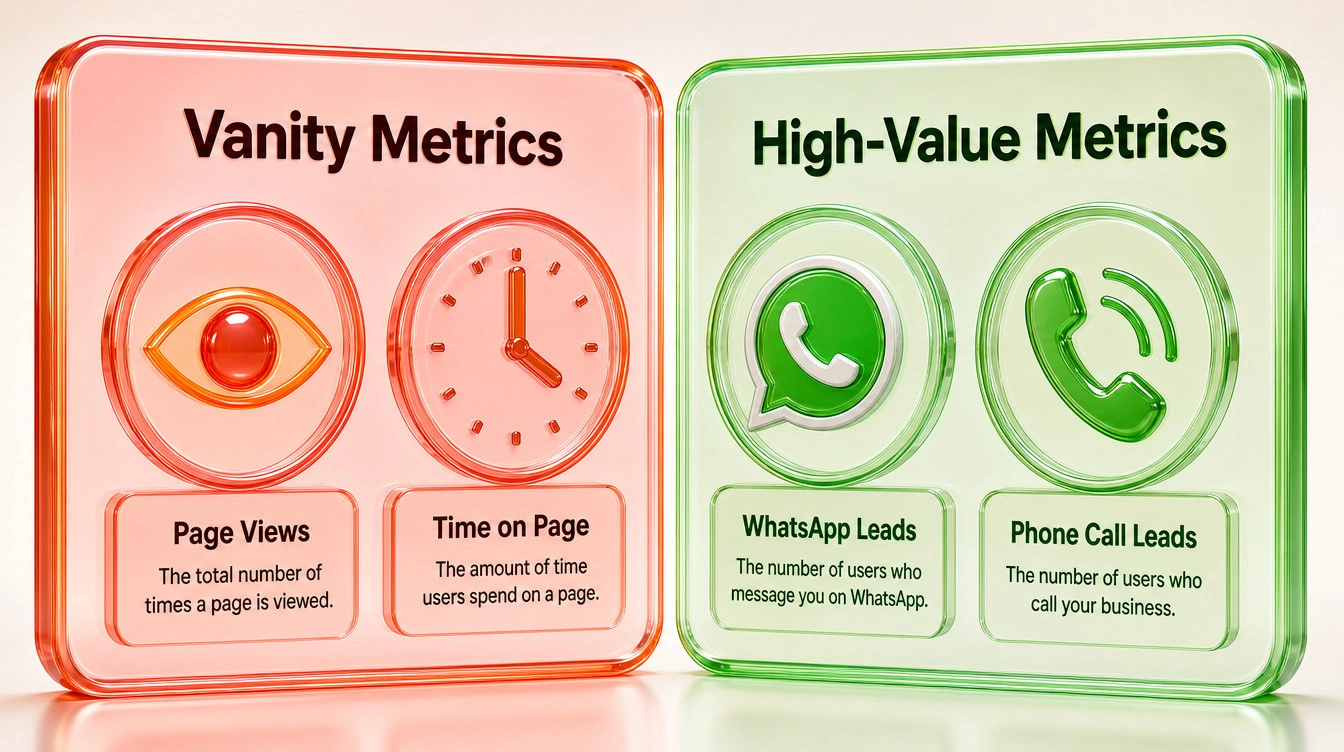
| Vanity Metric (Do Not Focus Here) | High-Value ROI Metric (Track This) |
|---|---|
| The total number of people who visit the website each month. | Number of people who finished the lead form. |
| How many times people see the website in search results. | Number of people starting a WhatsApp chat right away. |
| How much time people spend on the page on average. | Times people used click-to-call on their phones. |
Q: Why are my high-traffic pages not generating patient bookings?
A: High traffic with zero bookings indicates a mismatch between search intent and your page content. Ulement analyses user behaviour flows to fix these exact conversion bottlenecks.
How Do You Track WhatsApp Leads Without Capturing Patient Details?
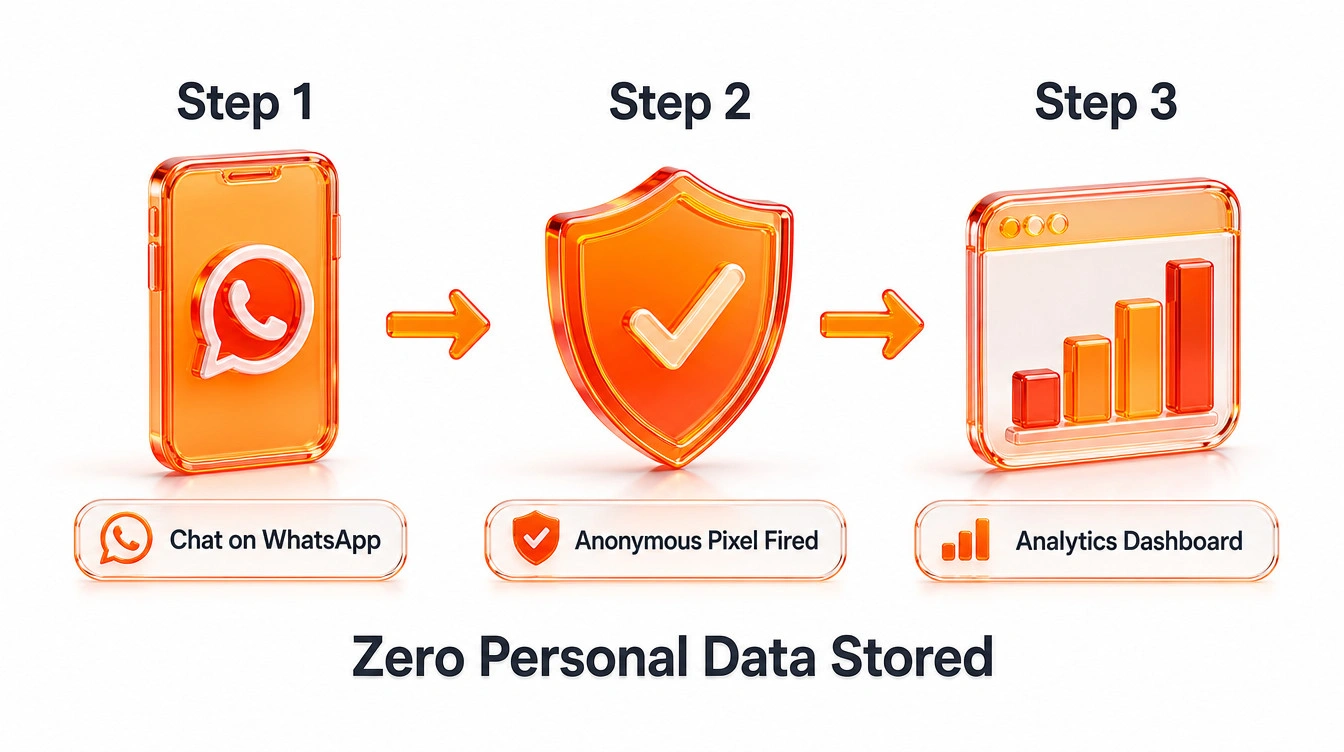
In Malaysia, over 60% of aesthetic clinic enquiries occur via the WhatsApp Business API. You want to know that a patient came from your “Laser Skin Treatment” page, but you absolutely cannot record their medical symptoms inside your analytics dashboard. The solution is anonymous event tracking. You configure your software to fire a conversion pixel the moment the “Chat on WhatsApp” button is clicked.
Q: Does tracking WhatsApp clicks violate the PDPA?
A: It is okay to track when someone clicks the button as a random event. This is fine and does not break any rules. A problem will only happen if you put the real chat information or the phone number of the patient into your marketing analytics platform.
Understanding Patient Acquisition Economics in Healthcare Marketing
To measure your success, you must understand your acquisition metrics. These numbers show if the clinic’s digital strategy is sustainable. Marketing is not just a cost. It is a way to reach patients who need your care. You can measure this, too.
The True Cost of Patient Acquisition and Patient Lifetime Value
Customer Acquisition Cost (CAC) tells you how much money in your marketing budget is spent to get one patient who books a consultation. Patient Lifetime Value (LTV) is the total revenue your clinic generates from that patient over the time they stay under your care. This way, you can see the lifetime value of every patient and know the most efficient way to use your marketing budget.

For example, you may need to spend MYR 350 to acquire a new medical aesthetic patient by using targeted healthcare SEO. If that patient returns every four months for ongoing maintenance treatments for about three years, their total value can go over MYR 12,000. Clinics using strong healthcare SEO strategies want the LTV to CAC ratio to be at least 4 to 1.
Why Do Clinics Struggle With ROI Measurement?
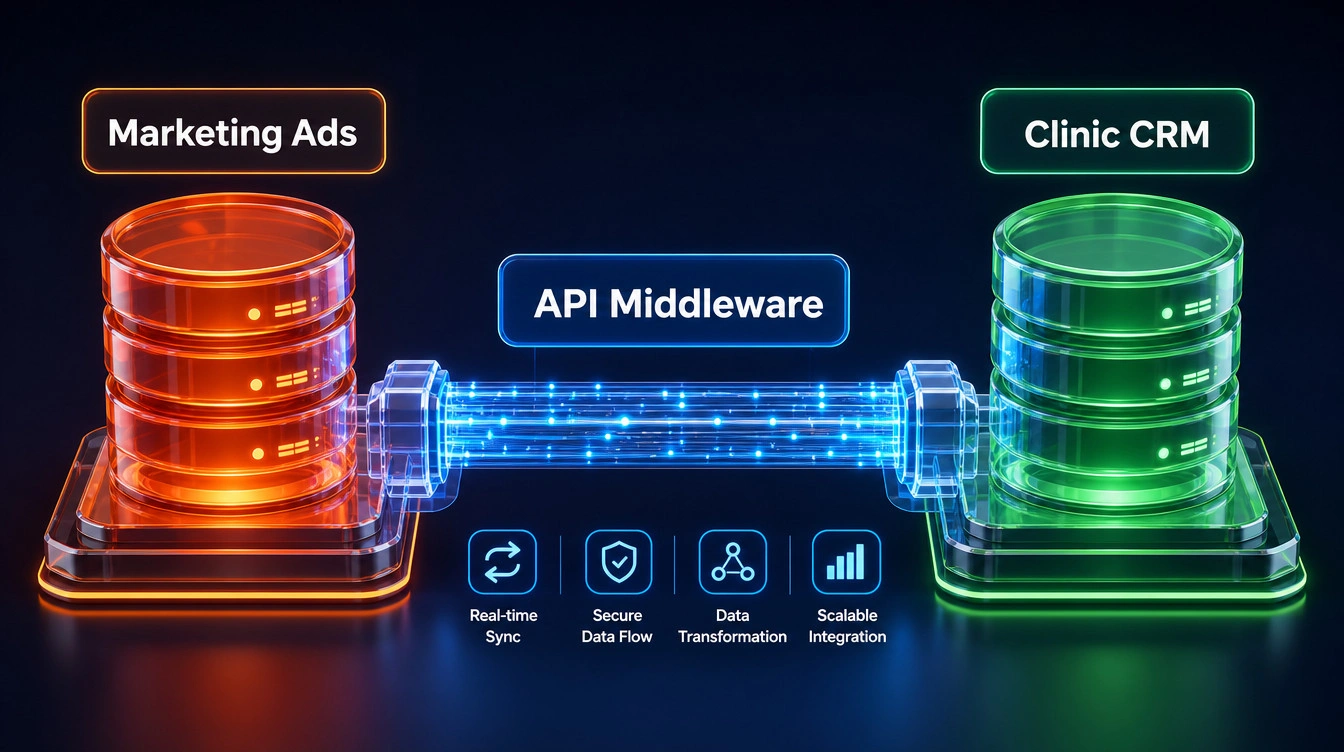
Most healthcare groups do not follow the right way to check ROI. One big reason is that the data is not in one place. A marketing group checks numbers in Google Ads. At the same time, the front desk team uses internal clinical tools like Clinicify or Pluto. These systems do not work together well. So, it is tough for the clinic management to find out which marketing channel attracted patients seeking long-term care.
Q: How do we fix disconnected clinic marketing data?
A: You can fix this with secure middleware or an encrypted API connection. This helps you move lead source tags into your CRM system safely. By using this, you will see which campaigns are effective without exposing patient medical records.
Top-Performing Digital Marketing Channels and Their ROI in Healthcare
The way you get people to visit your site can affect your practice’s growth. If you rely on only one source to get traffic, your clinic faces risks. A change to the algorithm can hurt your traffic and appointment numbers.
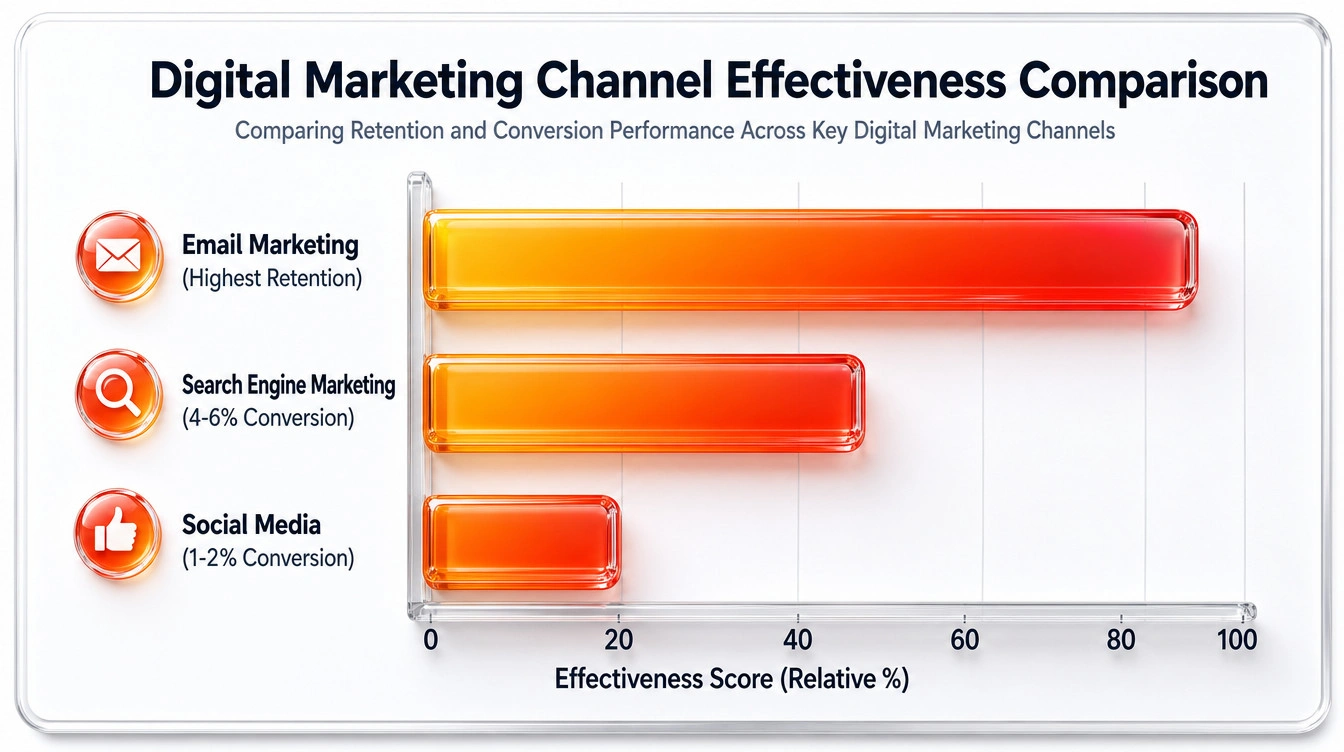
Search Engine Marketing, Social Media, and Email ROI Benchmarks
Research from the Journal of Medical Marketing notes that targeted search engine marketing (SEM) typically converts at 4% to 6% for elective aesthetic procedures. Social media ads have a lower direct conversion rate, between 1% and 2%, but they are essential for building brand awareness. Email marketing consistently delivers the highest return on investment for patient retention. Often, for every MYR 1 you spend to remind patients about routine aesthetic maintenance, you can get MYR 40 back.
Referral Programs, Online Reviews, and Reputation Management Returns
While reviews drive high ROI, healthcare providers must navigate them carefully. Under KKLIU guidelines, soliciting or promoting patient testimonials regarding clinical outcomes is prohibited. To safely track the ROI of your online reputation, train your staff to ask patients for reviews based purely on operational excellence (e.g., facility cleanliness, friendly staff, short wait times). Tracking the growth of these compliant reviews directly correlates to improved local map rankings and increased booking conversions.
Anonymising Data for PDPA-Compliant Healthcare SEO Analytics
Healthcare providers have strict rules they must follow for data privacy. When you want to check your clinic SEO or local SEO, it is very important to make sure your analytics tools do not collect any information that shows who a person is, even by mistake. A lot of marketing tools log IP addresses by default. In Malaysia, the law classifies this as personal data if the IP address can be linked to other identifiers.
As the “Reporting, Analytics & Ongoing Optimisation” section of our Healthcare SEO Guide says, a good digital plan keeps marketing data completely isolated from patient health records. You have to set up your tools so they do not send any personal info to the server.
To maintain strict PDPA compliance for your clinic website, you need to follow these data anonymisation rules:
- Turn on IP anonymisation now in your GA4 property settings.
- Check all contact forms. Make sure they do not append any patient names, medical conditions, or email addresses in the URL structure (query strings) to your Google Analytics software.
- Use a secure CRM tool hosted locally to manage patient details. Keep this data out of your marketing analytics at all times.
For clear legal meanings on how data should be collected, refer to the compliance rules set by the Department of Personal Data Protection (JPDP).
Q: Can we connect our clinic management software to our SEO dashboard?
A: We strongly advise against direct connections. Ulement structures your analytics to measure marketing performance without exposing sensitive clinical databases to third-party tracking tools.
Leveraging Advanced Analytics and AI Tools for ROI Optimisation
It is not common for enterprise clinics to track data by hand anymore. Modern clinics now utilize artificial intelligence to analyze patient acquisition pathways and predict future operational needs.
How Do Predictive Analytics Target High-Value Patients?
Predictive AI models run in secure environments like Salesforce Health Cloud. They use historical, anonymized data to evaluate marketing channels. The system also watches aggregate online behaviour. It can help identify the marketing channels most likely to attract patients interested in comprehensive treatment plans, rather than just single-session visits.
When you send this anonymized conversion data back to your marketing platforms, you can allocate your budget toward keywords that bring in high-LTV patients. Clinics that utilize this compliant scoring method report that their consultation show rates grow significantly.
Is AI analytics software too expensive for a single-location clinic?
AI analytics software can be an investment. A single clinic may feel like it is a lot to pay for upfront. But there are different models available, including monthly SaaS subscriptions. The price depends on what you need the software to do. A smaller practice can choose a tiered plan that fits its budget. Many brands now make tools suitable for independent clinics, and it helps to compare options. If the software saves administrative time and improves your marketing ROI, it quickly pays for itself.
Frequently Asked Questions
Next Steps
- Check your Google Analytics account today to ensure IP anonymisation is active.
- Change your “Contact Us” page goals to track button clicks (like WhatsApp or phone numbers) rather than page views alone.
- Review your lead forms right now to ensure patient names or symptoms are not being passed into your web URLs upon submission.
Secure Your Clinic’s Marketing Data
Are you having a hard time showing the real results from your marketing efforts? Stop guessing which marketing campaigns bring in your patients.
Contact Ulement today. Get a full site audit and analysis to set up safe and proper tracking for your practice.