Consultants constantly claim that a massive company history page will secure high-paying enterprise clients, but users absolutely hate reading ego-driven corporate timelines when they actually need immediate service pricing.
Key Takeaways:
- Static digital brochures fail because users search for specific solutions to their immediate problems instead of looking for corporate histories.
- Proper content structures prioritise dedicated service landing pages over massive background sections to capture active commercial traffic.
- Every successful digital strategy requires mapping specific keywords to exact stages in the buyer journey to guarantee high conversion rates.
Why Do Branding Consultants Misunderstand Search Intent?
Traditional advertising experts usually struggle with digital strategies because they are used to controlling the entire message through static billboards or expensive print magazine placements. The person typing words into a search box actually controls the exact narrative online, which means you have to meet potential buyers exactly where their specific queries currently exist. A high-paid agency might suggest that you try to rank for fancy terms like innovative synergy solutions, but real purchasing managers actually type straightforward phrases like outsourced IT services for manufacturing companies into their browsers. Figuring out exactly what the reader wants to know requires mapping out informational and commercial search phrases before you even think about planning your corporate visual identity or color schemes. You can review Think with Google on search intent data to see exactly how consumer queries shift during different stages of the basic buying journey. A proper website revamp process always places user questions at the centre of the entire project scope.
What Makes A Good Service Landing Page Structure?
Organising the different pages on your domain requires a careful balance between telling an interesting brand story and actually selling your specific retail products to targeted audiences. Every single primary and secondary service needs its own dedicated web address because this clear separation allows algorithms to easily understand the precise topical focus of each specific document. The main corporate narrative remains crucial for building long-term buyer trust once a prospect finally finds your service description, but long biographies are absolutely terrible for pulling initial traffic away from competitor platforms. Setting up specific tracking metrics through data dashboards allows you to monitor exactly how many visitors drop off when they are forced to read boring administrative announcements instead of product features. Reviewing Search Engine Journal on ranking factors shows that individual pages focused on single topics perform far better than generic pages attempting to cover twelve different services simultaneously. Implementing strong technical SEO architecture ensures that robots can actually index these distinct service pages properly.
| Feature | Digital Brochure Approach | Search Intent SEO Strategy |
| Main Focus Area | The company founder and historical corporate milestones. | The actual daily problems faced by the specific target audience. |
| Menu Navigation | Hides all secondary services under a single general tab. | Lists every specific service clearly inside the top header. |
| Content Writing Style | Uses heavy corporate jargon and confusing industry buzzwords. | Uses clear direct answers and exact pricing numerical examples. |
| URL Structure | Clumps everything onto one messy generic services page. | Creates individual focused web addresses for every single offering. |
Defining True User Search Intent For Modern Websites
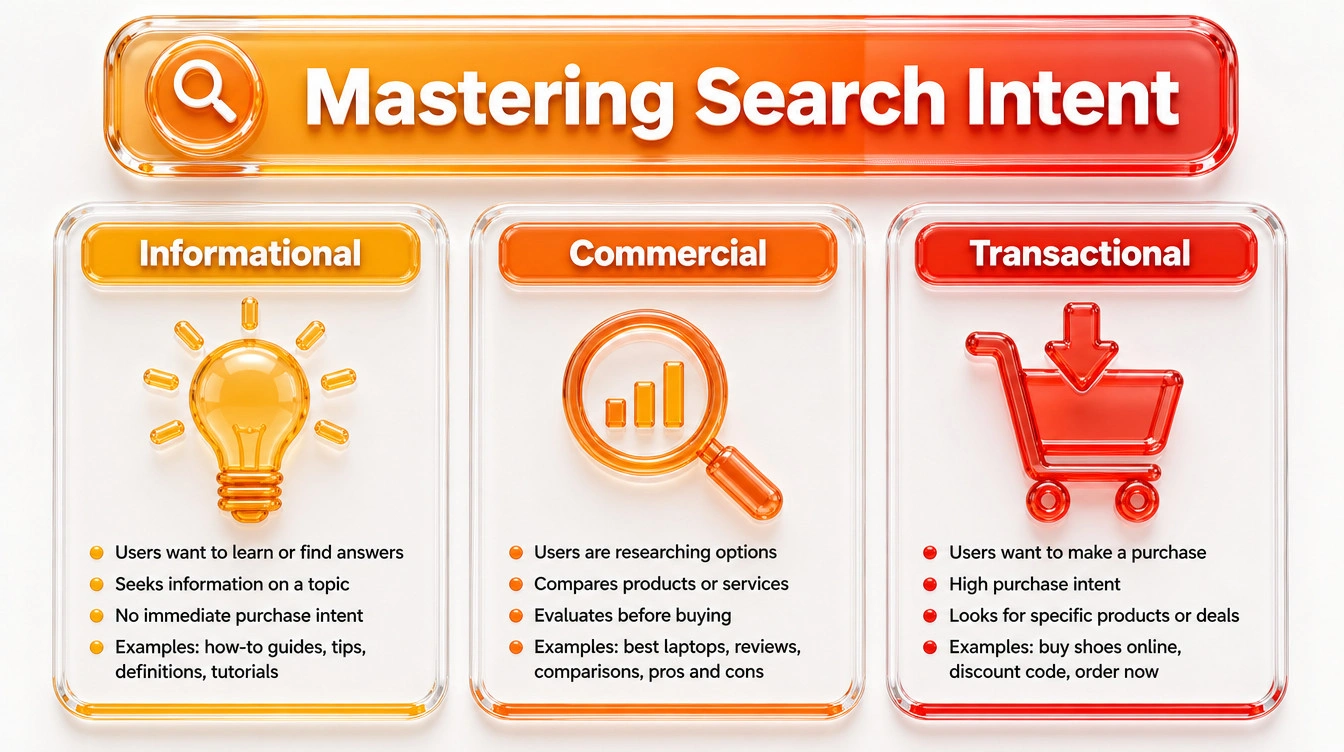
Digital marketers must categorise every single piece of text based on whether the reader wants to learn information, find a specific page, or buy a local product. Semantic classifications form the strict mathematical foundation of modern entity-based search algorithms that dictate exactly which domains receive the most profitable organic traffic streams. Failing to respect these strict classification principles guarantees that companies will suffer the severe cheap development issues that currently plague many traditional Malaysian retail businesses today.
| Search Intent Type | User Motivation | Ideal Page Structure | Example Search Query |
|---|---|---|---|
| Informational Intent | Users want to learn broad facts about a specific topic. | Long-form blog posts with clear headings and simple answers. | “How to register a business in Penang” |
| Commercial Investigation | Users want to compare different tools or local service providers. | Comparison tables and detailed service feature breakdowns. | “Best web hosting services like Exabytes” |
| Transactional Intent | Users are ready to spend money immediately right now. | Focused landing pages with clear pricing and fast checkout buttons. | “Hire emergency plumber in Jelutong” |
The Severe Disconnect In Traditional Branding Semantics
Traditional advertising executives remain permanently stuck in an outdated mindset where they control the entire communication flow through television commercials and static roadside billboard displays. Modern digital environments operate completely differently because the user actively dictates the entire conversation through exact match keywords and conversational voice search queries executed on smartphones. Ignoring user demands creates a massive operational problem for companies that launch visually stunning platforms, leading directly to predictable beautiful site failures that generate absolutely zero organic traffic. Industry data published extensively by Ahrefs keyword studies confirms repeatedly that aligning page structures with actual public search demand remains the absolute strongest ranking factor available today.
Why Do Users Reject Static History Pages During Research?
Buyers performing complex B2B research want immediate access to hard data, specific case studies, and clear value propositions that solve their daily internal operational headaches. A generic corporate timeline showing when a company moved into its current Kuala Lumpur office provides absolutely zero practical value to a stressed procurement manager seeking fast solutions. Website owners must start aggressively mastering semantic search to ensure their digital assets actually speak the exact same practical language as their ideal paying target demographic. Reading comprehensive market reports published by Gartner B2B analysts proves definitively that modern professional buyers demand extreme clarity and functional utility over emotional historical brand storytelling.
Q: Where should a company put its historical background information?
A: Website administrators should always place historical background details on a dedicated secondary page that remains permanently linked directly from the bottom main footer menu structure. This smart structural choice keeps the top primary navigation completely clear for essential service pages while still allowing interested financial investors to find critical corporate facts easily.
Prioritising Service Landing Pages Over About Us Pages
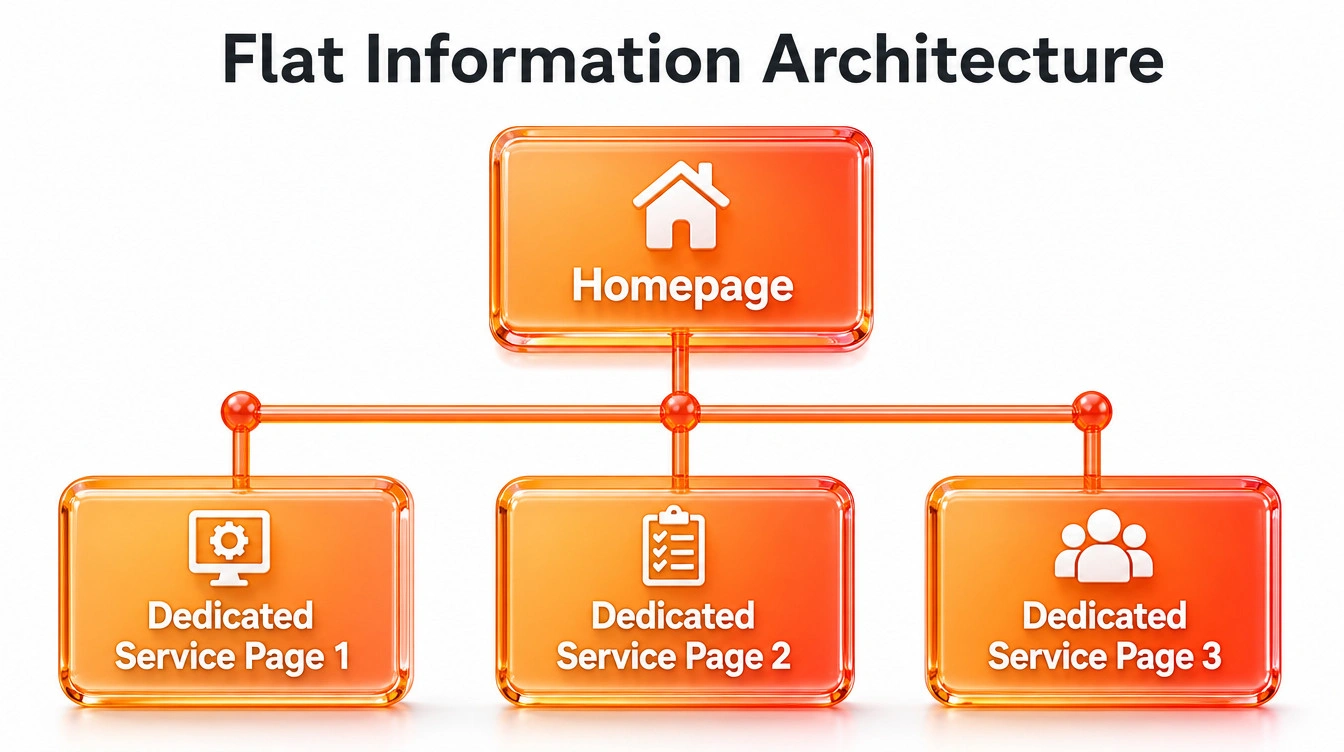
Business owners must construct entirely dedicated service pages for every single core offering to ensure search engines can properly index and rank each unique specific product category. Burying multiple distinct services onto one single crowded page completely destroys the deep semantic relevance needed to dominate competitive local map rankings in dense regions like Selangor. Establishing a perfectly flat information architecture requires building strict pre-launch blueprints that map exact technical parent relationships between primary category pages and their supporting educational content clusters. Digital marketing managers often rely on robust traffic tracking data from platforms like SEMrush to mathematically prove that dedicated service URLs consistently outperform combined bloated corporate pages.
- Create one unique target URL for every primary service to maximise strict keyword relevance and aggressively avoid internal content cannibalisation across your main domain structure.
- Include clear pricing brackets or transparent starting costs using local currency like MYR to filter out unqualified financial leads immediately before they contact your sales team.
- Embed specific customer reviews and precise geographic location data directly onto the page using proper valid schema markup formats to trigger local rich results.
- Ensure the requested page loads incredibly fast by working directly with reliable local infrastructure partners like Exabytes web hosting to drastically improve all core web vitals.
- Write highly descriptive and helpful alt text for all published product images to properly assist visually impaired users while simultaneously improving contextual image search rankings.
Q: How many unique service pages should a small business website have?
A: A small business should build one distinct standalone page for every major service category they currently offer to active local customers. If a dental clinic offers braces, whitening, and implants, they absolutely need three separate dedicated pages to correctly capture the specific commercial intent for each distinct medical treatment.
How Should Companies Map Target Keywords To The Buyer Journey?
Content creators must stop guessing exactly what users want and start rigorously analysing actual query data to align specific phrases with the correct stage of the customer lifecycle. Top of funnel visitors need broad educational articles, while bottom of funnel prospects require hard technical specifications and immediate access to fast responsive local sales representatives. Technical directors overseeing large corporate projects must implement strict migration error prevention tactics to ensure these carefully mapped pages do not break during complex server transfer procedures. Writing highly structured semantic HTML code allows search engine crawlers to generate valuable rich snippet guides that automatically push weaker competitor links further down the organic results pages.
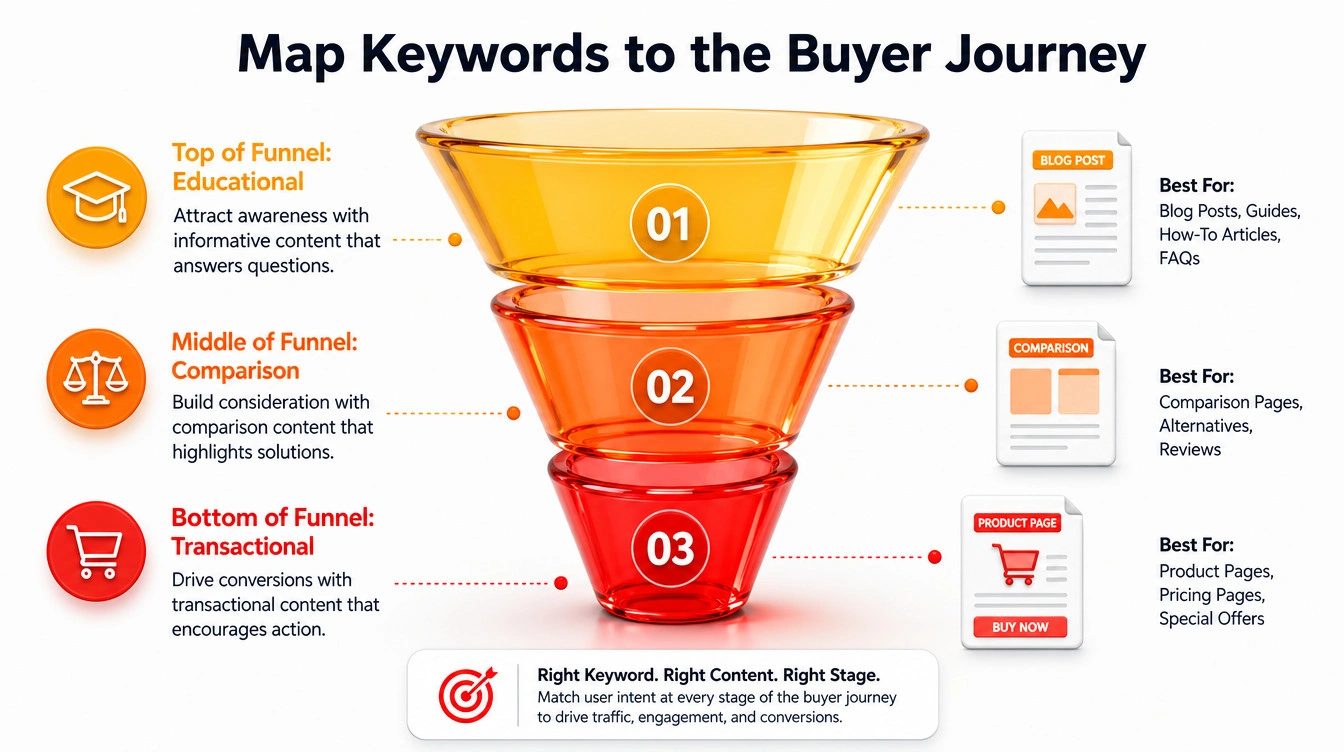
Website administrators must also prioritise aggressive server speed management because slow initial loading times will permanently ruin even the absolute most perfectly mapped keyword targeting strategies. The Malaysian government technology agency MDEC digital guidelines heavily emphasises building highly accessible and blazingly fast digital infrastructure to properly support the rapidly growing regional digital economy. Successful modern brands treat every single digital update as a deep structural revamp that systematically improves exactly how raw information flows directly towards the final profitable conversion event. By adopting proven data-driven planning methodologies, marketing teams can guarantee that every new paragraph directly supports measurable financial goals rather than aimlessly feeding upper management corporate egos.
Q: What is keyword mapping in digital content strategy?
A: Keyword mapping is the strict methodical process of assigning specific search phrases to exact dedicated pages on a business website. This precise structural organisation prevents different pages on the exact same root domain from accidentally competing against each other for the exact same organic search rankings.
Frequently Asked Questions
Next Steps
- Conduct a deep log file analysis to properly identify hidden crawl errors, fix terrible status codes, and apply proper hreflang tags for any multilingual regional pages targeting broad match head terms.
- Audit your current active backlink profile to ensure all sponsored and UGC outbound links use the absolutely correct structural attributes, while simultaneously maximising exact match anchor text for your primary internal linking structure.
- Update all existing corporate history pages by aggressively pruning outdated historical data, consolidating unstructured data using smart knowledge graph integrations, and focusing entirely on predictive analytics that track actual conversion rate optimisation.
Stop losing highly qualified commercial leads to local competitors with vastly superior website structures. Contact our technical team today to audit your current digital footprint and finally transform your static corporate brochure into a high-performance lead generation engine driven entirely by proven user search intent.