You’ve just launched your new website. The design is beautiful, the features are amazing, and you’re excited for the future. But there’s a sinking feeling in your stomach as you check your analytics… where has all your traffic gone? This is the moment almost every website owner dreads, and it’s almost always preventable.

Understanding the Post-Migration SEO Audit: Why It’s Critical
What is a Post-Migration SEO Audit?
A post-migration SEO audit is a comprehensive process of reviewing a website immediately after a significant change, like moving to a new domain, switching to HTTPS, or launching a major redesign. Its purpose is to identify and fix any issues that could negatively impact your search engine rankings and organic traffic.
Why Your Website Needs a Post-Migration SEO Audit
A website migration is like moving your entire business to a new physical address. You need to make sure the post office is forwarding your mail correctly, your phone number is connected, and your sign is visible from the street. An audit is the process of double-checking all those connections to ensure your customers and Google can still find you without any interruption.
The Risks of Skipping a Post-Migration SEO Audit
From my experience as a consultant, skipping this step is the single biggest mistake a business can make after a launch. The risks are significant: a catastrophic drop in organic traffic, loss of valuable keyword rankings built over years, and a direct impact on your leads and sales. I suppose it’s like moving house and not telling anyone your new address.
Pre-Audit Preparation: Setting the Baseline for Your Post-Migration SEO Audit

Before you dive in, you need a baseline. What did “good” look like before the migration?
Gathering Pre-Migration Data (Analytics, GSC, Crawls)
Before the migration, it’s essential to take a “snapshot” of your site’s health. This includes exporting data from Google Analytics and Google Search Console (GSC), and running a full website crawl to have a complete list of all your old URLs.
Documenting Your Migration Plan & Redirect Map
A good migration starts with a great plan. This must include a detailed “redirect map,” which is a spreadsheet that matches every old URL to its new destination URL.
Key Stakeholders & Communication Plan
Ensure everyone involved—your developer, your marketing team, and any other stakeholders—understands the plan and is ready to act on the audit’s findings.
Executing Your Post-Migration SEO Audit: A Step-by-Step Checklist
Technical SEO Checks
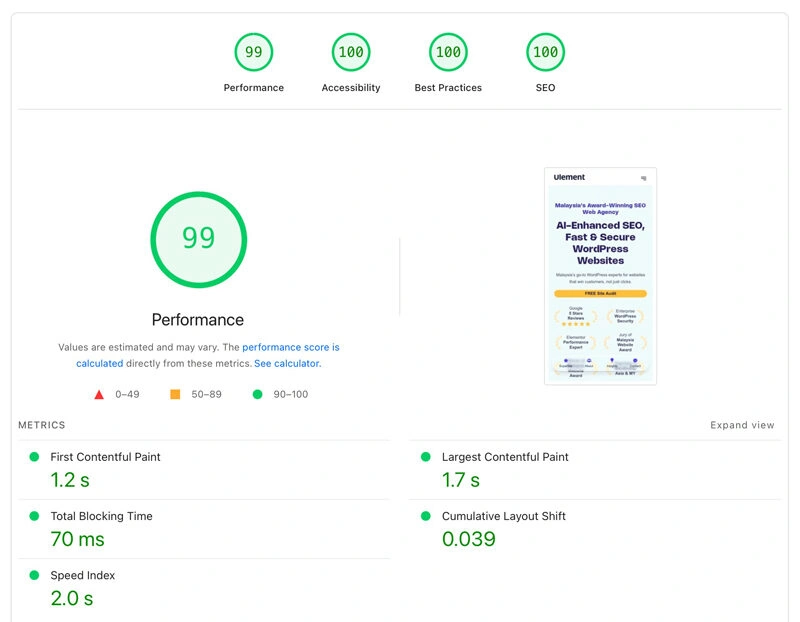
This is the foundation. If search engines can’t technically access your site, nothing else matters.
- Indexing & Crawlability (Robots.txt, Sitemaps, GSC Index Coverage): The first check is to ensure search engines can actually see and crawl your new site. We review the
robots.txtfile to make sure no important pages are blocked, submit the new XML sitemap, and check the Index Coverage report in GSC for any errors. - Redirects Verification (301s, Chains, Loops, Orphaned Pages): This is maybe the most critical step. We systematically check that all old URLs are correctly 301 redirecting to their new counterparts. We also look for redirect chains (A -> B -> C) or loops (A -> B -> A) that can waste crawl budget and hurt performance.
- Canonical Tags & Hreflang Implementation: We verify that canonical tags on your new pages point to the correct version to prevent duplicate content issues. For international sites, we ensure
hreflangtags are correctly implemented. - Internal Linking & Broken Link Analysis: We crawl the new site to find and fix any broken internal links that might have occurred during the migration. All internal links should point directly to the new, live URLs, not to old URLs that redirect.
- Site Speed & Core Web Vitals Performance: A new site should be faster. We measure the Core Web Vitals and overall performance to ensure the migration has resulted in a speed improvement, not a regression.
- Mobile-Friendliness & Responsiveness: We test the new site across a range of mobile devices to confirm it is fully responsive and offers an excellent user experience for mobile visitors.
- HTTPS Status & Security Headers: We confirm that the SSL certificate is installed correctly and that all traffic is being securely served over HTTPS. We also check for the proper implementation of security headers.
- Structured Data Validation: We test all structured data (like Schema markup) to ensure it migrated correctly and is still validating without errors.
On-Page SEO & Content Integrity Checks
Now, let’s look at the content people actually see.
- Meta Titles & Descriptions Accuracy: We check that all meta titles and descriptions have been transferred correctly and are still optimised for their target keywords.
- H1s & Heading Structure Consistency: We verify that the heading hierarchy (H1, H2, H3, etc.) on each page is logical and has been maintained from the old site.
- Content Duplication & Thin Content Issues: We scan for any instances of duplicate content that may have been accidentally created during the migration process and identify any “thin” pages with little to no content that could be pruned.
- Image Optimisation (Alt Text, File Sizes, Broken Images): We check that images are loading correctly, are properly sized, and that their descriptive alt text has been preserved.
- User Experience (UX) & Design Integrity: We do a manual check of the site to ensure that the design has rendered correctly and that the overall user experience is as intended.
Performance & Traffic Monitoring
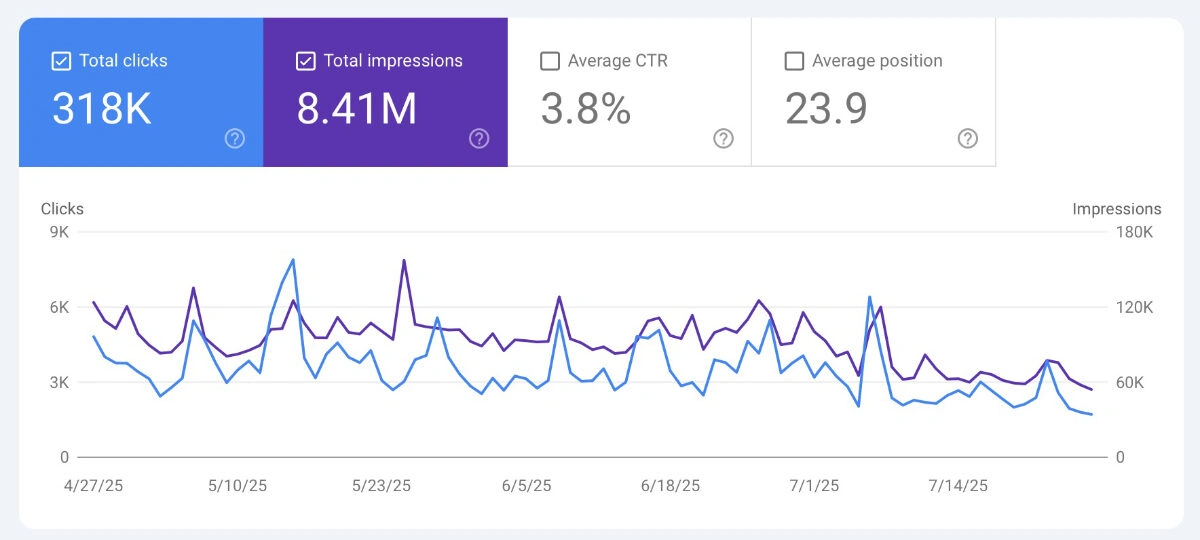
This is where you measure the impact.
- Google Analytics (Organic Traffic, Conversions, Bounce Rate, User Behavior): We closely monitor organic traffic levels, looking for any significant drops. We also track conversion rates and user behavior metrics to ensure the new site is performing its business function.
- Google Search Console (Queries, Impressions, CTR, Crawl Errors, Index Coverage): GSC is the diagnostic hub. We monitor for spikes in crawl errors, check the index coverage report daily, and compare post-migration queries and impressions to our pre-migration baseline.
- Keyword Rankings & Visibility Fluctuations: We track our most important keywords to monitor for any ranking drops. Some fluctuation is normal, but a sustained drop indicates a problem.
- Backlink Profile Monitoring & Reclaiming Lost Links: We check that valuable backlinks pointing to old URLs are being correctly passed through the redirects. If any high-value links are lost, we may need to reach out to the linking sites to request an update.
Functionality & User Journey Checks
- Forms, Call-to-Actions (CTAs) & Conversion Paths: We test every form, button, and checkout process to ensure they are functioning correctly. A broken form is a lost lead.
- Critical User Journeys & Navigation: We walk through the most important user journeys (e.g., finding a product and checking out) to ensure the navigation is intuitive and there are no dead ends.
- Cross-Browser & Device Compatibility: We test the site on different browsers (Chrome, Firefox, Safari) and devices (iOS, Android) to ensure a consistent experience for all users.
Essential Tools for Your Post-Migration SEO Audit
Website Crawling Tools (e.g., Screaming Frog)
These are essential for a technical audit, allowing you to crawl your entire site to check redirects, find broken links, and analyze on-page elements.
Analytics & Webmaster Tools (Google Analytics 4, Google Search Console)
These free tools from Google are non-negotiable. They provide the most direct data on how Google is seeing your new site and how users are behaving on it.
Keyword & Ranking Trackers (e.g., Semrush, Ahrefs, Moz)
These platforms are crucial for monitoring your keyword ranking positions and overall search visibility before and after the migration.
Page Speed & Core Web Vitals Tools (e.g., PageSpeed Insights, GTmetrix)
These tools are used to benchmark your site’s performance and diagnose speed-related issues.
Redirect & HTTP Status Code Validators
There are many tools available that can bulk-check a list of old URLs to verify that their 301 redirects are working correctly.
Troubleshooting & Fixing Common Post-Migration SEO Issues
Diagnosing & Recovering from Traffic Drops
A traffic drop is usually caused by a problem with indexing or redirects. The first step is to use GSC and a crawler to identify which pages have lost traffic and check their redirect paths.
Resolving Indexing & Crawlability Problems
This often comes down to an incorrect setting in your robots.txt file or errors in your new sitemap.
Correcting Redirect Errors & Link Equity Loss
Ensure all redirects are a permanent 301, not a temporary 302. Fix any redirect chains and ensure all internal links point to the final destination URL.
Addressing Content & On-Page Discrepancies
Sometimes, critical content or meta tags can be accidentally omitted during a migration. A side-by-side comparison with your pre-migration crawl data is the best way to find these issues.
Strategies for Reclaiming Lost Backlinks
If a high-authority site is linking to a page that was removed (not redirected), it’s often worth reaching out to them and politely requesting they update the link to a new, relevant page on your site.
Beyond the Audit: Ongoing Monitoring & Long-Term SEO Strategy
Establishing Regular Reporting & Automated Alerts
A migration isn’t truly “over” for several weeks. Set up regular reporting and automated alerts to monitor for any new crawl errors or unexpected traffic drops.
Continuous Optimisation & Iteration Cycles
Use the launch of your new site as an opportunity. The audit will provide a clean slate and a clear roadmap for your ongoing SEO and content strategy.
Preventing Future Migration Mishaps
The most important lesson from any migration is to document everything. Your redirect map and audit checklist will be invaluable resources for any future site changes.
Conclusion: Safeguarding Your SEO Success Post-Migration
A website migration is a moment of huge opportunity, but it’s also a moment of significant risk. A thorough post-migration SEO audit is not an optional extra; it is the essential final step that safeguards your years of hard work. It’s the process that turns a risky transition into a successful new beginning.
Feeling overwhelmed by the post-migration process? A small error can have a huge impact on your business. Let an expert handle it.