Malaysia faces an escalating cybersecurity crisis, with the nation recording 19.62 million web-based attacks in the first half of 2024 alone, the highest in Southeast Asia. This alarming statistic underscores the urgent need for Malaysian businesses to understand, identify, and mitigate common website security vulnerabilities.

The data reveals that fraud accounts for 71% of all cybersecurity incidents, primarily through sophisticated phishing campaigns, while ransomware attacks surged by 78% in Q4 2024. These figures represent not just statistics, but a clear indication that Malaysia’s digital transformation journey has made it a prime target for cybercriminals seeking to exploit vulnerabilities in unprotected systems.
The Malaysian Cybersecurity Landscape: Current Threat Profile
Attack Volume and Distribution
Malaysian organisations face an unprecedented volume of cyber threats, with 26.85 million attacks recorded throughout 2023, averaging 74,000 attacks per day. The Cyber999 Incident Response Centre documented 1,550 incidents in Q4 2024, representing a slight decrease from Q3 but maintaining consistently high threat levels. The breakdown of these incidents reveals a concerning pattern: fraud remains the dominant attack vector, leveraging increasingly sophisticated social engineering techniques to bypass traditional security measures.
The geographical distribution of threats targeting Malaysia reveals the global nature of modern cybercrime. Analysis indicates that attacks originate primarily from the United States, China, Great Britain, South Korea, and Russia, with each region contributing different attack methodologies. State-sponsored Advanced Persistent Threat (APT) groups, including FLAX TYPHOON, SIDEWINDER, GAMAREDON, and BLACKCAT, have specifically targeted Malaysian financial institutions, logistics companies, and educational sectors.
Sector-Specific Vulnerabilities
Government agencies and critical infrastructure have been particularly vulnerable, with high-profile breaches affecting 17 million Malaysians through the MyKAD data leak and the Prasarana ransomware attack that resulted in 316 GB of stolen transportation data. These incidents highlight the interconnected nature of modern digital systems, where a breach in one sector can cascade across multiple services and affect millions of citizens.
Healthcare institutions, educational establishments, and small-to-medium enterprises (SMEs) represent the most vulnerable segments of Malaysian cyberspace. Research indicates that 76% of Malaysians have faced some form of online or phone scam, creating a population that is simultaneously digitally engaged yet security-vulnerable.
OWASP Top 10 Vulnerabilities: Malaysian Context and Prevalence
Critical Vulnerabilities Dominating Malaysian Networks
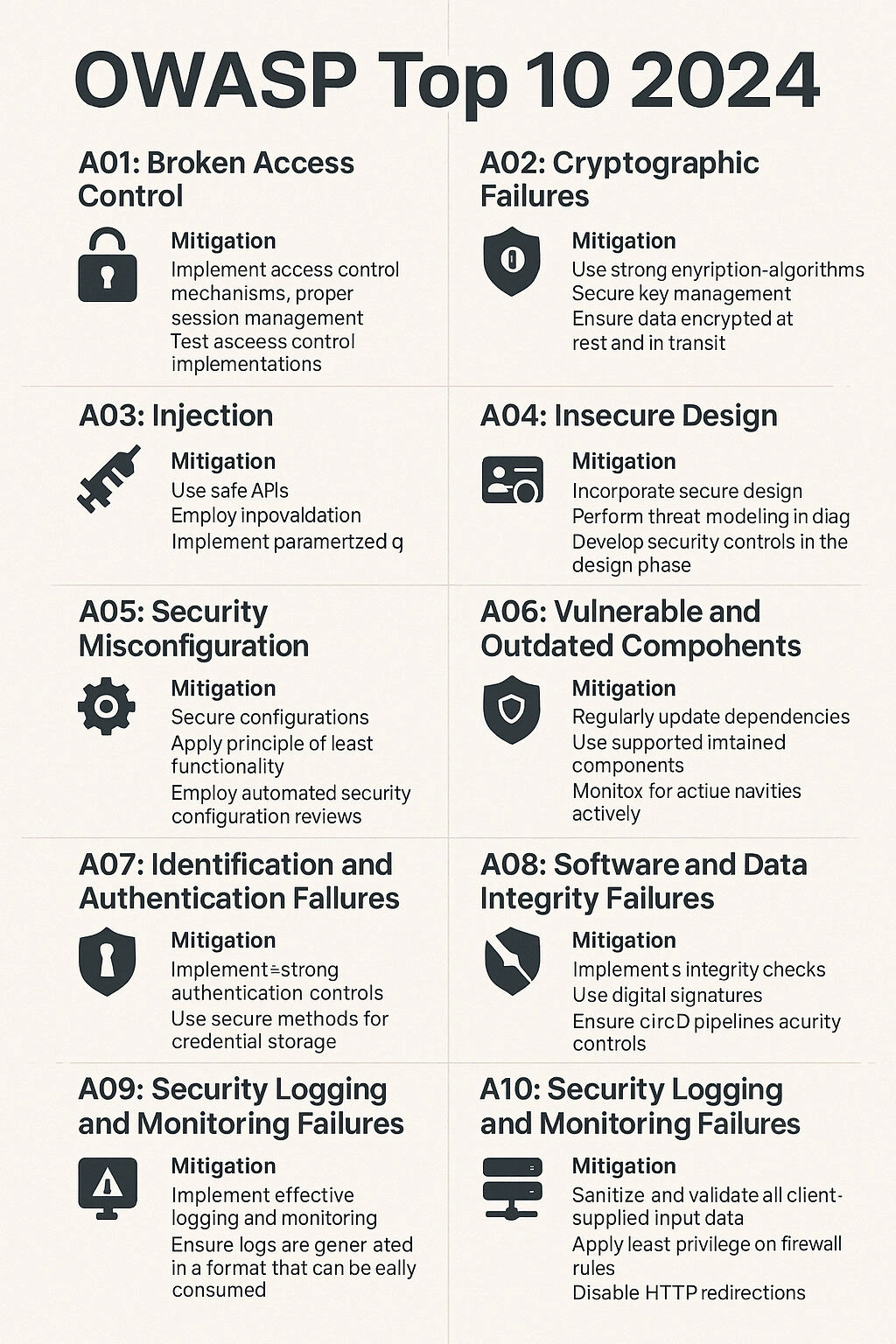
The Open Web Application Security Project (OWASP) Top 10 provides the foundational framework for understanding web application vulnerabilities globally, but Malaysian-specific data reveals unique patterns of exploitation. Broken Access Control maintains its position as the most critical vulnerability, allowing unauthorised users to access restricted resources and escalate privileges. In the Malaysian context, this vulnerability has been exploited in numerous government system breaches, where attackers bypassed authentication mechanisms to access citizen data.
Cryptographic Failures, previously known as sensitive data exposure, rank second in critical importance. Malaysian organisations frequently struggle with implementing robust encryption protocols, particularly in legacy systems that handle financial transactions and personal identification data. The MyKAD data breach exemplifies the devastating consequences when encryption fails to protect citizens’ most sensitive information.
Injection attacks, particularly SQL injection and Cross-Site Scripting (XSS), continue to plague Malaysian websites. These vulnerabilities accounted for 53.3% of WordPress plugin vulnerabilities discovered in 2023, with Malaysian websites being disproportionately affected due to widespread use of outdated plugins and themes. The prevalence of injection attacks in Malaysia is exacerbated by insufficient input validation practices among local web development teams.
Emerging Threats and New Categories
Insecure Design and Software and Data Integrity Failures represent newer categories in the OWASP framework but have particular relevance to Malaysia’s rapidly digitalising economy. Many Malaysian organisations rush to deploy digital solutions without incorporating security considerations during the design phase, creating architectural vulnerabilities that are difficult to address post-deployment.
Security Misconfiguration affects the majority of Malaysian websites, with common issues including unchanged default credentials, unnecessary features enabled, and improper error handling that reveals system information to attackers. The widespread use of shared hosting services among Malaysian SMEs compounds this problem, as security configurations are often managed by hosting providers rather than the organisations themselves.
WordPress Security: The Malaysian Web Development Ecosystem
WordPress Dominance and Vulnerability Landscape
WordPress powers over 43% of all websites globally, with even higher adoption rates among Malaysian businesses seeking cost-effective content management solutions. However, this popularity makes WordPress installations prime targets for cybercriminals. The reality facing Malaysian businesses is stark: plugins are responsible for 97% of all new security vulnerabilities, while nulled plugins and themes – pirated versions containing malicious code – are widespread in the local market.
Malaysian WordPress sites face unique challenges due to local development practices and hosting environments. Many marketing agencies that built websites for Malaysian businesses aren’t equipped to maintain them properly, creating dangerous gaps in digital security strategies. Research reveals that 76% of Malaysians have faced some form of online or phone scam, yet many websites remain inadequately protected.
Common Malaysian WordPress Vulnerabilities
The Malaysian WordPress ecosystem suffers from several critical vulnerabilities. Outdated WordPress core, plugins, and themes represent the most common attack vectors, with many Malaysian businesses failing to implement regular updates. Weak passwords and poor login security remain prevalent, with simple passwords like “password123” still common among local businesses.
Vulnerable or nulled plugins and themes pose particular risks in Malaysia’s market. These unauthorised modifications bypass official security updates and often contain hidden malware or backdoors. Additionally, improper user roles and permissions frequently give too many users administrative access, increasing the risk of accidental or malicious changes.
Malaysian-Specific Threats and Costs
Local WordPress installations face region-specific attack patterns. Brute force attacks targeting Malaysian websites have increased, with bots attempting to guess login credentials repeatedly. Malware, viruses, and backdoors specifically target Malaysian businesses, often using compromised WordPress sites to distribute malicious Android applications or host phishing campaigns targeting local banking credentials.
The financial impact of these vulnerabilities can be devastating for Malaysian SMEs. A typical emergency cleanup following a successful attack costs between RM1,000 to RM5,000, while lost revenue from downtime can reach RM2,000 for just two days offline. The SEO penalty from Google’s hacked site warning can eliminate organic traffic for weeks or months, with total recovery costs exceeding RM10,000 for neglecting a single plugin update.
Critical Incident Analysis: Learning from Malaysian Breaches
High-Profile Data Breaches and Their Implications
The MyKAD data breach affecting 17 million Malaysians represents the most significant privacy violation in the country’s digital history. This incident involved the compromise of national identification data, including full names, IC numbers, addresses, and photographs. The breach highlighted critical vulnerabilities in API security, as attackers exploited weaknesses in the MyIdentity application programming interface to access National Registration Department databases.
The Prasarana Malaysia Berhad ransomware attack demonstrated the vulnerability of critical infrastructure to modern cyber threats. The RansomHub ransomware group successfully penetrated transportation systems, stealing 316 GB of operational data and disrupting public transportation services. This incident revealed how ransomware operators increasingly target Active Directory servers, VMware platforms, and ESXi virtualisation environments to maximise impact across organisational networks.
Government System Vulnerabilities
Malaysian government systems have experienced multiple high-profile compromises, including breaches affecting KWSP (Employee Provident Fund), SPR (Election Commission), and Malaysia Gazette. These incidents often involve insider threats and procurement vulnerabilities, where cybercriminals exploit relationships with ICT system suppliers to gain unauthorised access.
The MySejahtera contact tracing application vulnerability provided another concerning example of API security failures. Attackers exploited weaknesses in the application’s programming interface to send fake COVID-19 positive notifications and unauthorised OTP messages to users. This breach demonstrated how quickly cybercriminals adapt to exploit new digital systems implemented during crisis situations.
Financial and Cryptocurrency Losses
The impact of cybersecurity incidents extends beyond data theft to significant financial losses. Malaysian users suffered losses exceeding $100 million from the Atomic Wallet cryptocurrency hack, highlighting the global interconnectedness of financial cybercrime. Additionally, widespread banking credential theft through phishing campaigns has resulted in millions of dollars in fraudulent transactions.
Comprehensive Mitigation Strategies for Malaysian Organisations
Technical Security Controls
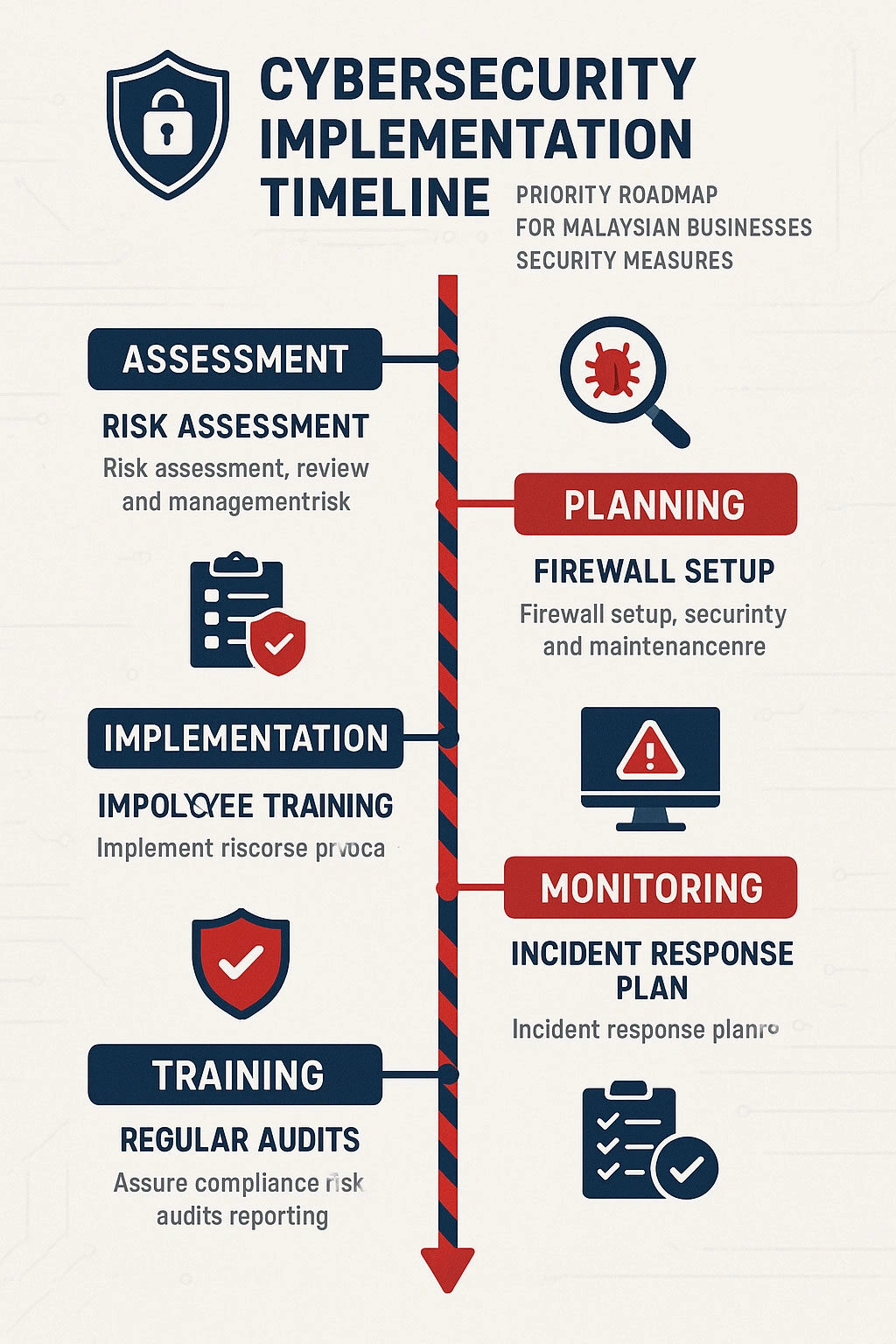
Multi-Factor Authentication (MFA) implementation represents the most effective single security control, capable of blocking over 99.9% of account compromise attacks according to Microsoft research. Malaysian organisations should prioritise MFA deployment across all critical systems, particularly given the high prevalence of credential-based attacks in the region.
Web Application Firewalls (WAFs) provide essential protection against common attack vectors. Modern WAFs must advance beyond signature-based detection to incorporate behavioural analysis and artificial intelligence to identify sophisticated attack patterns. Malaysian businesses should implement WAFs that can detect SQL injection, XSS attacks, and CSRF attempts while providing detailed logging for security monitoring.
Input validation and contextual sanitisation require sophisticated approaches that match validation strategies to specific data contexts. Malaysian web developers must implement validation matrices that address HTML body, JavaScript, URL, SQL, and XML contexts with appropriate encoding and sanitization rules.
WordPress-Specific Security Measures
Malaysian WordPress installations require specialised security approaches addressing local threat patterns. Regular updates and vulnerability management form the foundation of WordPress security, though updates should never be automated without testing in staging environments. Professional maintenance services become essential when internal teams lack the technical expertise to manage these critical updates safely.
File permissions management represents a critical control often overlooked by Malaysian website administrators. WordPress installations should implement directory permissions of 755 or 750, file permissions of 644 or 640, and ensure wp-config.php is set to 440 or 400. Never assign 777 permissions to any directories, as incorrect permissions allow hackers to modify files.
Advanced Security Controls
Multi-factor authentication (2FA) implementation provides essential protection against credential-based attacks. Malaysian organisations should enable 2FA for all administrative accounts, with particular attention to email-based authentication, authenticator apps, and FIDO U2F security keys. This extra verification layer ensures that even if passwords are compromised, unauthorised access is prevented.
Security plugins and monitoring require careful selection and configuration. Tools like Malcare or PatchStack provide comprehensive security monitoring with daily vulnerability scanning, real-time threat detection, and automated malware removal. These tools prove particularly valuable for Malaysian businesses that lack internal security expertise.
Professional Maintenance and Support
The reality for Malaysian businesses is that website maintenance often falls to the bottom of busy entrepreneurs’ priority lists. Professional maintenance services ensure critical security tasks are completed regularly and correctly, protecting against the much larger potential losses from security breaches, downtime, or poor performance.
Comprehensive maintenance solutions for Malaysian businesses include WordPress core, theme, and plugin updates; daily offsite backups with encryption; security monitoring and malware scanning; performance optimisation; and technical support during business hours. Advanced services add premium security features, content management assistance, SEO monitoring, and priority support with faster response times.
The cost of professional maintenance – typically between RM150-5,000 monthly depending on business size and requirements – represents a fraction of potential losses from successful attacks. Most Malaysian SMEs spend around RM300-800 monthly for professional maintenance services, far less than the potential RM10,000+ cost of recovering from a single successful breach.
Organisational Security Measures
Cybersecurity awareness training addresses the human element in security, particularly important given that 90% of cyber-attacks exploit human error. Malaysian organisations should implement tailored training programmes that address local threat patterns, including phishing campaigns targeting Malaysian banking systems and region-specific social engineering techniques.
Zero Trust Architecture principles should guide security implementations, particularly for Malaysian organisations with hybrid cloud and remote work environments. This approach requires continuous verification of all access requests and network segmentation to limit the impact of successful breaches.
Incident response planning must account for Malaysian-specific legal and regulatory requirements, including Personal Data Protection Act (PDPA) compliance and coordination with CyberSecurity Malaysia’s Cyber999 response centre. Response plans should include clear escalation procedures, evidence preservation protocols, and stakeholder communication strategies.
Advanced Security Technologies
Artificial Intelligence and Machine Learning applications in cybersecurity provide enhanced threat detection capabilities particularly relevant to Malaysian organisations facing sophisticated APT groups. AI-driven threat intelligence platforms can identify attack patterns, indicator correlations, and behavioural anomalies that traditional security tools might miss.
Cloud security configurations require particular attention as Malaysian businesses increasingly adopt hybrid and multi-cloud architectures. Security misconfigurations in public cloud environments have led to numerous data breaches, making Cloud Security Posture Management (CSPM) tools essential for maintaining secure cloud deployments.
API security frameworks must be implemented given the prevalence of API-based attacks in Malaysia. This includes API authentication and authorization protocols, input validation for API endpoints, and rate limiting to prevent abuse and denial-of-service attacks.
Regulatory Compliance and Legal Frameworks
Malaysian Cybersecurity Legislation
The Cybersecurity Act 2024, passed by Parliament in March, establishes comprehensive frameworks for protecting Malaysia’s digital infrastructure. This legislation empowers CyberSecurity Malaysia to mandate security standards, conduct audits, and impose penalties for non-compliance. Organisations must align their security practices with these regulatory requirements to avoid legal consequences and maintain business continuity.
Personal Data Protection Act (PDPA) compliance requires organisations to implement data protection by design principles and maintain comprehensive audit trails. The MyKAD breach highlighted gaps in PDPA enforcement, prompting calls for stricter penalties and more rigorous oversight of data handling practices.
Industry-Specific Requirements
Financial institutions face additional regulatory requirements through Bank Negara Malaysia’s cybersecurity guidelines, which mandate specific security controls for digital banking and payment systems. These requirements include penetration testing, vulnerability assessments, and incident reporting obligations.
Healthcare organisations must comply with Ministry of Health cybersecurity directives that protect patient data and ensure healthcare system availability. The COVID-19 pandemic demonstrated the critical importance of healthcare cybersecurity, leading to enhanced regulatory oversight and security requirements.
Future Trends and Emerging Threats
Artificial Intelligence in Cybersecurity
The integration of AI-powered cyber attacks and AI-driven defences represents a significant evolution in the Malaysian threat landscape. Cybercriminals are increasingly using deepfake technology for social engineering attacks and machine learning algorithms to evade detection systems. Malaysian organisations must prepare for this arms race by investing in AI-enhanced security tools and developing AI literacy among security teams.
Phishing-as-a-Service (PhaaS) platforms enable cybercriminals to deploy large-scale credential harvesting campaigns with minimal technical expertise. These platforms specifically target Malaysian financial institutions and government services, requiring enhanced user education and technical controls to detect and prevent such attacks.
Supply Chain Security Challenges
Malaysian businesses face increasing risks from software supply chain attacks that target widely-used development tools and libraries. The interconnected nature of modern software development means that vulnerabilities in third-party components can affect thousands of downstream applications.
Container and microservices security presents new challenges as Malaysian organisations adopt cloud-native architectures. Traditional perimeter-based security models are inadequate for these distributed systems, requiring service mesh security, container scanning, and runtime protection capabilities.
Conclusion and Strategic Recommendations
Malaysia’s position as Southeast Asia’s most targeted nation for web-based attacks demands a comprehensive, multi-layered approach to cybersecurity. The evidence clearly demonstrates that traditional security measures are insufficient against modern threats, requiring organisations to adopt proactive security strategies, continuous monitoring, and adaptive defence mechanisms.
Immediate priorities for Malaysian organisations include implementing multi-factor authentication, updating vulnerable WordPress installations, and deploying web application firewalls. These fundamental controls can prevent the majority of successful attacks while providing time to implement more sophisticated security measures.
Long-term strategic initiatives should focus on developing internal cybersecurity expertise, establishing security-by-design principles, and creating incident response capabilities. The shortage of cybersecurity professionals in Malaysia requires organisations to invest in training programmes and partnerships with educational institutions to build necessary capabilities.
Collaborative approaches involving government agencies, private sector organisations, and international partners will be essential for addressing the scale and sophistication of threats facing Malaysia. The establishment of information sharing mechanisms, joint threat intelligence initiatives, and coordinated incident response can enhance the nation’s collective cybersecurity posture.
The cost of cybersecurity investment pales in comparison to the potential impact of successful attacks, as demonstrated by the millions of Malaysians affected by recent breaches. Proactive security investment, comprehensive risk management, and continuous security monitoring represent not just best practices, but essential requirements for organisational survival in Malaysia’s challenging cybersecurity landscape.
Reference links:
- Malaysia Records 19.62 Mln Web-based Attacks In 1h 2024
https://www.bernama.com/en/news.php?id=2371054 - How Malaysia is regulating the rise in cybersecurity threats
https://fticommunications.com/how-malaysia-is-regulating-the-rise-in-cybersecurity-threats/ - Malaysia Q4 Cyber Report: Fraud & Ransomware Surge – Cyble
https://cyble.com/blog/fraud-and-ransomware-cybersecurity-report/ - What Are the Cybersecurity Issues in Malaysia? – Infosyte
https://infosyte.com/what-are-the-cybersecurity-issues-in-malaysia/ - Guide to OWASP Top 10 Vulnerabilities and Mitigation Methodshttps://www.eccouncil.org/cybersecurity-exchange/penetration-testing/owasp-top-10-vulunerabilities-mitigation/
- Malaysia Cybersecurity Trends 2024: A Year in Review – Flawtrack
- https://www.flawtrack.com/blog/malaysia-cybersecurity-trends-2024
- Protecting SME From Cyber Attacks – Kementerian Komunikasi
- https://www.komunikasi.gov.my/en/public/news/19611-protecting-sme-from-cyber-attacks
- Understanding OWASP Top 10 Vulnerabilities in 2025 with Real World Examples
- https://www.webasha.com/blog/understanding-owasp-top-10-vulnerabilities-with-real-world-examples-and-prevention-tips
- Malaysia Threat Report: 2024 Cybersecurity Insights – Simply Data
https://www.simplydata.com.my/malaysia-threat-report-2024-cybersecurity-insights/ - WordPress Website Performance and Security Issues and Solutions Ultimate Guide
https://u.msia.dev/wordpress-website-performance-and-security-issues-and-solutions-ultimate-guide/ - Web Application Security: Risks and Best Practices – NordLayer
https://nordlayer.com/blog/web-application-security/ - Cybersecurity Malaysia Flags Major Threats in Chrome & WordPress – Cyble
https://cyble.com/blog/cybersecurity-malaysia-flags-major-threats-in-chrome-and-wordpress-are-you-safe/ - Top Security Measures to Protect Your WordPress Website in 2025
https://u.msia.dev/enterprise-wordpress-security/ - 6 Web Application Security Best Practices: A Developer’s Guide – Jit.io
https://www.jit.io/resources/app-security/6-web-application-security-best-practices-a-developers-guide - WordPress Security Setup: A Complete Guide
https://u.msia.dev/wordpress-security/ - Protecting Malaysian Cyberspace – Kementerian Komunikasi
https://www.komunikasi.gov.my/en/public/news/22458-protecting-malaysian-cyberspace - What’s the best way of scanning WordPress for vulnerabilities – Reddit
https://www.reddit.com/r/Wordpress/comments/1lhr1bm/whats_the_best_way_of_scanning_wordpress_for/ - Website Maintenance & Support Services for Malaysian Businesses
https://u.msia.dev/website-maintenance-and-support-ensuring-your-online-success/ - 10 Application Security Vulnerabilities and How to Mitigate Them
https://www.pynt.io/learning-hub/application-security/10-application-security-vulnerabilities-and-how-to-mitigate-them - WordPress Site Hacked? Here’s How to Get Back Online Fast
https://u.msia.dev/wordpress-site-hacked/ - Web Application Security Best Practices Beyond OWASP Top 10
https://www.griddynamics.com/blog/web-application-security - Cyber999 Advisories – CyberSecurity Malaysia
https://www.cybersecurity.my/portal-main/advisories-details/41f66969-4119-11f0-a5d3-0050568c1b65 - 22 Cybersecurity Best Practices {Infographic} – phoenixNAP
https://phoenixnap.com/blog/cybersecurity-best-practices