Many business owners see website maintenance and SEO as two separate expenses on a spreadsheet. But what if one of the most powerful ways to improve your SEO rankings was a task you might be overlooking? It is. It’s your regular, professional maintenance routine.

The Undeniable Link: What is Website Maintenance in the Context of SEO?
Beyond Aesthetics: Moving from Reactive Fixes to a Proactive SEO Strategy
Website maintenance is not just about fixing things when they break or keeping the design looking fresh. In the context of SEO, it is a proactive strategy. It’s the ongoing process of ensuring your website is technically sound, secure, and provides a high-quality user experience—all of which are critical factors that Google’s algorithm evaluates.
How Google Perceives a Well-Maintained Website
Google favors websites that load quickly, provide mobile-friendly experiences, have clean, crawlable code, and consistently fresh, relevant content. A well-maintained site signals trustworthiness, authority, and user-first design, all key factors in search rankings.
How Proactive Website Maintenance Boosts SEO Rankings Directly
1. Enhancing User Experience (UX) & Core Web Vitals
Google’s algorithm is heavily focused on user experience. A happy user is a strong ranking signal.
Improving Page Load Speed
Fast-loading pages reduce bounce rates and keep visitors engaged, which Google interprets as a positive user signal. Regular maintenance ensures images are optimised, scripts are efficient, and caching is configured correctly.
Ensuring Mobile-Friendliness and Responsiveness
With most users browsing on mobile devices, maintenance includes testing responsive design and functionality across various screen sizes and devices, ensuring smooth navigation and usability.

Website Load Speed Improvement Guide for Malaysia
2. Maintaining Technical Health & Crawlability
If Google’s crawlers can’t understand or access your site properly, you won’t rank.
Fixing Broken Links and 404 Errors
Broken links frustrate users and confuse search engines. Regularly scanning and repairing these keeps your site trustworthy and fully indexable.
Optimising Your XML Sitemap and Robots.txt
Keeping your sitemap updated ensures search engines discover new and updated content quickly. Properly configured robots.txt files control what gets crawled, preventing indexing of unwanted pages.
Resolving Crawl Errors Identified in Search Console
Google Search Console provides insights on crawl issues like blocked resources or server errors. Fixing these promptly ensures smooth search engine access to your site.
3. Bolstering Site Security & Trust Signals
Trust is a cornerstone of SEO. A secure site is a trustworthy site.
The Importance of HTTPS and Security Patches
Securing your site with HTTPS and regularly applying security patches reinforces user trust and avoids ranking penalties.
Updating Plugins and Core Software to Prevent Hacks
Outdated software can expose vulnerabilities that harm user safety and trigger Google penalties. Timely updates guard both security and SEO.

Top Security Measures to Protect Your WordPress Website in [year]
4. Ensuring Content Freshness & Topical Relevance (with GEO & AEO)
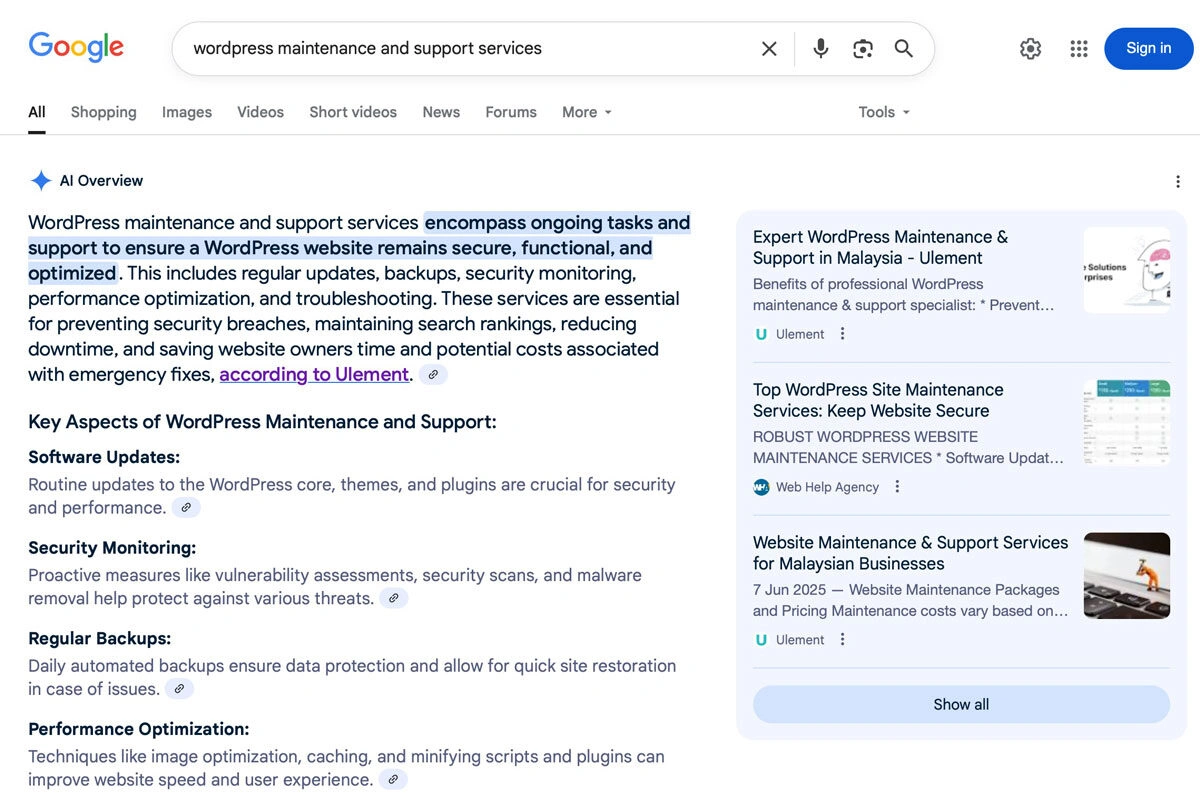
In the modern search landscape, it’s not enough for your content to just exist. It must be fresh, accurate, and trustworthy to perform well in both traditional search and new AI-powered answer engines. Regular maintenance is how you achieve this.
Updating Content for Answer Engine Optimisation (AEO)
Answer engines aim to provide the single best answer to a user’s query. Regularly updating outdated information, statistics, and facts is a critical maintenance task. This process ensures your content remains the most accurate and authoritative source, making it a prime candidate to be featured in Google’s Featured Snippets and other direct answer formats.
Optimising for Generative Engine Optimisation (GEO)
AI Overviews and chatbots rely on trust signals (E-E-A-T) to choose which sources to cite. A regular content audit, as part of your maintenance routine, is a powerful way to signal your ongoing expertise and trustworthiness. By pruning, updating, and optimizing old content, you demonstrate that you are an active authority in your field, which is essential for becoming a citable source in AI-generated results.

Beyond Traditional SEO: Why Generative Engine Optimisation is Transforming Digital Marketing [year]

Mastering SEO, GEO, and AEO for Total Search Dominance
Your Actionable SEO Maintenance Checklist (Weekly, Monthly, Quarterly)
Weekly SEO Checks
- Monitor Keyword Rankings & Analytics
Keep an eye on your key keyword rankings and look for any sudden drops or significant changes in your Google Analytics traffic. - Check for Critical Site Errors
Log in to your Google Search Console to check for any new crawl errors or security warnings that need immediate attention. - Update All Plugins, Themes, and Core Files
This is a critical security and functionality task. Always test major updates on a staging site first if possible. - Perform a Full Site Backup
Always have a recent, secure backup of your entire website before performing any major updates.
Monthly Maintenance Tasks
- Run a Website Speed Test
Benchmark your site’s performance using Google PageSpeed Insights to ensure it remains fast. - Review and Fix Broken Links
Use a tool to crawl your site and find any broken links that need to be fixed or removed.
Quarterly & Bi-Annual Reviews
- Conduct a Content and SEO Audit
Review your content to identify pages that can be updated, consolidated, or re-optimised for better performance. - Review and Optimize Internal Links
Look for opportunities to add new internal links from your newer content to your most important service pages. - Analyse Competitor Strategies
Briefly review your top competitors to see if they have launched any new content or strategies that you need to be aware of.
The High Cost of Neglect: How Ignoring Maintenance Kills Your SEO
Ranking Drops from Poor Performance and User Signals
Slow load times, broken links, and poor mobile experience frustrate visitors, increasing bounce rates and lowering dwell time—factors that negatively impact rankings.
Security Vulnerabilities Leading to Google Penalties
Sites compromised by malware or outdated software risk penalties, delisting, and loss of user trust, severely damaging SEO and business credibility.

A Step-by-Step Guide to WordPress Security & Performance

Website Maintenance & Support Services for Malaysian Businesses
FAQ
Make Maintenance a Core Part of Your SEO Strategy
Stop thinking of website maintenance as an optional cost. It is one of the most fundamental and effective components of a successful, long-term SEO strategy. A healthy, well-maintained website is the foundation upon which all of your other marketing efforts are built.
Ready to turn your website maintenance into a powerful SEO advantage?