Aesthetic clinics in Malaysia face severe fines for violating Ministry of Health advertising guidelines. You can achieve top search rankings safely by prioritising objective patient education and technical compliance over guaranteed treatment results.
Key Takeaways
- Ministry of Health (MOH) guidelines prohibit guaranteed medical outcomes or exaggerated aesthetic claims.
- Patient data collection must adhere to Malaysia’s Personal Data Protection Act (PDPA) to avoid legal penalties.
- Educational content backed by clear medical disclaimers builds trust and satisfies search engine authority signals.
- Secure hosting and encrypted lead forms are mandatory for healthcare websites handling sensitive patient enquiries.
The Boundary Between Patient Education and Illegal Claims
Medical SEO compliance requires balancing high search visibility with strict regulatory boundaries. Search engines reward detailed, authoritative answers. However, the Malaysian Ministry of Health actively penalises unverified promises. You cannot legally guarantee results for aesthetic treatments like laser resurfacing or body contouring.
Furthermore, any website content or digital marketing asset that acts as a medical advertisement must be formally submitted to the Medicine Advertisements Board (MAB). Once approved, you will be issued a KKLIU approval number (e.g., KKLIU 1234/EXP 31.12.2026). Under Malaysian law, this approval number must be visibly displayed on the published page or ad creative.
To ensure your pages pass MAB scrutiny, clinics must focus their content strategy on explaining the scientific procedure, average recovery times, and known clinical risks. This educational approach satisfies search engine algorithmic authority signals, drastically speeds up your KKLIU approval process, and keeps your medical license legally protected. When we map out our healthcare SEO strategy for dental and medical aesthetics, we prioritise factual explanations of the technology used rather than promising miraculous physical transformations.
Which Aesthetic Claims Trigger Regulatory Warnings?
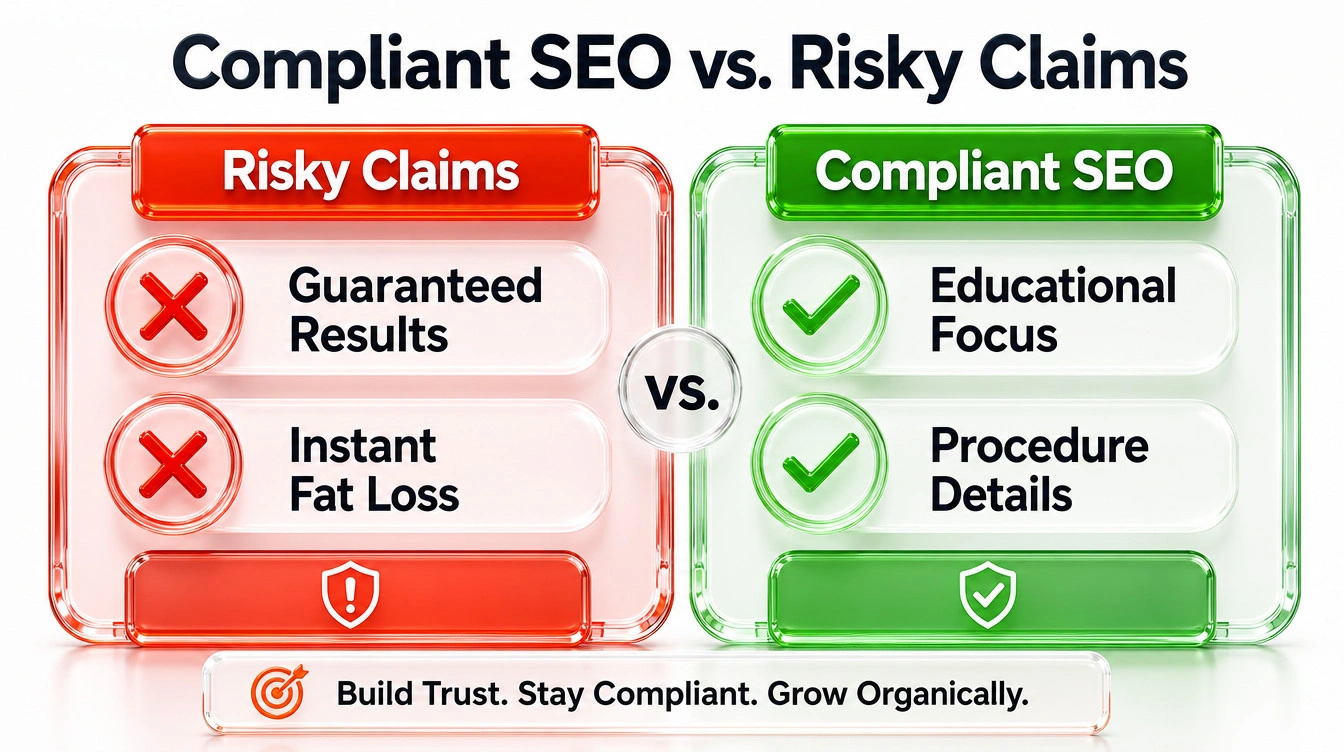
You can reference the official Ministry of Health Malaysia guidelines to verify exactly which clinical terms trigger regulatory warnings. Below is a comparison of risky copywriting versus compliant educational content.
| Uncompliant Marketing Claim | Compliant SEO-Optimised Education |
| “Guaranteed permanent acne scar removal in one session.” | “CO2 laser resurfacing targets acne scarring. Multiple sessions are usually required.” |
| “The best painless fat loss treatment in Penang.” | “Cryolipolysis is a non-invasive procedure designed to target stubborn fat cells.” |
| “Look 10 years younger instantly with our dermal fillers.” | “Soft tissue augmentation and volume restoration treatments are used to address signs of facial ageing.” |
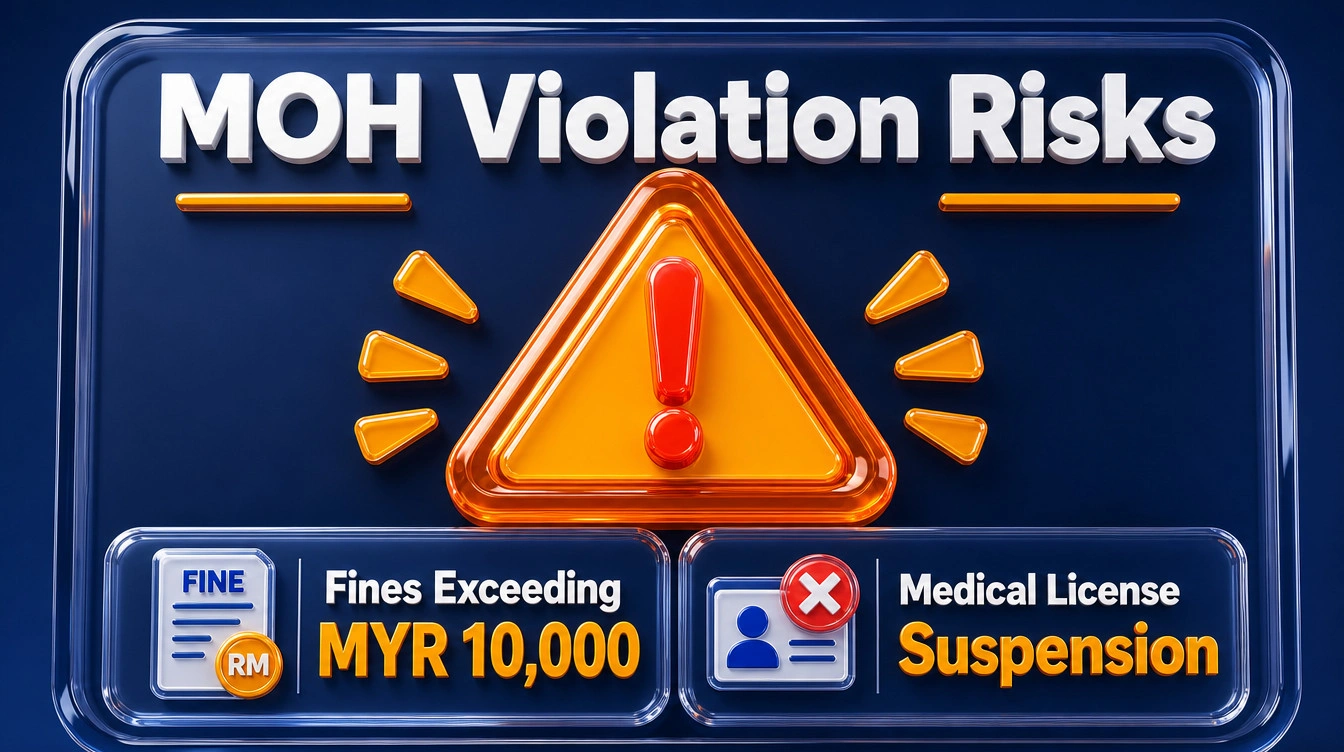
Q: What are the risks of violating MOH advertising rules?
A: Clinics risk fines exceeding MYR 10,000 or license suspension. Ulement strictly audits all website copy to ensure it remains educational and fully compliant with Malaysian medical advertising laws.
Patient Data Laws: Comparing PDPA and HIPAA
Data protection dictates the technical foundation of your medical marketing. Many international resources focus heavily on HIPAA compliant marketing. HIPAA is a United States regulatory standard. Clinics operating in George Town or Kuala Lumpur must adhere primarily to the Personal Data Protection Act (PDPA) alongside local medical council rules.
When prospective patients submit enquiry forms for aesthetic treatments, you collect highly sensitive personal data. Your website requires a robust technical SEO architecture to process this safely. This infrastructure includes implementing premium SSL certificates, encrypting database storage, and installing clear consent checkboxes on every contact form.
Does Your Clinic Need Local Hosting for Compliance?
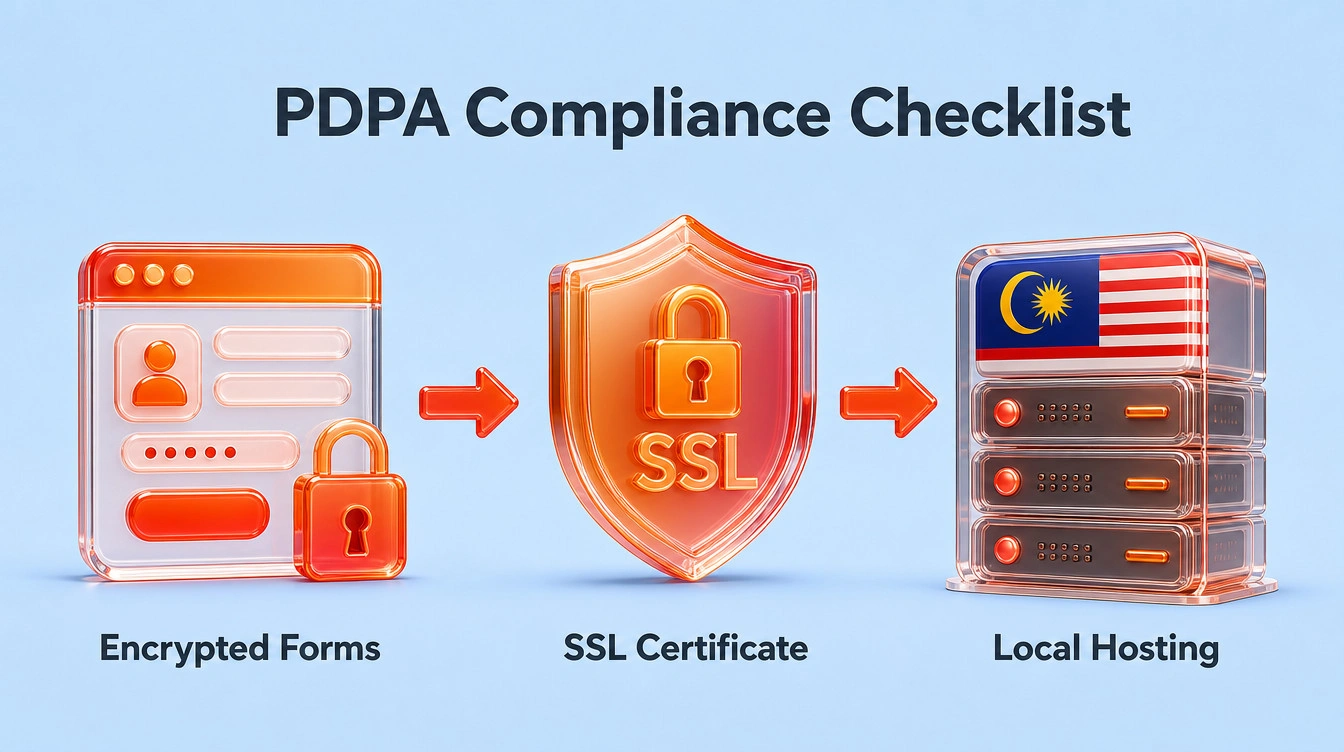
To ensure full compliance, aesthetic clinics must implement specific data protocols. Search engines evaluate website security as a core ranking factor, meaning poor data protection directly harms your search visibility.
- Host patient data on secure, locally compliant servers (such as Exabytes) to respect data sovereignty.
- Separate your marketing email lists completely from your clinical patient management software.
- Provide a clear privacy policy detailing how patient data is used, stored, and deleted.
- Require explicit opt-in consent before sending promotional materials via WhatsApp or email.
Q: Does my clinic need special hosting for SEO?
A: Yes. Encrypted local servers improve search rankings and ensure PDPA compliance. Ulement configures these secure hosting environments specifically to protect sensitive Malaysian patient data.
Structuring Compelling Copy with Medical Disclaimers
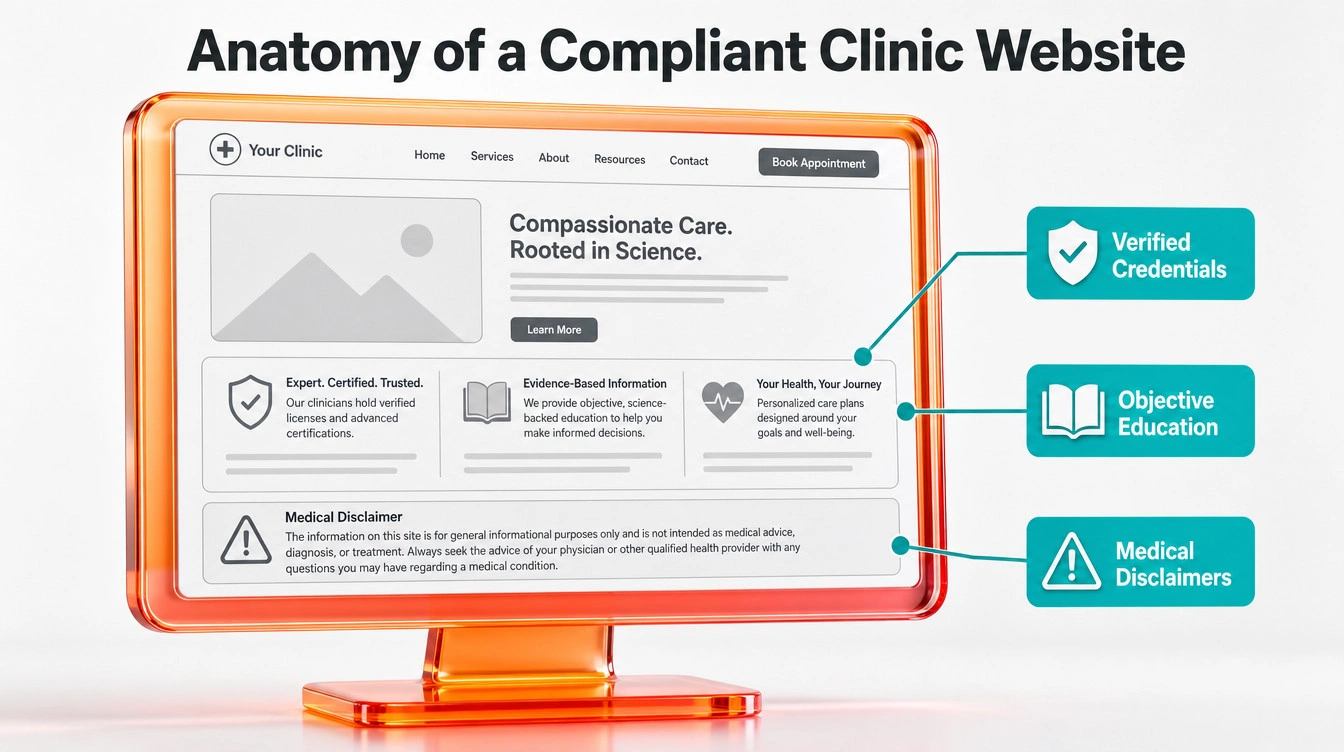
You do not need to break the law to convert website visitors into booked consultations. Effective medical copywriting focuses on the verified credentials of your medical team. Highlight your doctors’ specific qualifications, their verified SSM business registration details, and the premium quality of your clinical facilities.
Always include prominent medical disclaimers at the bottom of all treatment pages. State clearly that individual results vary and the published content serves informational purposes only. If you are upgrading an older site that relies heavily on risky before-and-after photos, consider a professional website redesign to restructure the layout. Authentic, legally sound content consistently outperforms exaggerated claims in long-term search performance.
Managing Patient Reviews Legally
As discussed in our Healthcare SEO Guide for Dental & Medical Aesthetics, a comprehensive digital strategy requires managing your online reputation actively. However, in Malaysia, you must ensure that patient testimonials do not cross the line into illegal medical endorsements. Encourage patients to review your clinic’s customer service, facility cleanliness, and staff professionalism rather than specific, guaranteed clinical outcomes.
Q: Can we use before-and-after patient photos on our website?
A: This is incorrect and poses a severe legal risk. Under MMC guidelines, publishing before-and-after photos in public medical advertising is strictly prohibited, even if you have patient consent and disclaimers. You must change this answer to state that they are entirely banned from public websites and can only be shown to patients privately during an in-clinic consultation.
Frequently Asked Questions
Secure Your Clinic’s Digital Presence Today
Are you worried your clinic’s website might be violating MOH guidelines or losing potential patients due to outdated technical security?
Stop risking your medical license with poor marketing advice. Contact Ulement today for comprehensive site audit and analysis to secure your healthcare SEO strategy.