It is the first question every client asks, and the one that causes the most confusion: “How long will it take to build my website?” Vague answers like “it depends” are frustrating and unhelpful. A professional web design process is not a mystery; it is a structured, predictable journey with clear phases and milestones.
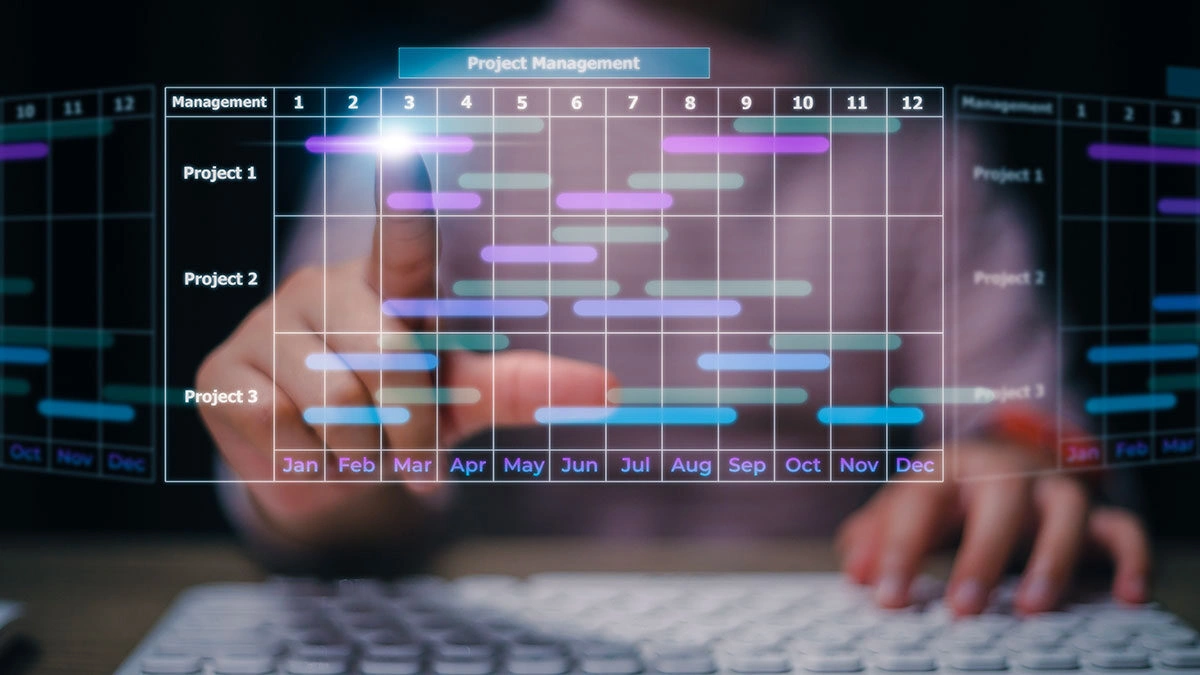
TL;DR: Web design timeline at a glance
Typical total duration by site type
- Single landing page: 2 – 3 weeks
- Fast and cheap website: 1 -2 weeks
- Small business site (5–10 pages): 2 – 8 weeks
- Content-heavy / blog site: 6 – 10 weeks
- eCommerce site: 10 – 16+ weeks
- SaaS/complex site: 12 – 24+ weeks
- Website redesign and migration: Add 2 – 5 weeks for content and SEO
- Multilingual site: Add 2 – 4+ weeks for translation and technical setup
Phase overview and deliverables
The process is broken down into distinct phases, from Discovery & Strategy at the beginning, through Design and Development, to Launch and Post-Launch Optimisation.
Critical path items that drive the schedule
The two factors that most often control the timeline are content readiness (having your text and images ready) and the client approval cycle (how quickly you provide feedback).
What is a web design timeline?
A web design timeline is a detailed, sequential plan that outlines every phase, task, deliverable, and milestone of a web design project from start to finish. It is the single source of truth for the project’s schedule.
- Timeline = actual schedule, including phases and deadlines
- Roadmap = big-picture plan and milestones
- Schedule = individual task assignments and buffers
It matters because clarity prevents delays, missed goals, and budget overruns.
Standard web design timeline by phase
1) Project kickoff and discovery (1 – 3 weeks)
This is the foundational strategy phase. We hold kickoff meetings to define the project’s goals, technical requirements, and the key metrics we will use to measure success.
2) Information architecture and content strategy (1 – 3 weeks)
Here, we create the blueprint for your website. This involves developing the sitemap (a list of all pages) and planning the content structure to ensure the site is logical and easy for users to navigate.
3) UX research and wireframes (1 – 2 weeks)
We create low-fidelity wireframes, which are simple layouts of your key pages. This allows us to focus on the user experience and page structure without the distraction of colours or images.
4) UI design and design system (2 – 4 weeks)
This is where the visual identity comes to life. We create high-fidelity, full-colour design compositions (comps) that show exactly how the website will look. We also establish a design system of reusable components.
5) Content production and SEO (2 – 6 weeks, runs in parallel)
While the design is being created, the content production begins. This includes copywriting for all pages, sourcing images and media, and performing keyword mapping for on-page SEO.
6. Development and CMS build (2 – 8 weeks)
Our developers take the approved designs and turn them into a fully functional, high-performance WordPress website. This is typically the longest phase of the project.
7. QA, accessibility, and performance (1 – 2 weeks)
We conduct rigorous Quality Assurance (QA) testing. This involves testing the site on different browsers and devices, checking for accessibility (WCAG) issues, and optimising for Core Web Vitals.
8. Launch prep and go-live (3 – 7 days)
In the final week, we prepare for launch. This includes setting up 301 redirects from the old site (if any), configuring analytics, and managing the technical process of going live.
9. Post-launch stabilisation and optimisation (2 – 4 weeks)
After launch, we enter a support phase to fix any minor bugs that may appear. This is also when we begin monitoring performance and planning for future optimisation.
Sample web design timelines by project type
- Landing page: Week 1 (kickoff, brief); Week 2 (design / proto); Week 3 (content / dev / launch).
- Fast and cheap webiste: Week 1 – 2 (kickoff & content replacement).
- Small business site: Weeks 1 – 2 (discovery, IA, content); Weeks 3 – 4 (wireframes, visual design); Weeks 5 – 7 (content, dev, QA); Week 8 (launch)
- Content/blog site: 6 – 10 weeks, extra time for content / SEO.
- eCommerce: 10 – 16+ weeks, more development / integration / testing.
- SaaS/complex: 12 – 24+ weeks; concurrency, APIs, deep QA.
- Redesign/migration: Add 1–3 weeks for legacy SEO / content steps.
- Multilingual Website (add 2 – 4+ weeks to any project): Adding multiple languages introduces significant new phases to a project. This additional time is required for translation and content localisation, technical implementation of a multilingual system, and a full quality assurance (QA) cycle for each language to test layouts, functionality, and user experience.
Factors that affect your web design timeline
- Scope / features: More pages/functions = longer build.
- Number of Languages: Each new language added to a website increases the project’s scope, requiring additional time for content translation, technical setup, and a separate round of testing.
- Content readiness: Delays happen if content isn’t finalized early.
- Team and tools: In-house vs freelancer vs agency vs DIY builders.
- Compliance / revisions: WCAG, legal, policy changes affect timeframes.
- Budget and resources: Tighter budgets mean smaller teams, longer delivery.
A Warning: Understanding the “Fast & Cheap” Website Offer
As you search for a web agency in Malaysia, you will see many offers for websites delivered at a very low price. It is important to understand how this is achieved. Most of these services are based on pre-made templates from a large marketplace, where the agency’s work is limited to simply replacing the demo text and images with your content. This process involves very little real design or development, which is why it is fast and cheap and it can be deliver in 1 – 2 weeks.
While this may be profitable for the agency, it is often a poor long-term investment for you, the business owner, for two key reasons:
- The templates often have poor performance. They are frequently bloated with unnecessary code to accommodate hundreds of different potential uses, which can result in a slow website that frustrates users and fails Google’s Core Web Vitals.
- They lack a proper SEO foundation. A generic template is not built with your specific business goals or keywords in mind. This often leads to poor site architecture and a weak technical SEO setup, making it very difficult for your site to rank effectively in search results.
- The hidden costs come later. After launching your new, invisible website, the agency will often try to ongoing upsell SEO services to fix the visibility problems that they created. The cost will end up way more expensive than having a proper build website from the start.
A professional partner understands that on-page and technical SEO is not suppose to be an add-on; it needs to be the foundation of any serious web development project, integrated from day one.
FAQ
Free Downloads & Resources
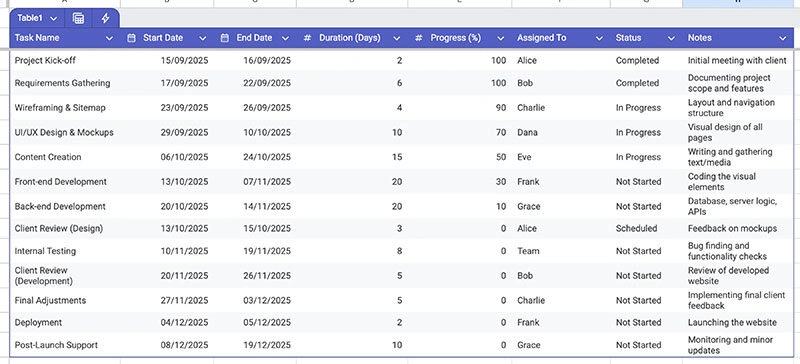
Gantt Chart Timeline Template (Google Sheets)
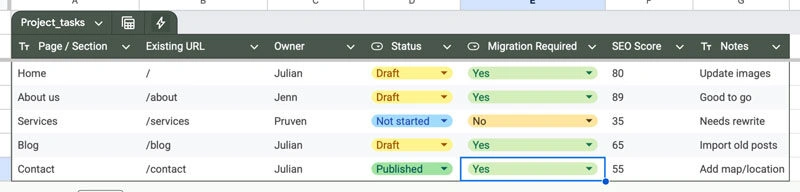
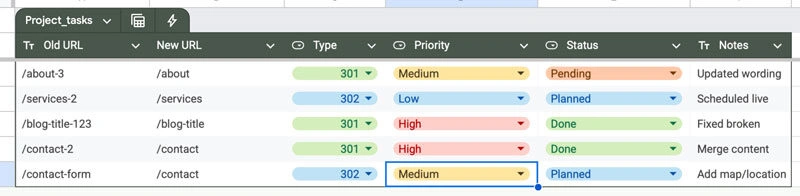
Content Inventory & Migration Sheet
Conclusion and Next Steps
A successful web design project is built on a clear, transparent, and realistic timeline. By understanding the key phases and the factors that influence the schedule, you can enter into a new project as an informed and empowered partner, ensuring a smooth process and a successful outcome.
Ready to get a clear, detailed timeline for your specific project?