You already know your clinic provides excellent care. Your patients know it. Your team knows it. But does Google?
When someone nearby searches for a doctor, the wrong result could actually cause harm. That’s why Google doesn’t simply show the closest clinic, it shows the one it trusts most. Search algorithms apply an especially strict filter to healthcare websites, something called YMYL, which stands for “Your Money or Your Life.” If your clinic’s website can’t clearly demonstrate its medical authority, you’ll find it tough to outrank local competitors, even if you’ve mentioned your city dozens of times.
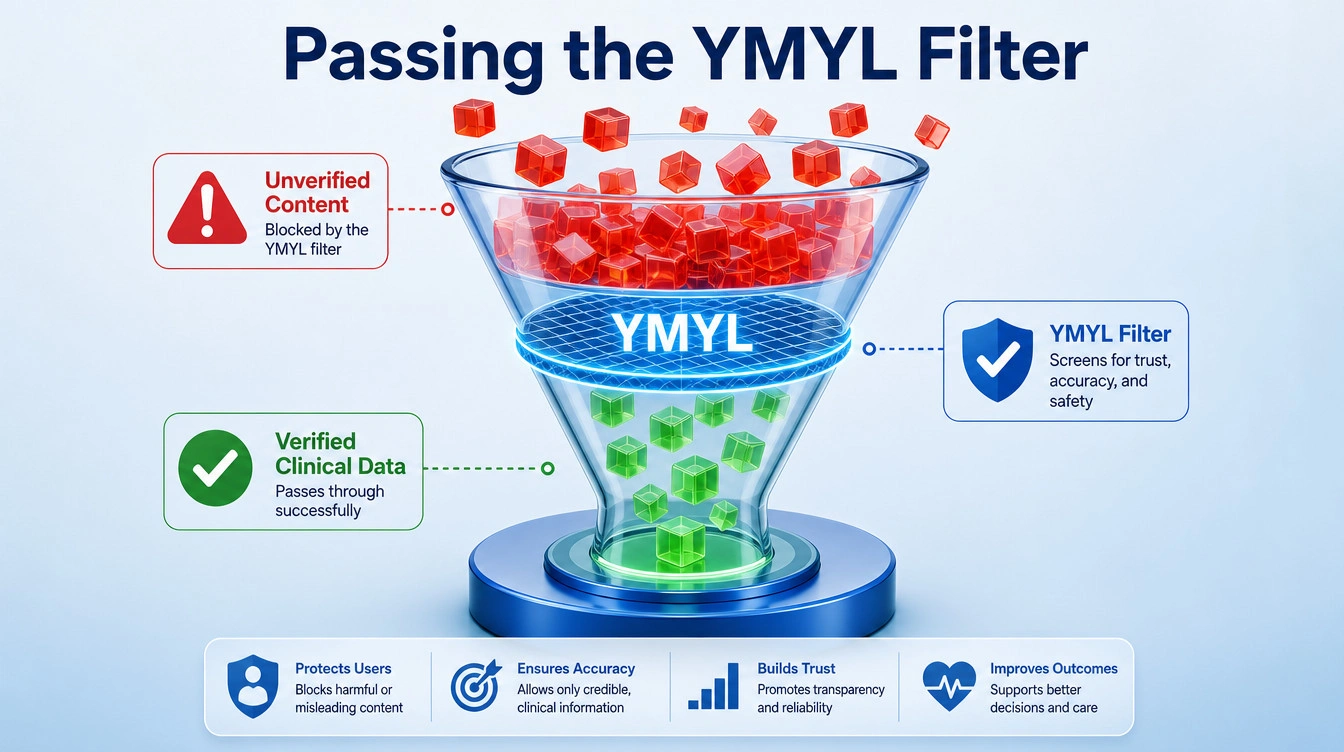
Overlay Text: “Passing the YMYL Filter”
As we covered in our Healthcare SEO Guide for Dental & Medical Aesthetics, success online means going beyond standard digital marketing. You need to build real, verifiable trust in the digital space.
Here’s exactly how doctors, dental surgeons, and aesthetic practitioners can meet Google’s demanding standards, prove their expertise, and win at local search to bring in more patients.
Key Takeaways
- Google has the YMYL filter for medical content. This means Google keeps this kind of information at a high standard. The reason for this is that it can affect people and their lives in a big way. If health advice is not checked or true, Google will move it down in the search results right away.
- E-E-A-T is Non-Negotiable. If you want your healthcare content to show up in search results, you need to show real Experience, Expertise, Authoritativeness, and Trustworthiness.
- Verifiable Bios: Every piece of medical content should connect to a real and approved doctor or health worker. There should be a clear and full author bio for each one.
- Clinical Citations: Add links to trusted medical journals, studies, and government health groups. This will help show that your content is backed by science. Using strong citations makes your writing more believable. It also helps build trust with people who read your work.
- Registry Linking: Help you connect your doctors to the Google Knowledge Graph. You can do this when you add their real links to the Malaysian Medical Council (MMC) registration or to their hospital connections.
What Exactly Are YMYL and E-E-A-T?
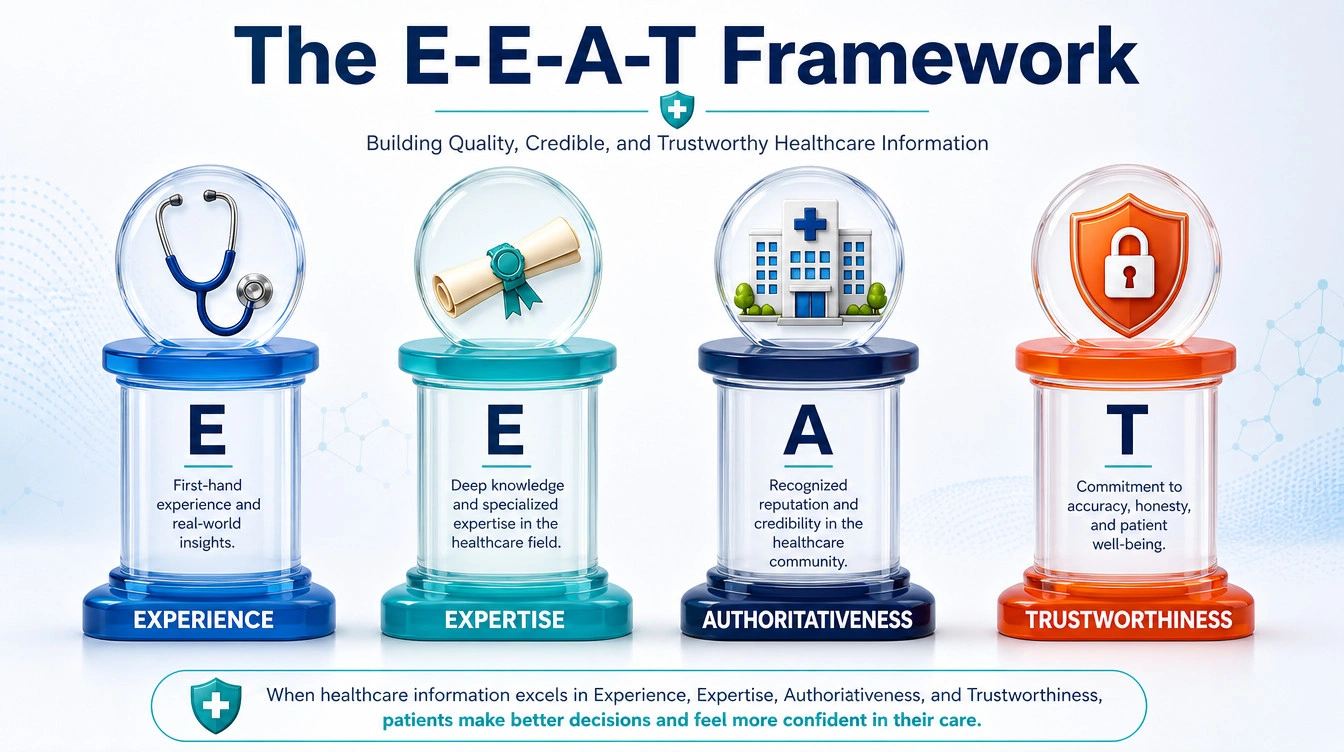
YMYL stands for “Your Money or Your Life.” Google uses this term for web pages that can change how happy, healthy, or safe you feel. These pages can also have an effect on your financial stability. If you see any page on a clinic, dental surgery, or medical aesthetics website, that page will be in this YMYL group.
To keep YMYL pages safe, Google uses a system. The name of this system is E-E-A-T:
- Experience: Does the writer have real practice with this topic? For example, did a dental surgeon write about root canals?
- Expertise: Does the writer have the right skills and credentials?
- Authoritativeness: Are the person or the clinic known in their field as someone people trust for help with this subject?
- Trustworthiness: Is the website safe? Does it give the facts that are true, and is it clear about who wrote it? This is the most important one.
In healthcare marketing, you can’t just say you are trustworthy. You have to show proof. You need clear and easy-to-check digital records in healthcare.
Step 1: Crafting Author Bios That Prove Expertise
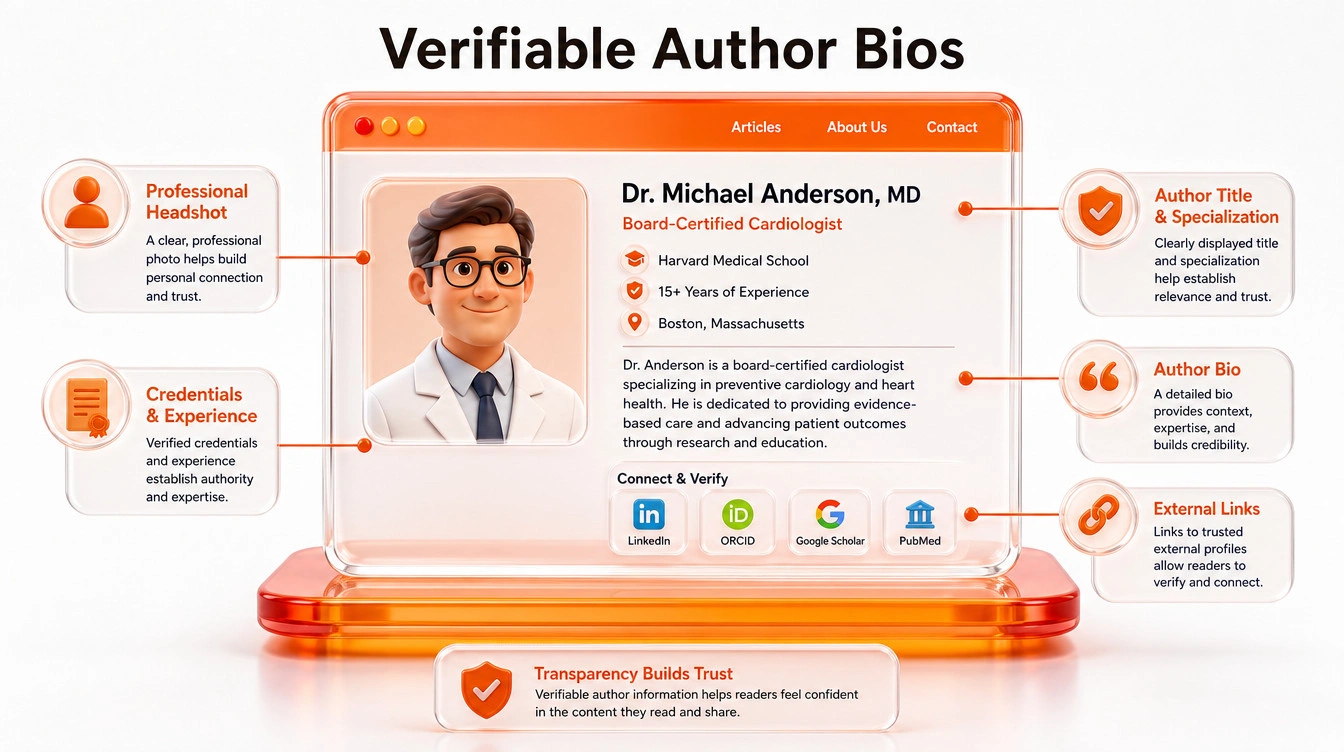
One big mistake that a lot of clinics make is putting out their content with simple names like “Admin” or “Clinic Team.” The algorithms do not know who “Admin” is. So, this makes the people feel no trust in the content.
Each page that talks about medical services needs to be linked to a skilled expert. The same is true for any article that helps people learn about health. Connecting to the expert is key.
How to structure a high-trust author bio:
- Full Name and Titles: Put the doctor’s full name and all the titles they have. For example, write Dr. Jane Doe, BDS, MSc Orthodontics.
- Real-World Experience: Share how many years the doctor has worked. Say what they do and their main area in practice.
- Headshot: Add a clear, good-quality photo that looks professional.
- Dedicated Profile Page: Add a link to the doctor’s full profile page on your website at the end of the bio. People can read more there about where they went to school, awards they have, and their certificates.
Step 2: Citing Medical Journals and Scholarly Articles
Being open about where you get your information is a big part of building digital clinical trust. For example, if your dental clinic puts out a page about how safe teeth whitening is, you should show proof. In the same way, if your GP clinic puts out something about how to manage blood pressure, you should support your statements. Always give proof for what you say.
Search engines look at the websites your site connects to. If you link to trusted and well-known websites, it shows that your content has been checked well. This means your information is more likely to be trusted, and it is based on good research.
- Use External Citations: If you talk about health or medicine, make sure to link to a trusted site. You can use PubMed, World Health Organization (WHO), or top medical schools to add your citations.
- Avoid Unsupported Claims: Do not use words like “guaranteed cure” or “100% safe.” This can get a message blocked as spam. Instead, speak about what you do by sharing facts, likely results, and give clear medical details.
Step 3: Entity Verification and National Registries
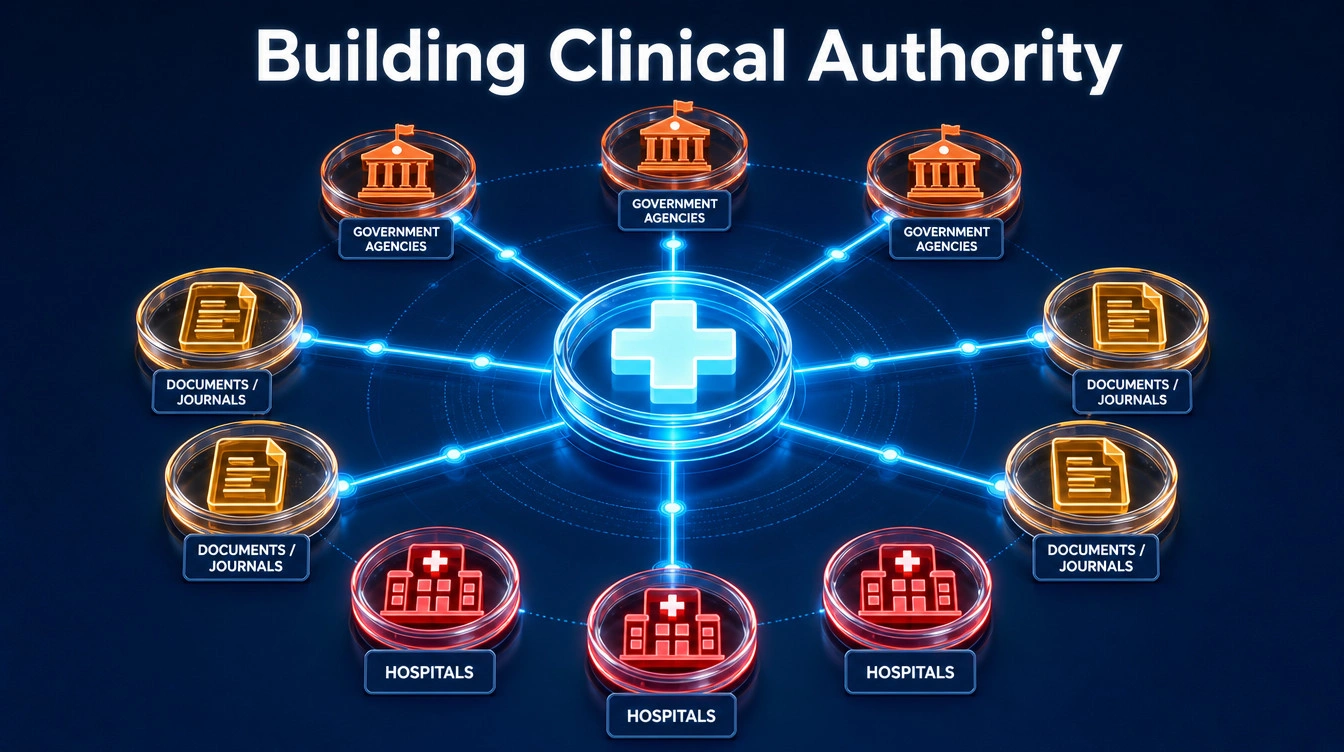
Artificial intelligence and today’s search algorithms use “entities.” These mean trusted digital people and ideas. To show real authoritativeness, you need to link your website’s doctors to well-known databases outside your website.
The MMC Connection: In Malaysia, doctors must sign up with the Malaysian Medical Council (MMC) or the Malaysian Dental Council (MDC). This means they can work as a doctor in the country.
- List the MMC registration numbers of your team members on their profile pages.
- If you can, add a link to show the details are right on the national registry.
- Give a link to their profiles on any hospital boards or professional groups, for example, the Malaysian Medical Association.
When you gather all the checked info, you make a Knowledge Graph for your doctors. The search engine is not just finding a name. It can see there is a real doctor who is registered and has good training. This is a big part of doing well in YMYL.
Frequently Asked Questions
Are You Losing Patients to Less Qualified Competitors?
If your clinic does well with medical work but people can not find it on the internet, your website might not meet Google’s YMYL rules. It is important to know where your trust signals are weak online.
Stop losing patients who want your help. Ulement builds strong healthcare SEO that tells search algorithms about your real skills in healthcare.
Book Your Comprehensive Site Audit & Analysis with Ulement Today and get a data-driven roadmap to secure your digital reputation and dominate local search.