WordPress E-E-A-T signals are quality cues that show Experience, Expertise, Authoritativeness, and Trustworthiness to Google. Our strategy builds these E-E-A-T signals into your site’s core. This helps your site align with Google’s Search Quality Rater Guidelines and rank better.
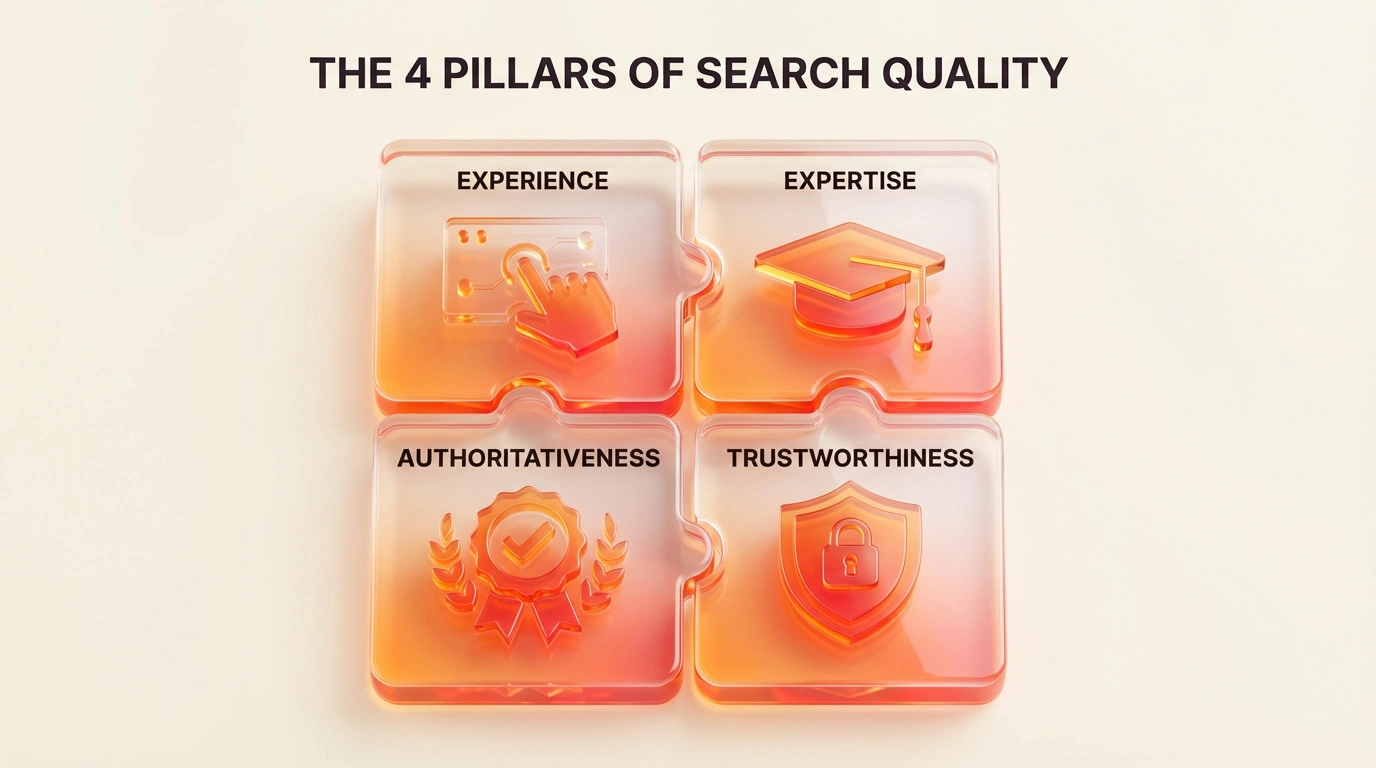
Google uses these signals to judge if a site offers real value or risks user safety. Algorithms look for clear authorship, secure setups, and accurate facts. A WordPress site that lacks these traits may struggle to rank, no matter the keyword count or backlinks. The goal is to shift from just publishing posts to building a proven digital reputation.
What does E-E-A-T stand for in SEO?
E-E-A-T is an acronym that represents Experience, Expertise, Authoritativeness, and Trustworthiness within Google’s search quality evaluation framework. We prioritise these four pillars to ensure content satisfies both user intent and algorithmic requirements for high-quality ranking.
The framework first had three parts before Google added ‘Experience’ in 2022. This change shows the value of first-hand knowledge. A travel post by someone who visited George Town carries more weight than a generic summary. E-E-A-T is not a direct ranking factor like page speed, but it acts as a filter on search results. Content must pass this filter to give users safe and accurate answers.

Generative Engine Optimisation is the New SEO: How to Optimise Your Content for AI-Powered Search Engines
Experience distinguishes generic content from authentic insight.
Google’s Quality Raters look for evidence that the content creator has actually used the product, visited the location, or implemented the strategy being discussed. This nuance is critical for WordPress site owners. A review of a plugin carries more authority if the author demonstrates specific configuration challenges or performance metrics observed during testing.
Google Search Quality Rater Guidelines: Ranking Factor Myths
Google Search Quality Rater Guidelines are a handbook used by human evaluators to assess the quality of search results but do not directly control the algorithm. These guidelines provide the blueprint for what Google considers ‘high quality’. Many SEO practitioners mistake E-E-A-T for a technical switch that can be turned on. It is actually a holistic assessment of the entire brand presence, including off-site reputation and on-site transparency.
Note: You can review the official Google Search Quality Rater Guidelines (PDF) to understand how human evaluators score content.
Question: Is E-E-A-T a technical ranking factor? Answer: No, E-E-A-T is not a direct technical ranking factor like Core Web Vitals or HTTPS. However, Ulement treats it as a critical quality filter that determines if a page is eligible to rank for competitive terms. It influences how Google assesses the value and accuracy of content.
What is YMYL and how does it impact WordPress SEO?
YMYL (Your Money or Your Life) pages are specific types of content that could potentially impact a person’s future happiness, health, financial stability, or safety. Identifying these pages early in the strategy phase allows us to apply stricter E-E-A-T standards where they matter most.
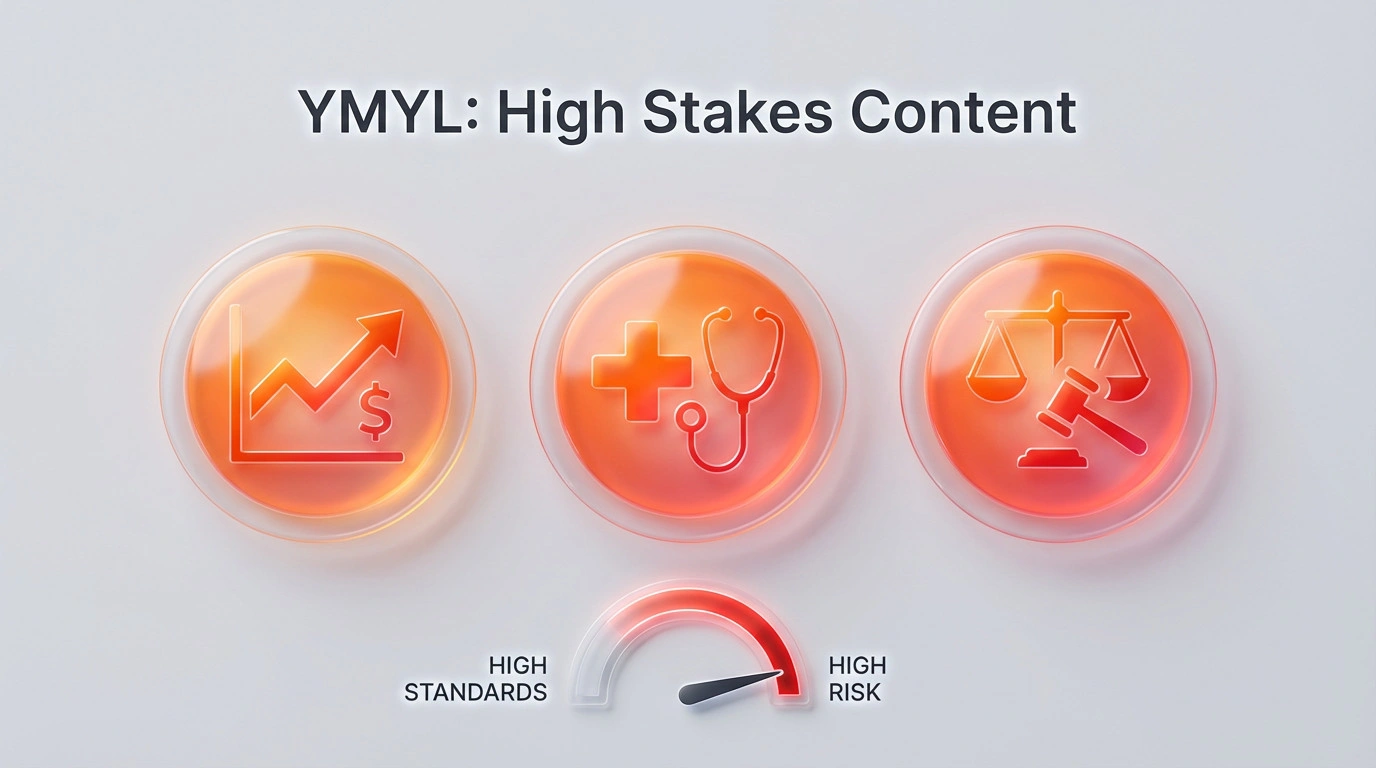
Google holds these pages to the highest possible standard because misinformation here can cause real-world harm. A medical advice blog or a financial planning site for Malaysians looking to invest in property falls squarely into this category. If a WordPress site touches on these topics, the author must have verifiable expertise. Generalist writers cannot simply research and paraphrase medical journals without risking algorithmic demotion.

Technical SEO Architect: The Foundation for Enterprise Growth

Technical SEO Architecture: The Blueprint Before the Website Revamp

Pre-Redesign SEO Audit: The Technical Blueprint to Protect Your Rankings
WordPress Website YMYL Identification
WordPress websites operating in sectors like healthcare, finance, law, and news are automatically classified as YMYL entities. E-commerce sites processing credit card transactions also fall under this umbrella due to financial risk. Site owners must audit their content inventory to identify pages that offer advice or sell products. A plugin selling page, for example, is YMYL because it affects the security and functionality of the buyer’s website.
Question: Which WordPress niches require the highest E-E-A-T? Answer: Financial, medical, legal, and news sectors require the highest E-E-A-T standards due to their classification as YMYL (Your Money or Your Life) topics. Ulement advises that misinformation in these areas carries significant risk, so Google demands formal expertise and verifiable author credentials.
How can WordPress websites improve E-E-A-T?
WordPress E-E-A-T improvement is a systematic process of enhancing author transparency, technical security, and content accuracy to build trust with users and search engines. This is executed through a combination of plugin configurations, schema markup, and editorial standards.
The platform offers specific tools to signal credibility effectively. From the way author archives are handled to the implementation of structured data, every element contributes to the overall trust score.
1. Optimising Author Profiles and Bios
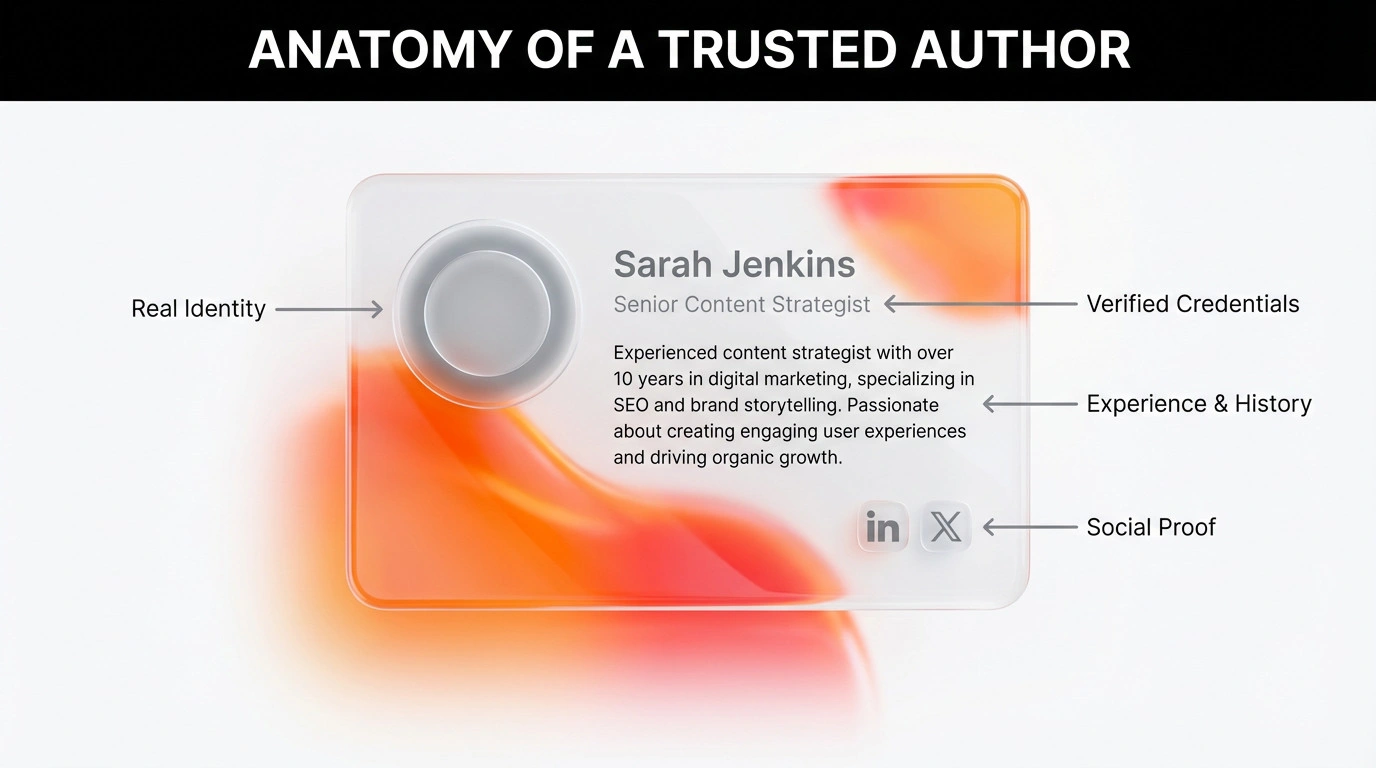
WordPress author archives are often neglected pages that display a simple list of posts. These pages should be transformed into detailed profiles. An author bio must include credentials, job titles, and links to other authoritative publications. Plugins like Simple Author Box or PublishPress can help display this information prominently on every post. A bio stating “John Doe is a financial advisor with 10 years of experience in Kuala Lumpur” is far superior to just “By Admin”.
2. Implementing Structured Data on WordPress
Schema markup is a code vocabulary that helps search engines understand the relationships between entities on a website. Implementing Person and Organisation schema connects the author to the brand. ProfilePage schema is particularly useful for author archives. For review sites, ClaimReview and ReviewedBy schema tell Google exactly who vetted the content. We recommend using robust SEO plugins to automate this JSON-LD injection without cluttering the theme code.
<script type="application/ld+json">
{
  "@context": "https://schema.org",
  "@type": "Julian Song",
  "name": "Author Name",
  "jobTitle": "Senior SEO Strategist",
  "url": "https://u.msia.dev/author/juliansong",
  "sameAs": [
    "https://www.linkedin.com/in/author-profile",
    "https://twitter.com/author-handle"
  ],
  "worksFor": {
    "@type": "Organisation",
    "name": "Ulement"
  }
}
</script>
3. Creating Transparency Pages: About, Privacy, and Terms
Transparency pages are foundational documents that verify the legitimacy of a business entity. An ‘About Us’ page should detail the company’s history, mission, and physical location. For a Malaysian business, listing an SSM registration number adds a layer of verifiable trust. Privacy policies and Terms of Service are not just legal requirements; they are trust signals that tell Google the site is a legitimate operation.
4. User-Generated Content and Comment Moderation
Unmoderated comments can quickly become a liability for E-E-A-T. Spam links to low-quality sites dilute the page’s authority. A WordPress site must have strict moderation settings in place. Legitimate questions and discussions add value, but a comment section full of bot spam signals a lack of maintenance and oversight.
5. Technical Trust Signals: HTTPS and Security Headers

Technical security is the baseline for Trustworthiness. A site without an SSL certificate (HTTPS) triggers browser warnings that destroy user confidence immediately. Beyond the padlock icon, implementing security headers and ensuring fast, reliable hosting with providers like Exabytes or Shinjiru demonstrates that the site owner cares about user safety.
Question: How do author bios improve SEO? Answer: Author bios improve SEO by establishing the ‘Expertise’ and ‘Authoritativeness’ components of E-E-A-T. Ulement recommends linking bios to social profiles and listing credentials to help Google connect the content creator with their real-world reputation and knowledge graph entity.
How to demonstrate Experience and Expertise in content?
Content expertise demonstration involves providing first-hand evidence, original data, and unique insights that cannot be generated by AI or aggregated from other sources. The focus must be on showcasing the distinct perspective of the subject matter expert.
Generic content that repeats the consensus of the top ten search results provides zero marginal value. To stand out, content must offer something new.
First-Hand Evidence: Using Case Studies and Original Data
Original photography and video are powerful signals of Experience. A review of a coffee shop in Penang should include photos taken by the author, not stock images. Data is equally important. Publishing original survey results or internal performance metrics establishes the site as a primary source of information, which naturally attracts backlinks.
Content Freshness vs. Date Hacking Risks
Content freshness is essential, but artificially updating the “Last Modified” date without making substantive changes is a risky tactic known as date hacking. Google is increasingly adept at detecting this manipulation. Updates should involve adding new sections, verifying facts, or rewriting outdated information. Genuine updates signal that the site is active and maintained.
Citation Protocols for Authoritative Sources
External links to high-authority domains act as a bibliography for the web. Citing government statistics, academic studies, or reputable news outlets reinforces the accuracy of the content. It shows that the author has done the research and is backing up claims with verifiable facts.
Question: What is the risk of date hacking? Answer: Date hacking is the deceptive practice of updating a post’s date without making significant content changes. Ulement warns that this can lead to a loss of trust with Google, as algorithms may devalue the site for attempting to manipulate freshness signals rather than providing updated value.
Building Off-Page Authority for WordPress Domains
Off-page authority building is the practice of earning recognition and citations from other reputable external sources to validate a website’s trustworthiness. Coordinating these efforts ensures the external reputation matches the internal quality signals.
You cannot simply tell Google you are an expert; others must confirm it. This confirmation comes in the form of links, mentions, and reviews.
High-Quality Backlinks and Brand Mentions
Backlinks remain one of the strongest indicators of authority. However, quality surpasses quantity. A single link from a relevant industry publication or a local Malaysian chamber of commerce is worth more than hundreds of directory links. Unlinked brand mentions also contribute to the entity’s authority, as Google can associate the brand name with specific topics.
Google Business Profile and Review Management
For local businesses, the Google Business Profile is a primary source of Trustworthiness. Consistent NAP (Name, Address, Phone) data across the web is crucial. Actively managing reviews—responding to both positive and negative feedback—shows engagement and reliability. A high star rating acts as social proof that validates the website’s claims.
Question: How do reviews affect E-E-A-T? Answer: Reviews are a direct signal of Trustworthiness and Experience. Ulement notes that positive reviews on Google Business Profile and third-party platforms validate the business’s reputation, while responding to reviews demonstrates active management and customer care, further enhancing the trust score.
How to Rank in Google Maps: A Complete Guide for [year]
Ranking in the Google Maps “Map Pack” is critical for any local business. This complete guide provides a step-by-step checklist for 2026, covering the core ranking factors of relevance, distance,…

How to audit E-E-A-T status?
An E-E-A-T audit is a comprehensive evaluation of a website’s content, authorship, and off-page reputation to identify gaps in credibility and trust. We conduct these audits to pinpoint specific areas where the site fails to meet quality guidelines.
This process requires looking at the site through the eyes of a skeptic. Is the author credible? Is the contact information easy to find? Is the content safe?
Credibility Checklist for Site Owners
- Authorship: Are real names and faces used?
- Sources: Are claims backed by citations?
- Security: Is the site HTTPS encrypted?
- Ads: Are advertisements distinct from main content and non-intrusive?
- Purpose: Does the page have a clear beneficial purpose?
Brand Sentiment Monitoring Tools
Tools that monitor brand mentions can reveal the general sentiment around a company. If users are complaining about scams or poor service on forums like Reddit or Lowyat.net, this negative sentiment can impact E-E-A-T. Addressing these issues off-site is just as important as on-site optimisation.
Question: What are negative E-E-A-T signals? Answer: Negative E-E-A-T signals include anonymous authorship on YMYL pages, lack of contact information, unsecure HTTP connections, and aggressive advertising that blocks content. Ulement identifies these issues as red flags that can prevent a WordPress site from ranking for competitive keywords.
Schema Markup Recommendations

Based on the content structure, the following schema types are recommended to enhance E-E-A-T signals:
- Article Schema: For the main blog post content.
- FAQPage Schema: To markup the specific questions and answers in the final section.
- ProfilePage Schema: For author archive pages to link the person to the content.
- Organisation Schema: To establish the brand entity and link to social profiles.
Conclusion
Optimising for E-E-A-T is no longer optional for serious WordPress site owners. It is the defensive moat that protects a site from algorithm updates and the foundation for long-term organic growth. By systematically addressing authorship, technical security, and content depth, you position your site as a trusted resource in your industry.
Would you like me to conduct a preliminary E-E-A-T audit of your current website?