Most Malaysian business owners treat a website setup fee as a one-time administrative expense. This assumption is completely wrong. Cheap web projects create compounding technical debt that quietly repels search engines and leaks revenue through unpatched security vulnerabilities.
Key Takeaways
- Commodity templates from ThemeForest or AI generators compromise search visibility and speed.
- Proper server management shields assets from critical zero-day threats like CVE-2026-42945.
- Website updates require structured data migration plans and pre-audits to safeguard current traffic.
- Total cost of ownership spans a three-year cycle including continuous technical optimisation.
Why Should You Stop Focusing on Website Costs and Look at Returns?
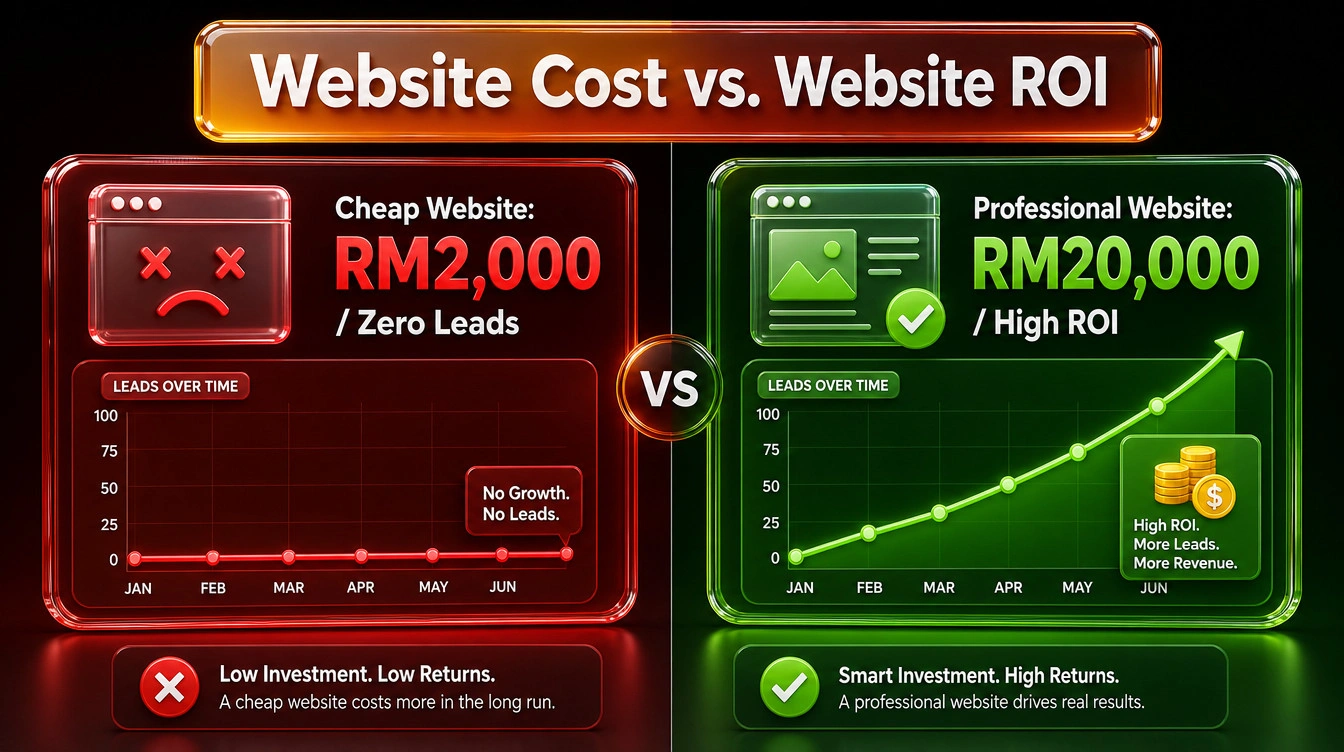
Focusing entirely on the initial build price guarantees you will miss the larger financial picture. A RM2,000 website that generates zero leads is an absolute loss. A RM20,000 website that drives RM10,000 in monthly revenue pays for itself in eight weeks. The primary function of business web architecture is customer acquisition, meaning every single ringgit spent should map directly to measurable commercial outcomes. If your agency treats your site as a static brochure rather than a sales asset, you are buying a liability.
Q: Why do cheap websites fail to generate revenue?
A: They rely on bloated code and shared hosting, leading to slow load times. Google actively penalises slow sites, meaning your target market will never find you.
How Much Does It Cost to Set Up a Website in Malaysia? (2026 Pricing at a Glance)
Basic Brochure Website Cost in Malaysia (RM800 to RM5,000)
A standard 5-page setup suitable for newly registered SSM entities. These typically use pre-built templates. They offer basic contact information but minimal search engine visibility.
Professional Business Website Cost in Malaysia (RM5,000 to RM20,000)
These platforms feature custom technical frameworks, proper on-page semantic structures, and targeted lead generation funnels. Businesses investing here expect to rank organically and convert visitors. Look for partners offering structured custom web development to ensure long-term scalability.
E-Commerce Website Setup Cost in Malaysia (RM8,000 to RM50,000+)
Digital storefronts require payment gateway integration (like iPay88 or Stripe), inventory management, and robust security protocols. Custom configurations for variable products and shipping rules increase the initial investment.
Custom Enterprise Website Cost in Malaysia (RM50,000 to RM500,000+)
Built for multinational corporations, high-traffic portals, or specialised web applications. These demand intensive database engineering, strict compliance audits, and custom API connections.
Q: Do these prices include domain and hosting?
A: Usually, agencies bundle the first year of domain and hosting into the initial quote. Subsequent years require separate renewals.
What Are the Core Building Blocks of a Website and Their Costs?
Domain Name Registration Costs in Malaysia
A .com.myor .mydomain indicates local authority and costs approximately RM80 to RM120 annually. Standard .comdomains range from RM50 to RM80.
Web Hosting Costs in Malaysia
Hosting dictates your site speed and reliability. Never compromise here.
| Hosting Type | Typical Monthly Cost (RM) | Best Suited For | Performance Level |
| Shared Hosting | RM15 to RM50 | Low-traffic local sites, new startups | Basic |
| Virtual Private Server (VPS) | RM80 to RM300 | Growing businesses, basic E-commerce | High |
| Dedicated Server | RM500 to RM2,000+ | Large enterprises, high-security data | Maximum |
| Cloud Hosting | RM100 to RM800+ | High-traffic spikes, SaaS platforms | Scalable |
SSL Certificate and Website Security Costs
Basic Let’s Encrypt SSL certificates are free. Organisation Validation (OV) or Extended Validation (EV) certificates, essential for enterprise trust, cost RM300 to RM1,500 annually.
Website Design and Development Fees
This covers the actual engineering hours. Front-end formatting, backend database setup, and user interface testing consume the bulk of any legitimate digital budget.
Content Writing and Professional Copywriting Costs
Search engines rank entities and topical authority, not just keywords.Professional copywriters charging RM150 to RM500 per page ensure your messaging aligns with high-intent search queries.
Initial SEO Setup Costs
Proper technical foundations, including schema markup, URL structuring, and indexing protocols, typically add RM1,500 to RM10,000 to the initial build. Understanding how technical SEO architecture works is critical for accurate indexing.
Q: Can I use free hosting to save money?
A: Free hosting forces ads onto your site, limits bandwidth, and harms credibility. Search engines heavily penalise free hosting environments.
Which Key Factors Determine Your Website Setup Cost in Malaysia?
Factor 1: Website Type and Intended Business Function
An informational blog requires significantly less backend logic than a dynamic membership portal processing monthly subscription payments.
Factor 2: Custom Design vs Template-Based Design
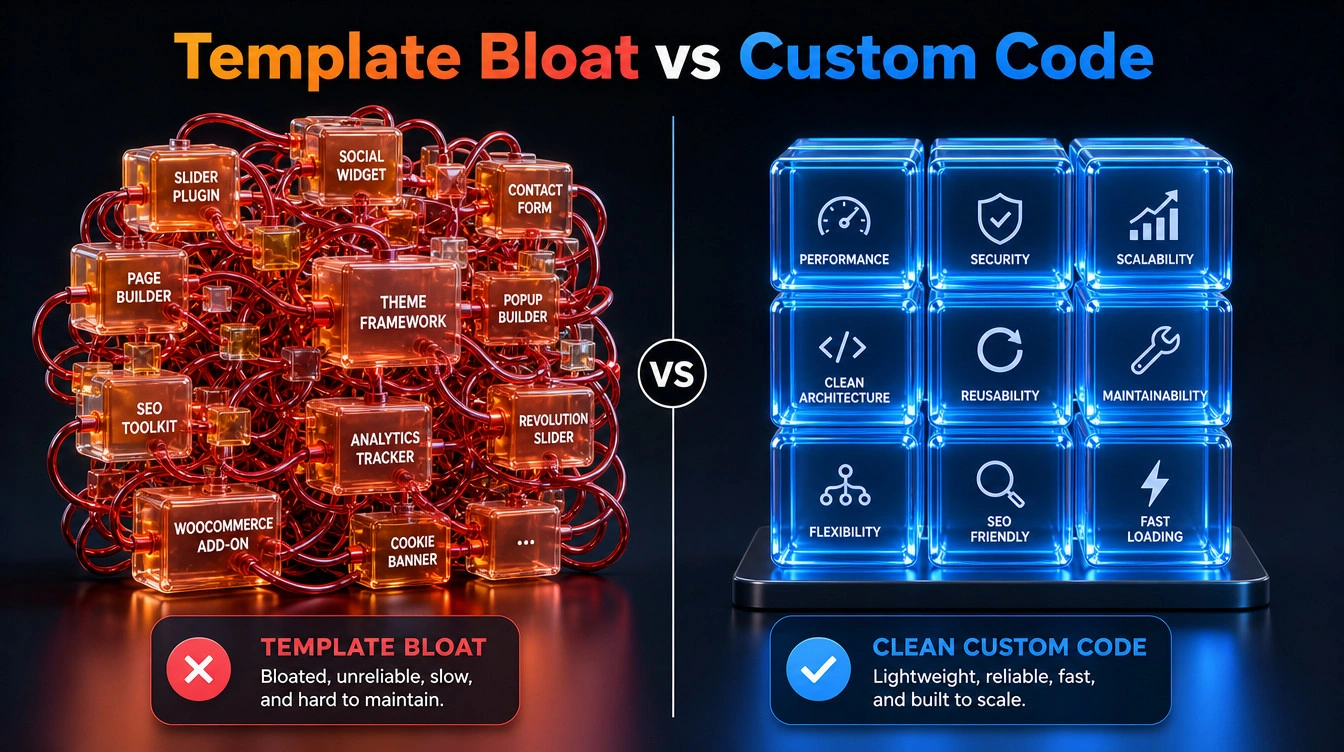
Most commodity agencies cut corners by purchasing commercial templates from platforms like ThemeForest for around USD 59, or relying on generic AI layout generators. While these template packages seem highly cost-effective during the initial pitch, they are built as multi-purpose software kits designed to fit thousands of different business types simultaneously.
To achieve this mass-market flexibility, the developers pack the themes with massive libraries of unused JavaScript, overlapping CSS files, and redundant layout options. This structural bloat remains entirely invisible to the human eye, but it severely degrades your server performance. Search engine crawlers and modern AI search models find it highly difficult to parse files wrapped in thousands of lines of junk code. Investing upfront in a clean, custom build ensures that your asset is light, highly scannable, and structurally primed to capture organic market share.
Q: Why do templates that cost USD 59 end up costing more later?
A: They require heavy plugin modifications to fit your specific workflow. This causes database bloat, performance drops, and constant developer intervention to fix broken features during core software updates.
Factor 3: Features, Integrations, and Custom Functionality
Connecting a CRM like Salesforce or integrating a local logistics provider API requires specialised engineering hours.
Factor 4: Content Scope and Volume
A 50-page corporate directory demands significantly more structural planning and content population than a single-page landing site.
Factor 5: Platform and Technology Stack Choice
Building on a closed-source platform locks you into rigid subscription tiers, whereas open-source environments require higher upfront developer fees but lower long-term licensing costs.
Factor 6: Who You Hire (Agency, Freelancer, or DIY Builder)
Freelancers offer lower rates but limited bandwidth. Agencies provide full-stack teams (developers, designers, copywriters) ensuring continuity.
Q: Are AI-generated website templates reliable.
A: AI templates create visually acceptable but technically hollow sites. Some lack semantic HTML and struggle to rank for competitive search terms.
Freelancer vs Web Design Agency vs DIY Website Builder: Which Delivers the Best Value for Malaysian Businesses?
Hiring a Malaysian Freelance Web Designer
Freelancers charge between RM1,000 and RM5,000. They work well for straightforward projects but often lack post-launch support or advanced security expertise.
Working with a Malaysian Web Design Agency
Agencies charge RM5,000 upwards. They deliver comprehensive strategy, technical accountability, and scalability. This is the optimal route for businesses targeting aggressive market growth.
DIY Website Builders: Wix, Squarespace, Shopify, and WordPress.com
DIY builders cost RM100 to RM300 monthly. They remove technical barriers for beginners but severely restrict server-level optimisations necessary for dominating local search results.
Q: What happens if a freelancer abandons my project?
A: You risk losing root access and source files. Always secure legal ownership of your domain and hosting accounts before project commencement.
What Is the True 3-Year Total Cost of Owning a Website?
Year 1: Setup, Launch, and Day-One Security Implementation
Your heaviest financial outlay occurs here, covering the core build, initial copywriting, and technical baseline setups. Crucially, proactive security and server management must be active the exact moment your site launches. Automated bots scan new domain registrations immediately for open ports and default configurations; treating security as a delayed, year-two expense guarantees an eventual breach.
Year 2 to 3: Continuous Vulnerability Patching and Performance Investment
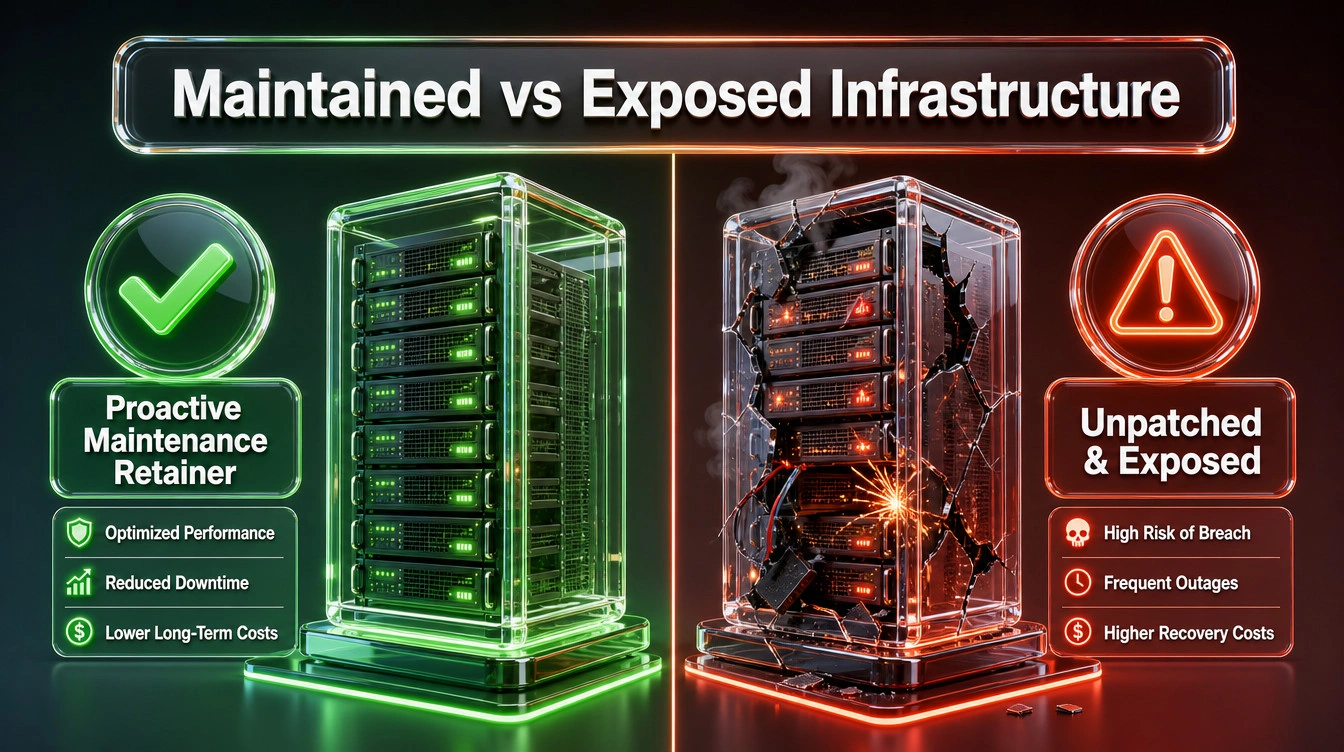
A website is a living application. Routine website maintenance like software updates, database cleanups, and patch deployments are mandatory ongoing costs. Inactive server management leaves your infrastructure completely exposed to zero-day exploits. For instance, the critical CVE-2026-42945 NGINX vulnerability (disclosed in May 2026) allowed unauthenticated attackers to trigger heap buffer overflows and crash unpatched worker processes. This instantly devastated businesses that lacked proactive maintenance retainers to deploy emergency patches.
The Hidden Revenue Cost of a Slow, Insecure, or Under-Optimised Website
Downtime and slow loading speeds directly degrade conversion rates. A 2-second delay in page load time can increase abandonment rates by up to 87%, turning what should be a primary customer acquisition asset into a silent financial liability.
Q: Why do newly launched websites immediately get targeted by hackers?
A: Hackers deploy automated scripts to scan fresh IP addresses for default administrative login paths and vulnerable plugins. If proactive firewalls are not active on day one, these scripts easily inject malicious code before you even secure your first customer.
How Do You Calculate the ROI of Your Website Investment?
Revenue Benchmarks: What a Professional Website Should Generate for Your Business
Divide your total website build cost by your average customer lifetime value. If a site costs RM15,000 and your average client brings RM3,000, you only need five conversions to break even.
How Website Speed and Technical SEO Directly Impact Your Revenue
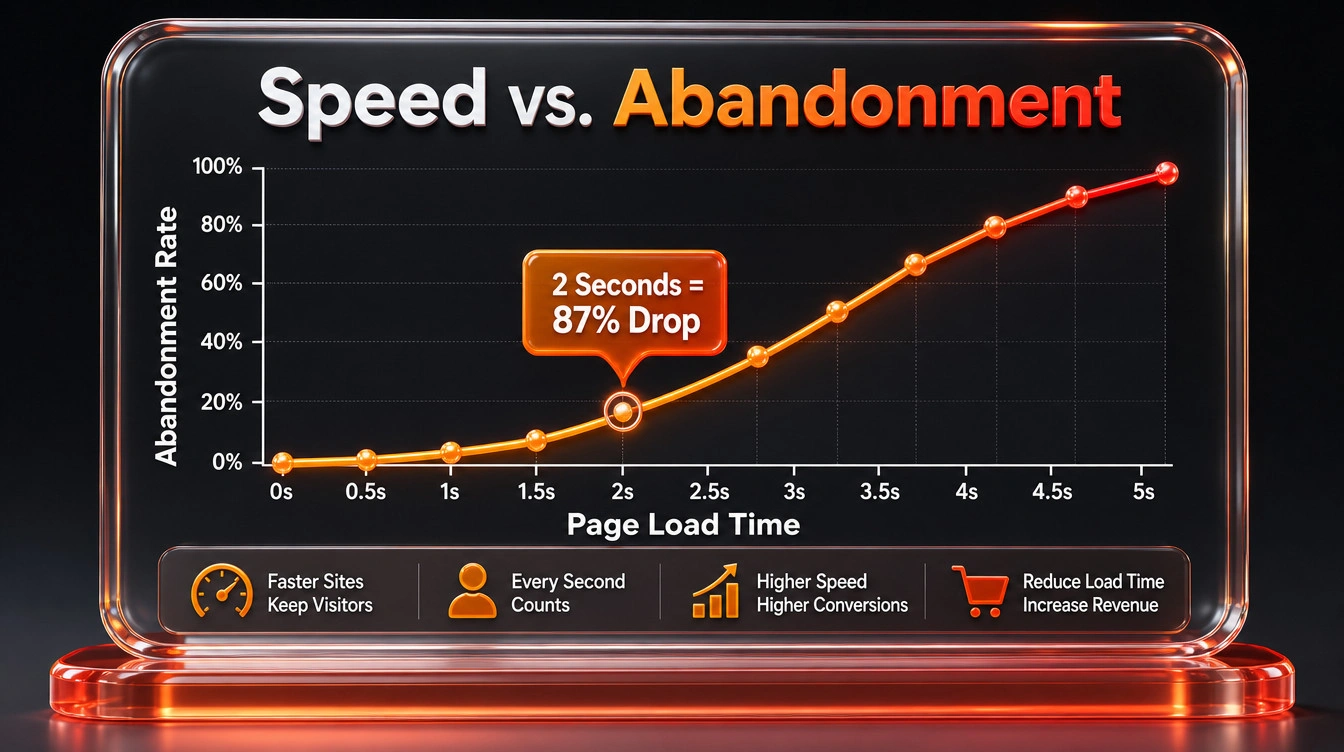
Google prioritises platforms passing Core Web Vitals. Fast, mobile-optimised sites rank higher, reducing your dependency on paid advertising and driving organic acquisition costs down to near zero.
Q: Can I measure exactly how many sales come from my website?
A: Yes. By integrating Google Analytics 4 and custom conversion tracking, you can attribute specific revenue amounts directly to organic web traffic.
What Are the Red Flags in Website Quotes to Look Out For?
Warning Signs That a Low-Cost Quote Will Cost You More in the Long Run
Vendors offering RM500 full-builds cut corners by stealing copyrighted images, ignoring mobile responsiveness, and withholding administrative access. They hold your asset hostage when you attempt to migrate.
10 Due-Diligence Questions to Ask Every Web Design Vendor in Malaysia Before You Sign
Always ask how they handle structural updates. If you are replacing an old site, demand a detailed website migration plan. Failing to execute a precise pre-redesign SEO audit will destroy your existing keyword rankings overnight.
Q: What should a proper website migration plan include?
A: It must include comprehensive 301 redirect mapping, existing backlink preservation, and thorough staging environment tests before pushing live.
WordPress vs Other Platforms: Which Delivers the Best Long-Term ROI for Malaysian Businesses?
Why WordPress Remains the Superior Platform for SEO and Business Performance in Malaysia
Self-hosted WordPress powers over 40% of the internet. It offers complete data ownership, unmatched plugin architecture, and total control over schema and entity injection for organic search dominance.
When to Consider Shopify, Webflow, or a Custom-Coded Solution Instead
Shopify excels for pure retail operations lacking deep technical resources. Webflow suits highly visual design agencies. Custom Python or React stacks are mandatory for complex SaaS products.
Q: Is WordPress secure enough for corporate use?
A: Yes. When paired with enterprise-grade hosting and strict vulnerability patching protocols, WordPress meets top-tier corporate compliance standards.
How Does Website Setup Cost Vary by Malaysian Business Type?
Small Business and Startup Website
Startups should allocate RM3,000 to RM6,000, prioritising clean local search signals and mobile-first loading speeds to capture immediate neighbourhood traffic.
B2B Professional Services Website (Legal, Accounting, Consulting, Medical)
Law firms and clinics require high-trust indicators and stringent data privacy compliance, pushing budgets between RM15,000 and RM30,000. These industries demand proper technical SEO and extensive schema markup to satisfy Google’s E-E-A-T (Experience, Expertise, Authoritativeness, Trustworthiness) guidelines. Hiring an agency with deep technical SEO knowledge is critical here. Effective E-E-A-T setup is hidden from the human eye within the code, and generic agencies entirely lack this capability.
E-Commerce and Online Retail Website
Inventory databases, secure checkout flows, and automated shipping calculators require budgets starting around RM12,000.
Corporate and Enterprise Website
Publicly listed companies require custom reporting dashboards, investor relations portals, and strict multilingual capability, pushing costs beyond RM50,000.
Q: Do e-commerce sites cost more to maintain?
A: Yes. Managing dynamic inventories, securing transaction data, and maintaining API connections to fulfillment centres require continuous developer oversight.
Why Do Typical Digital Marketing Agencies Build Websites That Fail Organically?
Most traditional digital marketing agencies build websites with a short-term focus on paid advertising. Because their revenue model relies on managing monthly ad campaigns through platforms like Google Ads, these teams prioritise immediate visual conversion elements. Designers focus on massive hero images and flashy animations. This narrow focus usually results in highly bloated structural code hidden beneath the surface.
To launch platforms quickly, commodity agencies routinely rely on heavy drag-and-drop page builders or stock templates. While these designs look visually impressive to a human user during a paid campaign, the underlying code framework remains heavily fragmented. Search engines and AI discovery bots struggle to crawl unoptimised structures. Consequently, organic rankings completely collapse the moment your paid ad budget runs dry. For a digital asset to remain profitable over a three-year cycle, developers must engineer the foundation using clean semantic HTML. Launching a site without proper semantic structure means you are paying to rent temporary traffic, rather than investing in permanent market share.
Crucial Insight: A successful business website is never designed purely as human eye candy. Developers must structure the architecture so search bots and AI models can easily parse the underlying data. Our breakdown on why beautiful websites are broken for search engines demonstrates exactly how generic visual templates destroy indexing potential.
Q: What is the main difference between an SEM-focused site and an SEO-focused site?
A: SEM sites prioritise immediate visual hooks and scripts for ad tracking, often ignoring page speed. SEO sites use clean, lean code structures that allow search crawlers to easily index content, securing long-term organic traffic without ongoing click costs.
Frequently Asked Questions
Next Steps
- Audit your current digital assets to determine whether you need a minor aesthetic refresh or a complete website redesign strategy to fix core structural issues.
- Document your specific commercial goals (e.g., target cost-per-lead, required monthly organic traffic) before approaching vendors for quotes.
- Request immediate proof of capability from potential agencies, specifically asking for real-world case studies demonstrating technical E-E-A-T implementations and active server management protocols.
Ready to build an asset that generates measurable commercial returns rather than endless technical headaches? Reach out to our technical team today to discuss your digital architecture needs.