Why does Ulement charge higher rates? Ulement operates primarily through word-of-mouth referrals because clients value long-term operational stability. Our pricing reflects deep consultation and years of expertise, not just coding hours. This approach proves significantly cheaper over the product lifecycle by eliminating the severe headaches associated with system failures. High-quality web development functions as a capital investment; cheap code acts as a high-interest loan requiring expensive future repayment.
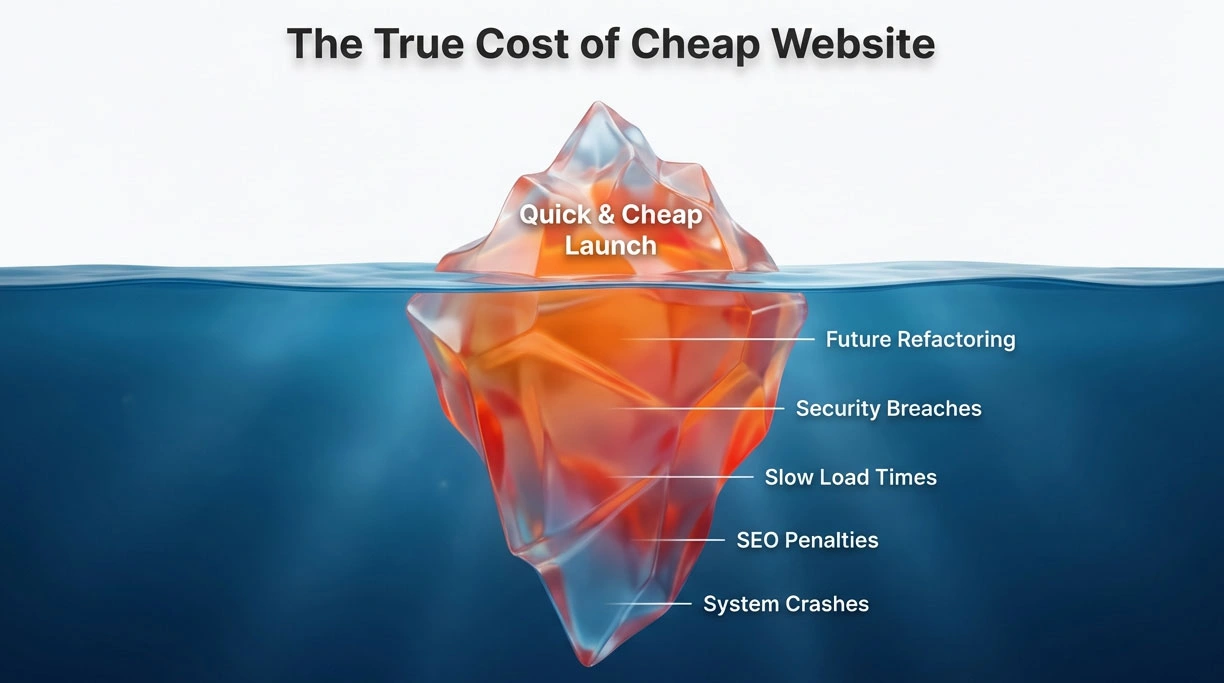
What is Technical Debt? Technical debt is the future cost you pay when you choose a quick code fix now instead of a better, long-term solution.
- Attribute: Interest Rate (Cost of Delay)
- Value: Compound expense of fixing errors later.
How does Technical Debt impact SEO performance?
Technical debt impacts SEO performance by increasing page load times and creating crawlability issues through bloated code structures. Search engines penalise slow sites with poor Core Web Vitals scores. Ulement delivers clean, scalable websites to ensure organic visibility remains high regardless of content volume or traffic surges.
How does code bloat affect site speed?
Code Bloat is a development inefficiency where excessive computer instructions slow down processing without adding functionality. Cheap development strategies often rely on pre-packaged themes laden with unused scripts. Google PageSpeed Insights detects these inefficiencies immediately. Adding new features to a bloated foundation causes site speed to drop further.
Why is the “Patchwork” problem dangerous?
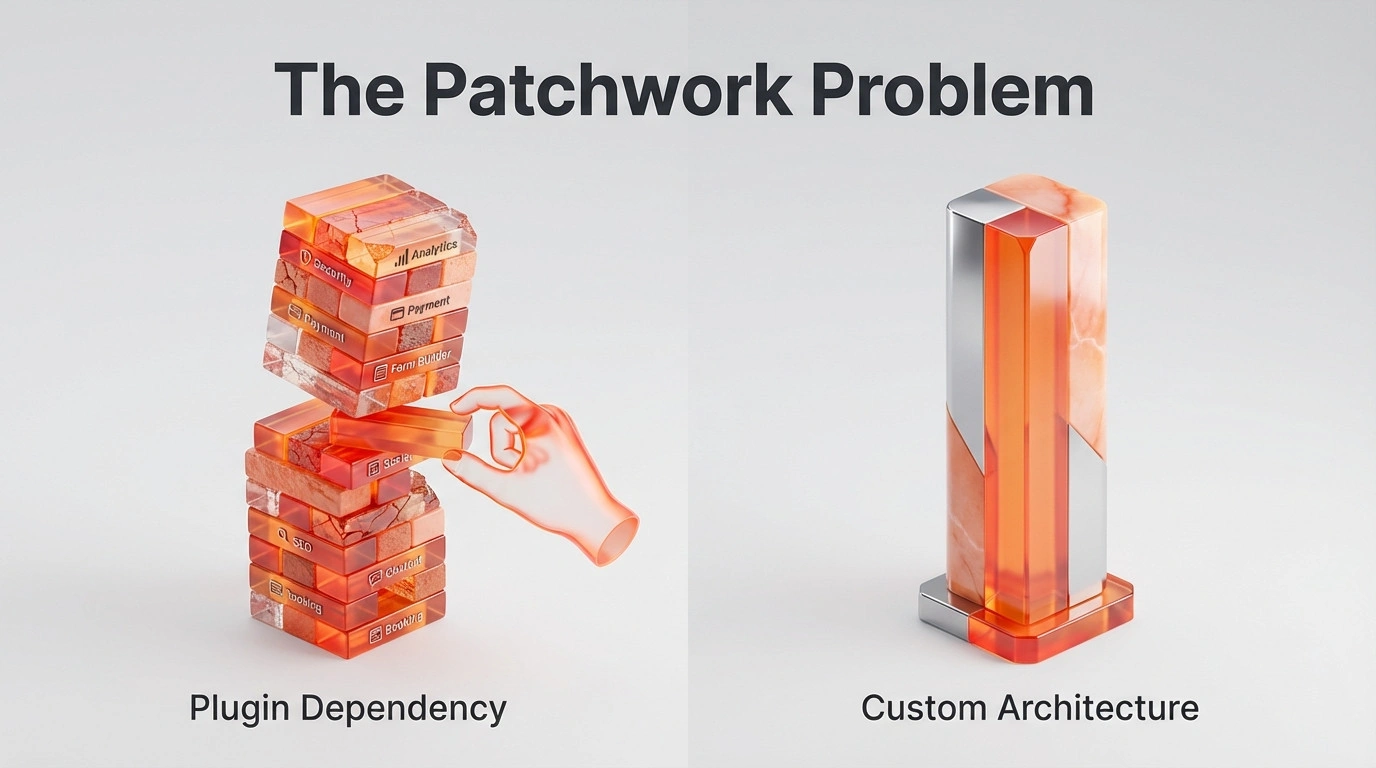
Low-budget developers often use multiple conflicting plugins to achieve functionality that a single custom script handles efficiently.
- Security Risks: More plugins create increased potential entry points for hackers.
- Conflict Errors: Updates to one plugin frequently break others in a fragile ecosystem.
- Performance Drag: Each plugin adds distinct database queries that slow down the Time to First Byte (TTFB).
Note: Custom web development remove reliance on third-party developers who may abandon support for their plugins at any time.
Why do budget websites fail during traffic spikes?
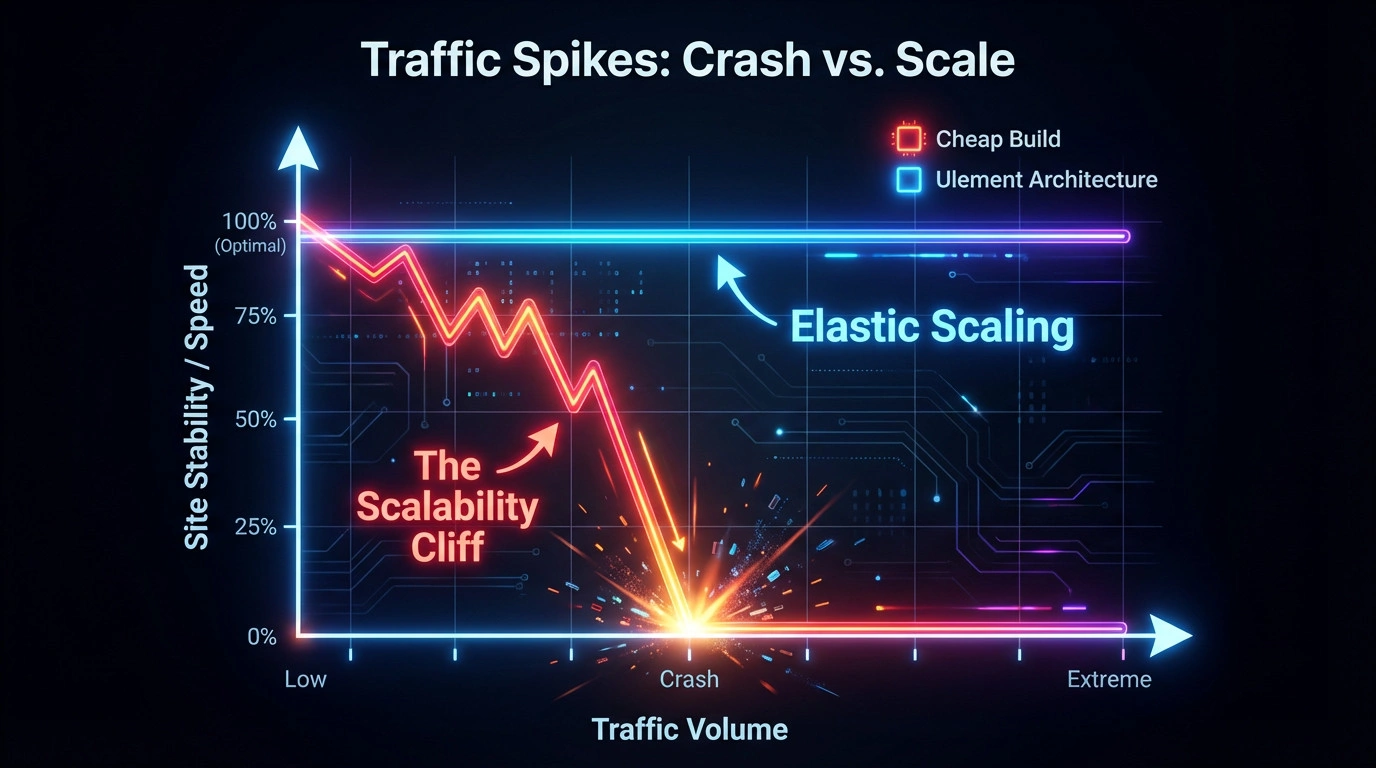
Budget websites fail during traffic spikes because unoptimised database queries exhaust server resources rapidly during high-concurrency events. Scalability requires efficient architecture capable of handling increased loads without crashing the database. Ulement builds systems that remain stable under pressure to protect revenue streams.
What is the “Scalability Cliff”?
Imagine a viral marketing campaign succeeds and thousands of users flood the site simultaneously.
- The Cheap Build: Servers crash because the database cannot handle the “n+1” query problems hidden in the cheap code. Businesses lose revenue during peak opportunities.
- The Quality Build: The site scales elastically. Caching layers serve content instantly while the database remains stable.
Which costs more: The Fix or The Build?
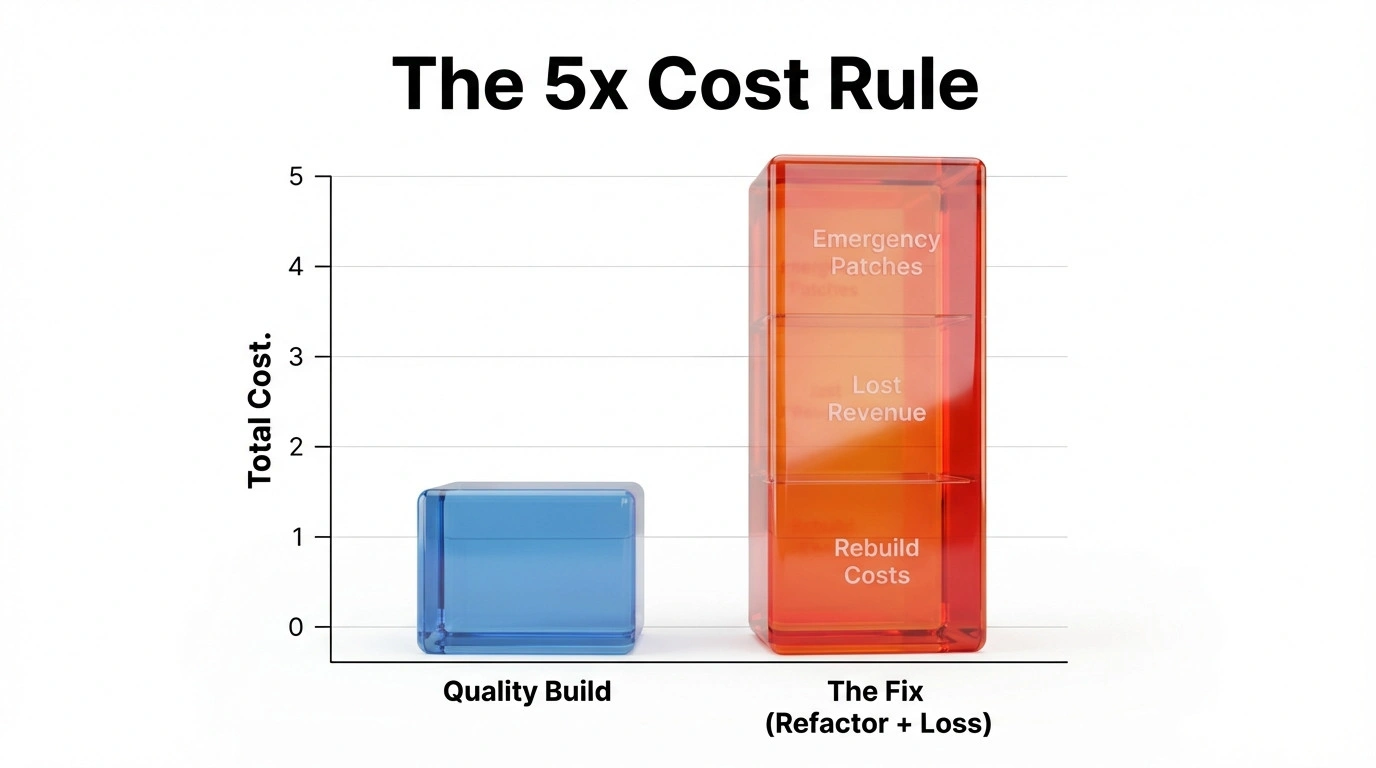
Refactoring is the process of restructuring existing computer code to improve non-functional attributes. Fixing a live, broken site often costs 5x more than building the website correctly the first time. Businesses pay for the emergency fix, the lost revenue, and the eventual rebuild.
Is the sustainable approach an investment or an expense?
The sustainable approach functions as a capital investment that secures asset longevity and performance stability over time. Businesses must view web development as purchasing a durable asset rather than paying for a temporary service. Ulement delivers platforms that appreciate in value rather than depreciating through obsolescence.
How does Ulement approach development?
We utilises semantic HTML, clean architecture, and server-side optimisation to ensure platforms remain robust.
- Semantic HTML: Improves accessibility and helps AI crawlers understand context.
- Clean Architecture: Separates concerns so future updates remain safe and easy.
- Server-Side Optimisation: Reduces the processing load on the user’s device.
What is the outcome of enterprise scalability?
Sites built on these principles handle 10x growth without needing a rebuild. Clients stop paying “rent” on website errors and start owning a platform that supports business goals.

Website Revamp is Reengineering and Rebranding: A Guide for Enterprises, GLCs and PLCs

The Hidden Flaw: Why “Beautiful” Websites Are Mispositioned in the Eye of AI

Technical SEO Architect: The Foundation for Enterprise Growth
Conclusion: The ROI of Peace of Mind
Why choose professional web development? Business leaders should not lose sleep over server crashes or database timeouts. Ulement removes the anxiety of technical debt by building sustainable systems. Paying for architectural expertise upfront eliminates the expensive, stressful cycle of emergency patches and lost revenue.
Final Thought: Stop paying “rent” on website errors. Invest in a digital asset that supports growth instead of hindering performance.
FAQs
Avoiding technical debt is not just a developer’s concern; it is a business strategy. Industry research from McKinsey shows that companies pay an additional 10 to 20 percent on every technology project to address tech debt accumulated from past shortcuts. By choosing a development partner who values clean architecture, semantic markup, and performance from day one, you protect your search rankings, your user experience, and your bottom line. Cheap code may launch your site faster, but quality code keeps it growing for years to come.