When a patient in Bayan Lepas wakes up with a severe toothache or their child spikes a fever on a Sunday, they do not read medical journals. They grab their phone and search “doctor near me,” “dentist near me,” or “clinic open now.”
Local SEO for clinics is the practice of optimising your Google Business Profile (GBP) and local citations so your practice appears in the top three Map Pack results for nearby searches. In Malaysia, however, ranking in the Map Pack requires more than just standard digital marketing—it requires strict adherence to the Malaysian Medical Council (MMC) and the Medicine Advertisements Board (KKLIU) regulations.
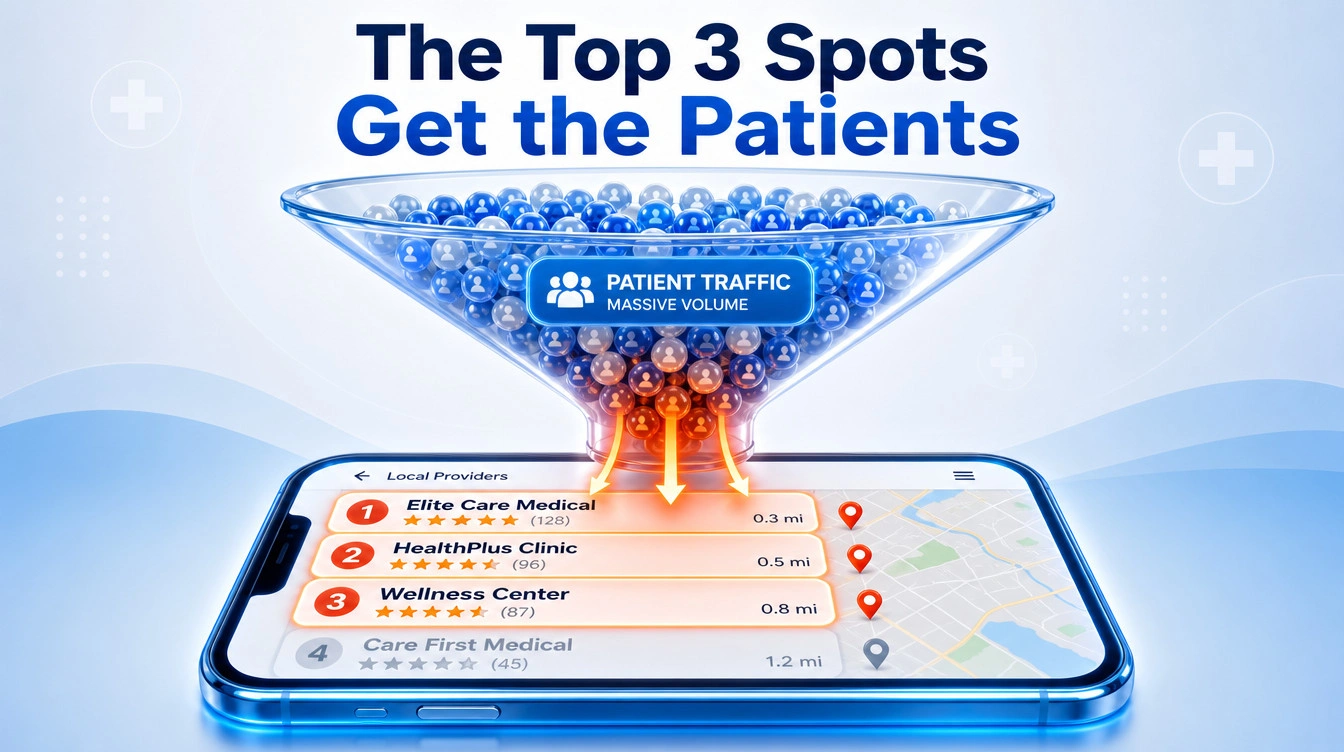
Google responds to local intent with the Local Map Pack: three nearby practices pinned on a map at the very top of the results. If your clinic is not in those three spots, you are almost invisible to patients ready to book. Here is how to claim those top spots while building legally compliant, localized clinical authority.
Key Takeaways
- Compliance-First SEO: Dominating local search in Malaysia means building E-E-A-T (Experience, Expertise, Authoritativeness, and Trustworthiness) without relying on MMC-prohibited laudatory terms or clinical guarantees.
- Operational Reviews Over Clinical: Review velocity matters, but under KKLIU guidelines, patient feedback must focus on operational excellence (wait times, facility cleanliness) rather than treatment efficacy.
- NAP Consistency is Non-Negotiable: Your clinic’s Name, Address, and Phone number must be perfectly synchronized across your GBP, website, and medical directories to build foundational ranking signals.
- Active Listing Signals: Weekly GBP Posts, a fully managed Q&A section, and complete service categories prove to Google that your clinic is active and relevant.
As we covered in our foundational Healthcare SEO Guide for Dental & Medical Aesthetics and our guide on local map dominance, local SEO for clinics is one of the fastest ways to turn online searches into waiting-room visits. Simply claiming your Google Business Profile (GBP) and checking your phone number is no longer enough.
Strengthen The Basics Of Your Google Business Profile
Your Google Business Profile is the single most influential asset for local clinic SEO. Google ranks clinics based on relevance, distance, and prominence. However, your profile must be built on facts, not exaggerated marketing claims.
Keep NAP And Core Details Consistent
Your clinic’s Name, Address, and Phone (NAP) must match everywhere. Use the same practice name on GBP, your website, and every directory. Keep your hours accurate and update your holiday hours ahead of time. Even minor mismatches (like using “Jalan” on your website but “Jln” on Google) can weaken trust signals.
Complete Your Profile Legally and Factually
Fill every relevant field in your GBP with clear, patient-focused language, but strictly avoid superlatives.
- Avoid: “The best aesthetic clinic in Penang” or “Pain-free dentistry.” (These violate MMC guidelines on laudatory claims and guaranteed outcomes).
- Use: “Certified Orthodontist in Penang” or “Comprehensive Dental Screening.”
- Add Attributes: Highlight wheelchair access, languages spoken (e.g., Bahasa Malaysia, Mandarin, English), and telehealth availability.
A Crucial Warning on GBP Photos
Generic SEO advice often encourages uploading “before-and-after” patient photos to boost engagement. Do not do this in Malaysia. Under MMC and KKLIU guidelines, using before-and-after photos as promotional material implies treatment efficacy and is strictly prohibited. Instead, build visual trust by uploading high-quality images of your clinic’s exterior, your state-of-the-art medical equipment, sterile treatment rooms, and professional team portraits.
Dial in Your Primary and Secondary Categories
Google uses categories to decide when your clinic is a relevant match for a search. Choosing only a broad primary category like “Dentist” forces you to compete with every general practitioner in your city.

Use categories with high intent to capture specific, lucrative searches:
- Primary Category: Your main identity (e.g., Dental Clinic, Medical Clinic, Dermatologist).
- Secondary Categories: Specific services that bypass generic competition (e.g., Orthodontist, Emergency Dental Service, Skin Care Clinic).
Correct categorization tells Google exactly what you should be known for without requiring you to write non-compliant promotional copy.
Use GBP Posts and Q&A to Reduce Patient Friction
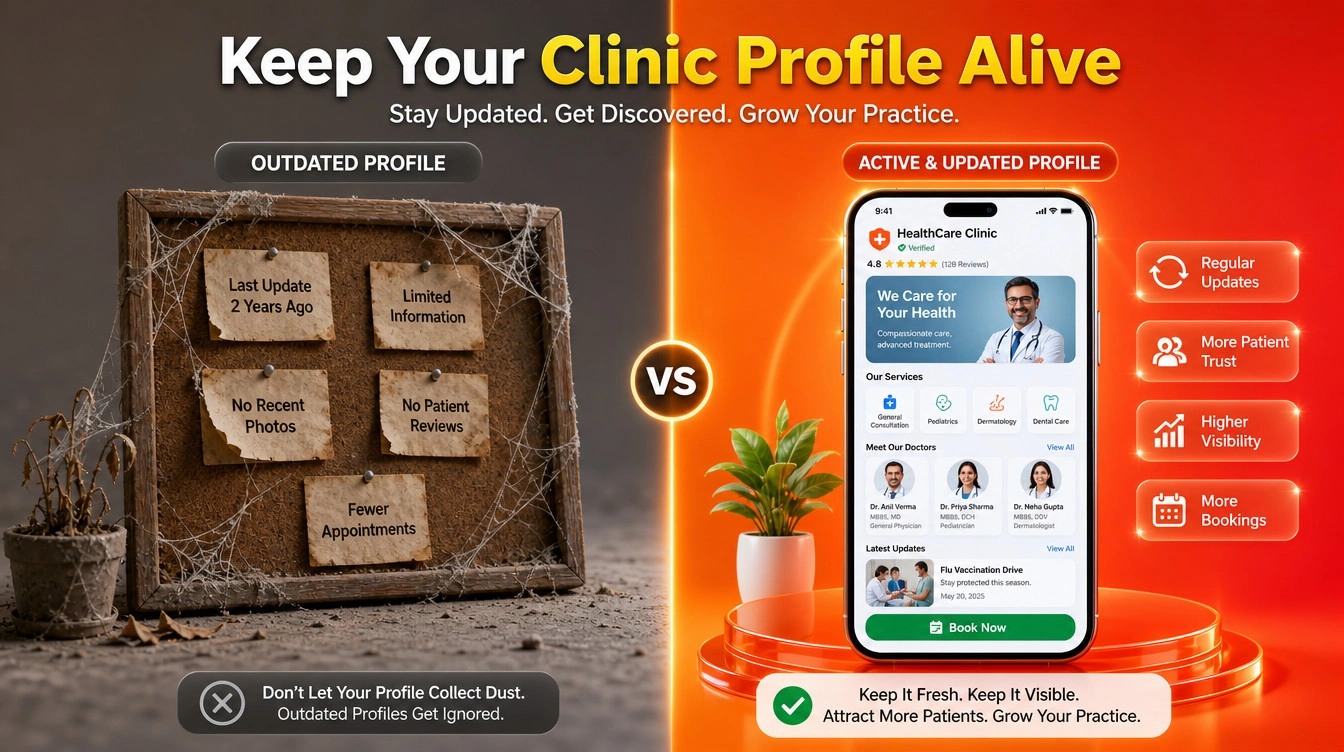
Google rewards listings that are actively managed. You can use GBP features to communicate directly with patients while staying firmly within local medical advertising laws
GBP Posts as a Digital Noticeboard
Post at least weekly to send freshness signals to Google. To remain compliant, ensure your posts are strictly educational or logistical rather than promotional. Excellent examples include:
- Announcing a new medical specialist joining your clinical team.
- Sharing upcoming holiday closure dates or sudden changes in operating hours.
- Posting short, educational health tips (e.g., “Post-operative dental care instructions” or “Tips for managing seasonal allergies”).
Pre-emptively answering logistical questions removes the friction that prevents patients from visiting your clinic.
Hack the Q&A Section to Reduce Friction
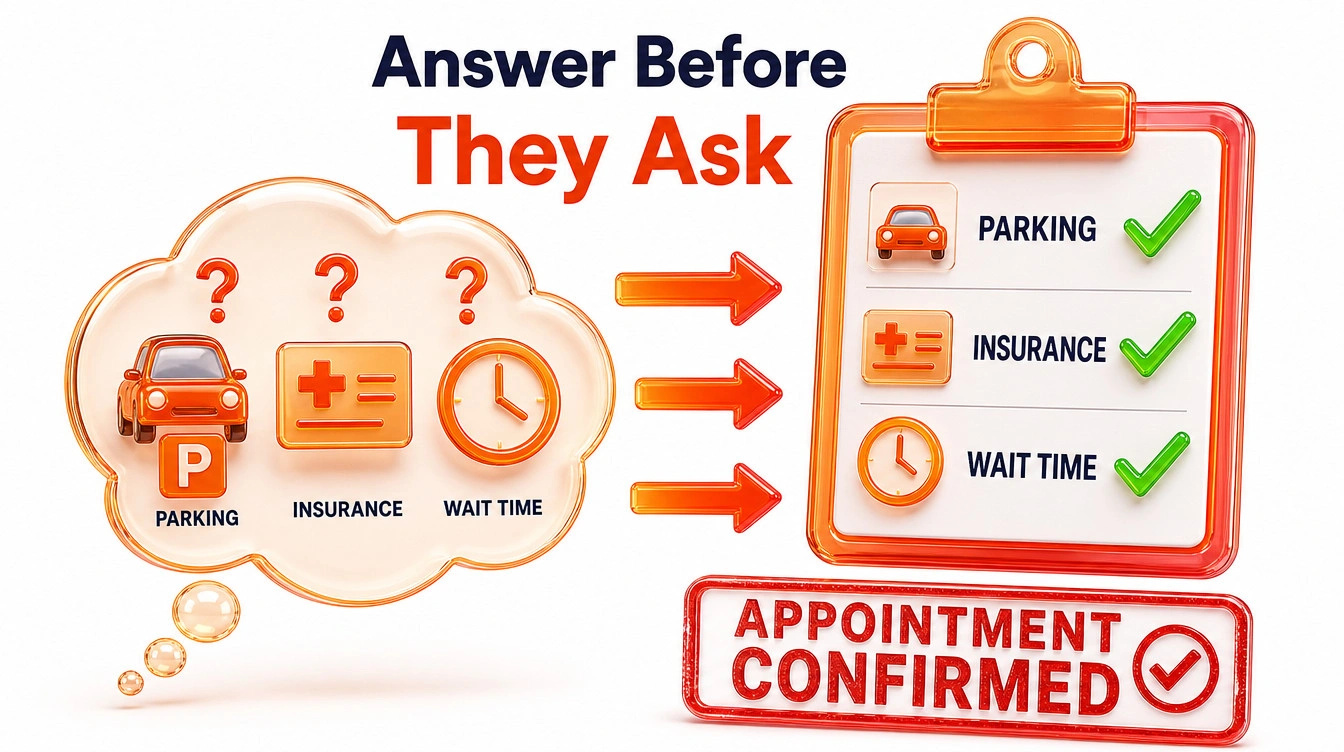
The public Q&A area is the perfect place to build authority by removing logistical barriers to entry. Ask your front desk for the most common questions they hear, and post official answers to your profile. Cover compliance-safe topics like:
Do not leave this box empty or unmanaged:
- Ask your front desk team for the 10 questions they hear most on the phone.
- Log in with your clinic’s Google account, post those questions, and add official answers.
- Cover topics such as:
- Insurance plans accepted
- Parking and public transit
- Walk-in policies and average wait times
- Telehealth availability
When patients see that you accept their insurance and offer easy parking right on your map listing, they are far more likely to hit Call or Directions.
Master “Review Velocity” (Not Just the Score)
Google pays close attention to review velocity—the steady pace at which new reviews arrive. A clinic with 150 reviews at 4.8 stars and two new reviews each week will outrank a clinic with 50 perfect 5-star reviews from three years ago.

However, gathering medical reviews in Malaysia is a regulatory minefield. Under KKLIU guidelines, patient testimonials regarding clinical outcomes are strictly prohibited. How to safely build 5-star reviews:
- Train your staff to ask for operational reviews: Do not ask patients to review a specific treatment. Instead, direct them to review your facility. Say: “We’d love your feedback on our clinic environment, our front desk team, and our booking process.”
- Target the right keywords: Reviews mentioning “minimal waiting time,” “spotless waiting room,” or “highly professional staff” boost local SEO without violating medical laws.
- Respond under PDPA constraints: When replying to reviews, never confirm a patient’s medical details or the treatment they received. A simple, “Thank you for your kind words about our clinic’s environment and team” is safe, professional, and signals to Google that your profile is active.
Measure Local SEO For Clinics And Fix Common Issues
Regular data reviews allow you to fix problems before they slow your visibility. Tracking the right metrics separates clinics that maintain map pack dominance from those that plateau.
| Tool Type | Example Metrics To Watch | Why It Matters |
|---|---|---|
| Google Business Profile Insights | Calls, direction requests, discovery vs. brand searches | Shows how often patients act straight from your listing |
| Google Analytics 4 (GA4) | Phone clicks, appointment form submissions | Connects map traffic to real appointments |
| Rank tracking tools | Positions for “[specialty] near me,” across neighborhoods | Reveals where you rank across your service area |
Frequent issues that hold back local SEO for clinics:
- Inconsistent NAP details between GBP, website, and directories
- Old or incorrect business hours and holiday hours
- No separate location pages for multi-location practices
- Ignoring negative reviews or replying defensively
- Outdated photos and no recent GBP Posts
A quick monthly review of these basics keeps your Google Business Profile doctors listing healthy and competitive.
Frequently Asked Questions
Is Your Clinic Invisible to Local Patients?
If you are not appearing in the top three positions on Google Maps, nearby competitors are taking calls and bookings that could be yours. A thin, outdated Google Business Profile and weak local signals create a quiet but steady leak in your clinic’s revenue.
Ulement specialises in technical and local SEO for clinics in Malaysia. We combine deep technical audits with a strict understanding of MMC, KKLIU, and PDPA regulations to pinpoint why you are not dominating the Local Map Pack—and we execute the exact strategies needed to get you there safely.