Most clinic owners believe patient referrals are their ultimate growth engine. In reality, a robust SEO strategy captures thousands of high-intent patients who have already decided they need a specialist but do not know who to trust yet.
Key Takeaways:
- Google categorises healthcare as ‘Your Money or Your Life’ (YMYL), demanding rigorous proof of clinical expertise.
- Local SEO and an optimised Google Business Profile drive the vast majority of immediate, geographic clinic appointments.
- AI Overviews mandate a shift toward Generative Engine Optimisation to ensure language models recommend your specific practice.
- Regulatory compliance across data privacy frameworks must dictate your technical analytics setup.
What is medical SEO and why is it fundamentally different?
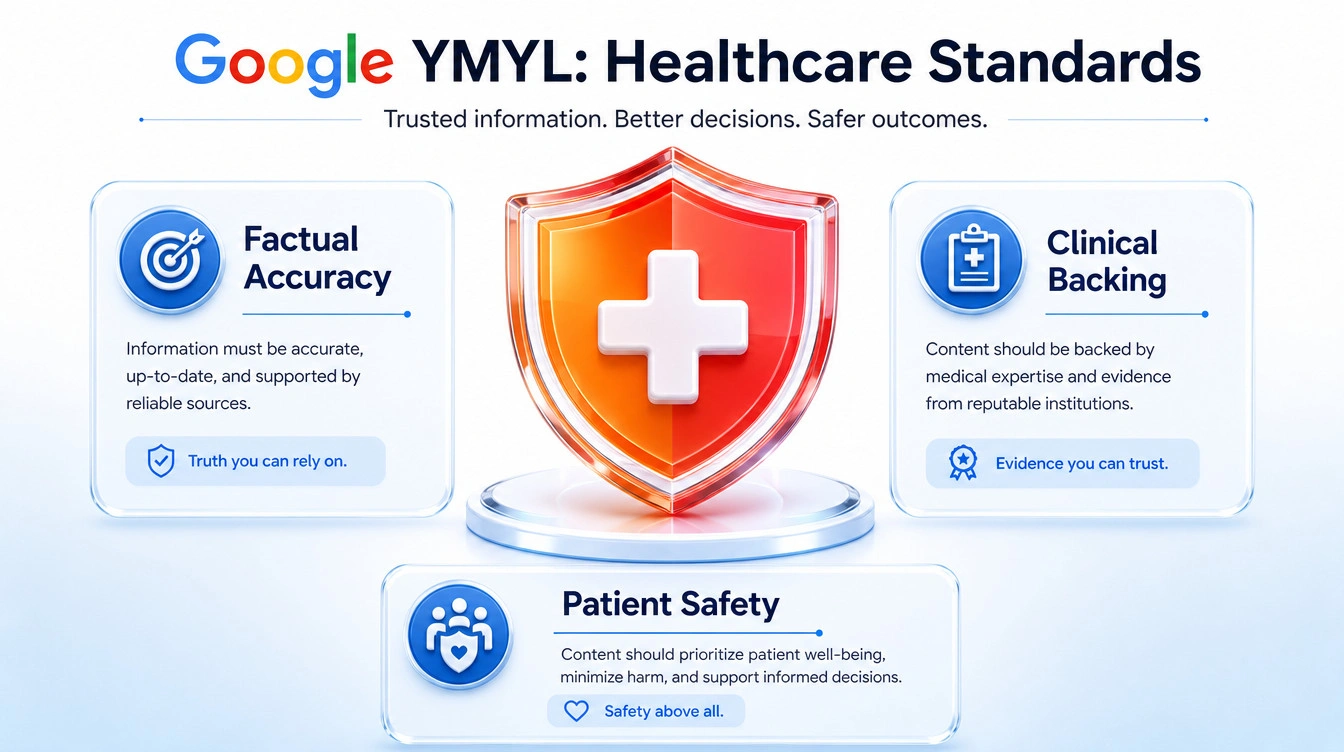
Medical search engine optimisation requires strict adherence to distinct algorithmic standards that do not apply to standard e-commerce or local business websites. When a patient searches for clinical information, Google prioritises safety and factual accuracy above all other ranking factors.
Why do healthcare websites fall under Google YMYL classification?
Google classifies healthcare topics as ‘Your Money or Your Life’ (YMYL). This means any page that could impact a person’s future happiness, health, financial stability, or safety is scrutinized under higher quality standards. Providing inaccurate medical advice online can cause real-world harm. Consequently, Google’s algorithms aggressively demote healthcare content that lacks verifiable clinical backing, heavily favouring institutional giants like the Mayo Clinic or established regional networks like IHH Healthcare.
Medical SEO versus healthcare SEO distinctions
While often used interchangeably, medical SEO typically refers to strategies employed by direct clinical providers (surgeons, dentists, dermatologists) focusing on patient acquisition. Healthcare SEO is a broader term encompassing medical software companies, pharmaceutical brands, and massive hospital networks. For a clinical practice, the primary intent is always driving localised patient bookings.
Q: Does every page on my clinic website fall under YMYL?
A: Yes, search engines treat the entire domain of a medical practice as a YMYL entity. Even your contact page or staff bios must project clinical authority and safety to maintain trust.
Building YMYL E-E-A-T Under MMC Guidelines
Google’s algorithms demand high E-E-A-T for medical websites. However, the Malaysian Medical Council (MMC) Code of Professional Conduct strictly prohibits self-promotion, laudatory remarks, and advertising that exploits patient vulnerabilities.
Many generic marketing agencies trigger MMC violations by using aggressive sales copy, “guaranteed results,” or clinical before-and-after photos. Our Healthcare SEO strategy relies entirely on Educational Authority.
We build your E-E-A-T by aligning with MMC ethics:
- Authoritative Content: We map your clinical entities (Physician, MedicalProcedure, MedicalCondition) using schema markup, allowing search engines to verify your credentials without using boastful, non-compliant web copy.
- Substantiated Claims: In accordance with KKLIU requirements, all published content is factually accurate, capable of being substantiated, and free from exaggerated or misleading medical claims.
- Verified Authorship: We structurally embed your verifiable credentials, board certifications, and professional affiliations into your website’s architecture, proving your expertise to Google’s Quality Raters ethically and legally.
Why medical SEO drives long-term patient acquisition
Patient behaviour has shifted drastically. Finding a reliable doctor is no longer solely reliant on word-of-mouth; it requires prominent digital visibility when symptoms arise.
The modern patient decision journey
Patients often begin their journey with symptom-based informational searches before transitioning to commercial investigation queries like ‘best dermatologist in Penang’. If your clinic’s content answers their initial symptom questions accurately, you build preliminary trust that frequently leads to a booked consultation.
SEO versus paid advertising costs
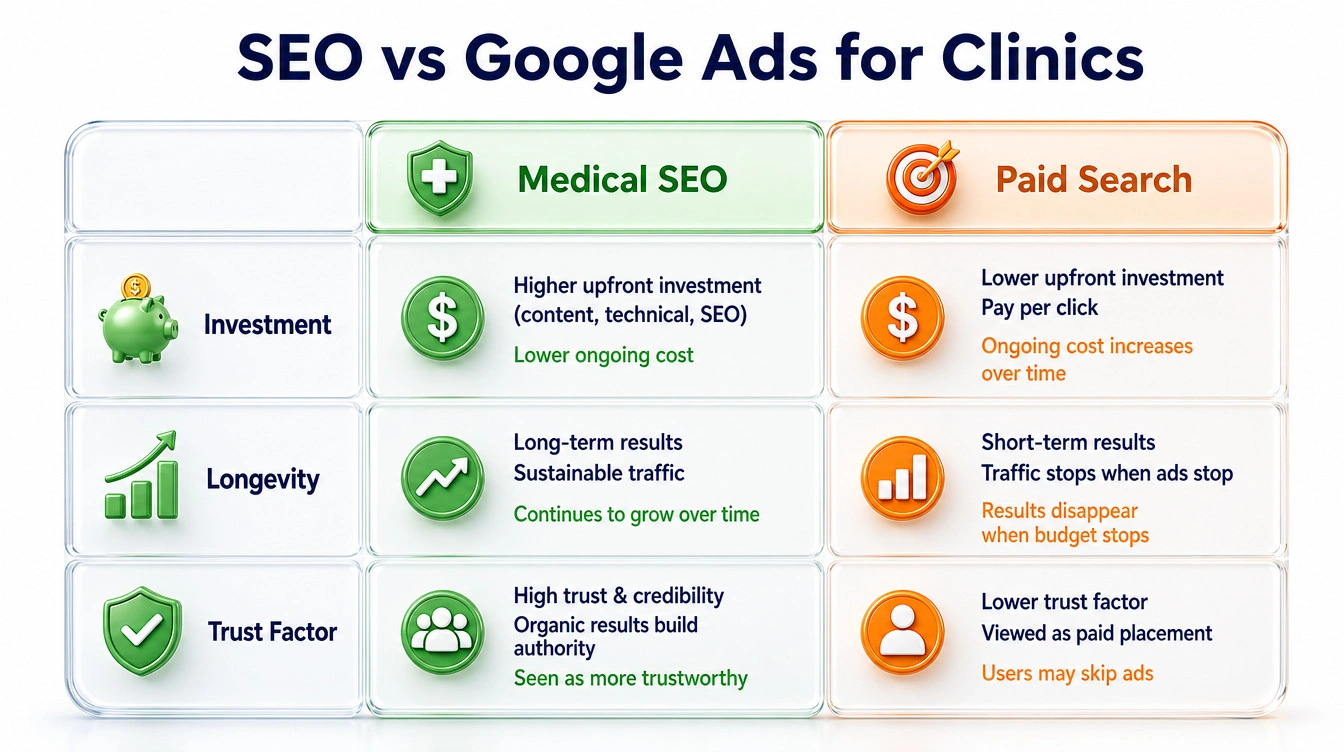
Evaluating patient acquisition costs highlights why organic search remains superior for sustainable growth. While Google Ads provide instant visibility, costs scale linearly with traffic.
| Metric | Medical SEO | Paid Search (Google Ads) |
| Initial Investment | High upfront time and strategy | Moderate setup costs |
| Traffic Longevity | Sustained traffic after work stops | Traffic stops immediately when paused |
| Average Cost Per Click | 0.00 MYR (Organic) | 10.00 – 45.00 MYR (Highly competitive) |
| Trust Factor | High (Earned placement) | Moderate (Paid placement) |
How can small practices outrank large hospital networks?
Small clinics usually struggle to out-publish massive hospital brands. The solution is extreme hyper-specialisation and localised relevance. A private dental clinic in George Town can outrank a national hospital chain for ‘Invisalign specialist George Town’ by building highly focused, localised content hubs and leveraging targeted healthcare SEO strategies.
Q: How long does it take to see patient growth from medical SEO?
A: Medical domains require high trust. A new clinic might take six to nine months to establish enough authority to rank for competitive treatment keywords, while older domains see faster gains.
E-E-A-T framework driving healthcare rankings
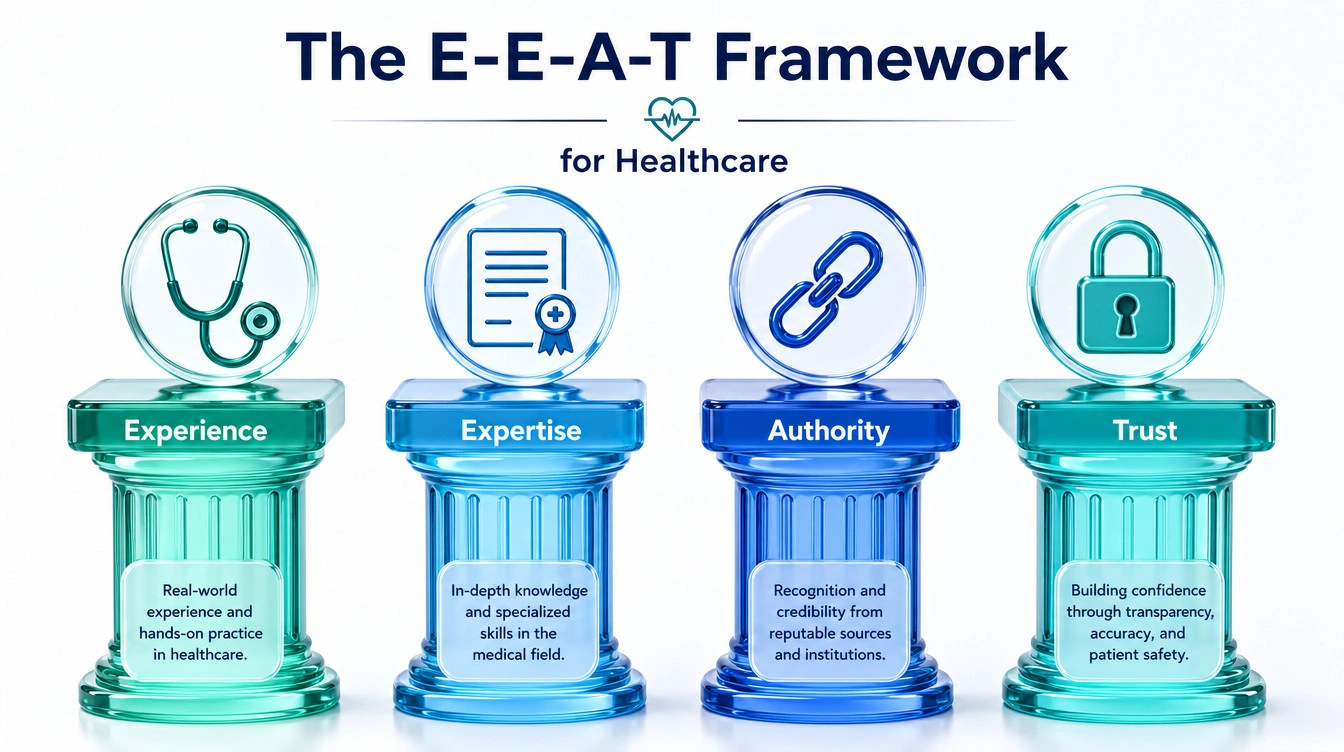
E-E-A-T stands for Experience, Expertise, Authoritativeness, and Trustworthiness. This is the core framework Google uses to evaluate medical content.
How do you demonstrate clinical expertise online?
Expertise must be explicitly verifiable. Every medical article or service page on your site must be authored or medically reviewed by a qualified professional. Include the doctor’s full credentials, their Malaysian Medical Council (MMC) registration numbers, and links to their academic publications directly in the author biography section.
Building authoritativeness via medical backlinks
Authoritativeness is determined by who links to your website. A backlink from a local news outlet or an official medical association acts as a digital vote of confidence. Securing citations from government health bodies or academic journals provides the highest algorithmic validation possible.
Establishing trustworthiness with compliance signals
Trust requires transparent operations. Your website must clearly display privacy policies, terms of service, and clear medical disclaimers. Ensure all medical claims cite reputable sources, linking out to authoritative databases like the Google Search Quality Evaluator Guidelinesor verified academic studies to substantiate your content.
Q: Can I use AI to write my medical content?
A: AI can assist in drafting, but publishing unreviewed AI content on a medical site destroys E-E-A-T. A qualified doctor must review, correct, and stamp the content for clinical accuracy.
Core pillars of a winning medical SEO strategy
A successful campaign integrates user psychology with technical precision.
What do patients actually search for?
Patients rarely use precise clinical terminology. A patient is more likely to search for ‘why do my gums bleed when I brush’ rather than ‘periodontal disease symptoms’. Effective keyword research maps these colloquial symptom searches to your clinical service pages.
On-page optimisation for clinics
Every treatment page must target a specific intent. The primary keyword should naturally appear in the H1 tag, URL slug, and first paragraph. Furthermore, pages should include structured data (Schema markup) for ‘MedicalClinic’ and ‘Physician’ to help search engines instantly parse your specific medical credentials.
Technical architecture and site speed
A sluggish website frustrates patients and search engines. A strong technical SEO architecture ensures fast load times, critical for mobile users searching for immediate medical help.
- Use dedicated, high-performance local hosting (like Exabytes for Malaysian clinics) to reduce server latency.
- Implement strict HTTPS security protocols to protect submitted patient data.
- Ensure a mobile-first responsive design, as over 70% of local health queries occur on smartphones.
- Compress high-resolution clinic images without losing visual quality.

Content marketing for patient education
Publishing comprehensive FAQs and post-care guides establishes your clinic as a community resource. This naturally attracts backlinks and satisfies the informational intent of anxious patients looking for clear recovery timelines.
Q: Does website speed directly impact my clinic’s organic ranking?
A: Yes, Google uses Core Web Vitals as a ranking factor. Slow sites are penalised, especially in mobile search results where patients demand instant access to contact information.
Cross-border medical SEO for the Indonesian market
Medical tourism is a massive growth vector for Malaysian healthcare. Penang is a prominent leader in this sector, requiring a specialised search strategy.
Why does the Medan-Penang healthcare corridor dominate?
Penang received 527,176 foreign patients in 2025, generating RM 1.137 billion in revenue. Indonesian patients account for the vast majority of this influx. The 45-minute direct flight from Medan to Penang makes cross-border healthcare highly accessible. To capture this market, your clinic cannot rely solely on Malaysian search traffic. You must optimise for regional searches originating from Sumatra, Jakarta, and Surabaya. Leverage programmes like the AirAsia Boarding Pass Privileges to make your clinic attractive to these inbound patients.
Technical implementation for multilingual reach
Indonesian patients use slightly different medical terminology compared to standard Bahasa Malaysia. Your SEO strategy must include dedicated landing pages targeting Bahasa Indonesia keywords. Implement strict hreflang tags for multilingual sites to ensure Google serves the correct regional page to Indonesian searchers without penalising your domain for duplicate content. Furthermore, highlight payment conveniences like the Quick Response Indonesian Standard (QRIS) system directly on these pages to improve conversion rates.
Q: Can I just translate my Malaysian website into Indonesian?
A: Simple translation is not enough. You must localise the content to match the specific colloquial symptom keywords used by Indonesian patients to rank effectively.
Local SEO for dominating geographic patient markets
Most medical searches are fundamentally local. A patient in Kuala Lumpur will not travel to Penang for a routine dental checkup, making targeted geographic prominence critical for conversion.
Optimising Google Business Profiles for maximum local SERP visibility
Your Google Business Profile (GBP) is often the first touchpoint for local patients. Fill out every category accurately, upload high-quality photos of your waiting room and equipment, and list your exact treatment offerings. For complete setup protocols, review our Google Business Profile optimisation tips to capture map-pack real estate and learn how to rank in Google Maps effectively.
How do you scale local SEO across multiple clinics?
If your brand operates three clinics in different states, do not group them onto a single contact page. Create a dedicated, distinct landing page for each physical location (e.g., /clinics/penang and /clinics/selangor). Each page must feature its unique address, localised schema markup, and specific doctor schedules to maintain search clarity.
Q: Should I hide my clinic address if I require appointments?
A: Never hide your address. Search engines require a verified, consistent physical location to rank your practice in local map results, even if walk-ins are not accepted.
Medical SEO in the age of AI search
Search is transitioning from a list of blue links to synthesized, AI-generated answers.
How are Google AI overviews reshaping healthcare results?
Google’s AI Overviews attempt to answer user queries directly at the top of the search results. To be cited within these AI summaries, your content must be structured logically with clear headings, definitive answers, and high fact density. Vague, rambling content is ignored by language models.
Generative Engine Optimisation for LLMs
Generative Engine Optimisation (GEO) involves training large language models like ChatGPT or Gemini to recognize your practice as the premier authority. This requires getting your clinic mentioned in high-authority third-party publications and maintaining a flawless, highly citable technical structure on your own website.
Q: Will AI search engines stop patients from visiting my website entirely?
A: For basic queries (like normal blood pressure ranges), perhaps. However, patients will always click through to verified clinic websites when seeking actual treatment or localised consultations.
Regulatory compliance in digital marketing
Digital marketing in healthcare carries distinct legal risks regarding patient data.
How do PDPA and HIPAA restrictions impact SEO tracking?
Analytics platforms track user behaviour, but in healthcare, this can violate privacy laws. In Malaysia, the Personal Data Protection Act (PDPA) governs data handling, while international clients look at HIPAA. You cannot use standard tracking pixels (like the Meta Pixel) on pages detailing sensitive medical conditions, as this transmits health-related browsing data to third-party advertising networks.
Building a compliant website architecture
Your digital infrastructure must be secure by design. Implementing a robust framework requires secure forms that encrypt patient data before it hits your server. Many clinics require custom web developmentto ensure their CMS integrates securely with internal patient management systems without leaking data to search engine crawlers.
Q: Can I use patient names in my SEO case studies?
A: Only with explicit, documented legal consent. It is safer to use anonymized case studies detailing the clinical problem and successful outcome without identifying the individual.
Measuring return on investment
Tracking rankings is a vanity metric; tracking patient bookings is a business metric.
Essential KPIs to track
Monitor organic traffic growth, conversion rates on appointment forms, and local map interactions (calls and direction requests). Focus heavily on non-branded organic traffic, which indicates patients found you by searching for a treatment, not by searching for your clinic’s name.
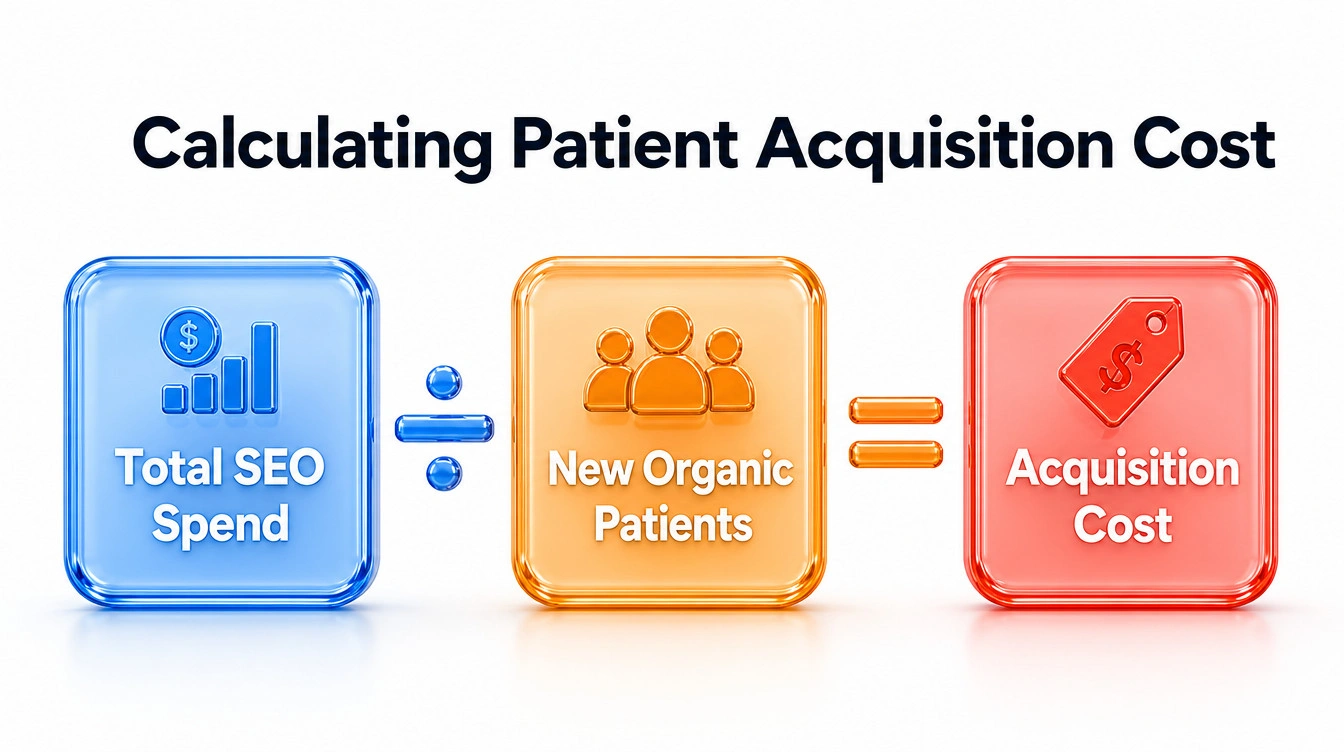
How do you calculate SEO patient acquisition cost?
To evaluate efficiency, divide your total monthly SEO expenditure by the number of new patients acquired strictly through organic channels. If you spend 5,000 MYR monthly on SEO and acquire 50 new patients, your organic patient acquisition cost is 100 MYR.
Q: Is it normal for organic traffic to drop during certain months?
A: Yes, seasonal fluctuations are common. For instance, aesthetic clinics often see dips during major holiday travel periods, while pediatric clinics see spikes before school terms begin.
Common medical SEO mistakes
Small technical or strategic errors can render a brilliant clinical website invisible.
Technical errors tanking rankings
Broken links, duplicate service pages across different locations, and improper redirect chains confuse search engine crawlers. Additionally, failing to implement correct hreflang tags on multilingual sites (common in Southeast Asia) splits your ranking power across duplicate language pages.
Content failures violating E-E-A-T
Publishing generic medical advice without an author bio, using stock photos instead of real clinic imagery, and lacking external citations to medical journals are critical E-E-A-T failures. Google treats anonymous medical content as inherently untrustworthy.
Q: I changed my clinic’s domain name and lost all traffic. Why?
A: You likely failed to implement proper 301 redirects from the old URLs to the new ones, effectively erasing your earned historical authority in the eyes of search engines.
Should you manage medical SEO in-house or outsource it?
Building a high-performing organic growth engine requires distinct technical, medical, and strategic skill sets.
What questions must you ask before signing an SEO contract?
If you choose to outsource, demand transparency. Ask potential partners how they handle YMYL content validation. Request specific case studies of similar clinics. Most importantly, ensure they follow strict ethical guidelines, promising guaranteed number one rankings in healthcare is a severe red flag indicating manipulative, short-term tactics. Consider the long-term website maintenance cost in Malaysia when allocating your digital marketing budget.
Q: Can a regular SEO agency handle my clinic’s marketing?
A: Usually, no. Medical SEO requires specialized knowledge of YMYL constraints, medical terminology, and patient privacy compliance that generalist agencies lack.
Frequently Asked Questions
Next Steps
- Conduct a thorough E-E-A-T audit of your website to ensure every medical page features a verified author biography with MMC registration numbers.
- Verify and completely fill out your Google Business Profile, ensuring the physical address matches your website footer exactly.
- Review your website’s technical privacy setup to ensure analytics platforms are not illegally tracking patient behavior on sensitive treatment pages.
Ready to dominate healthcare search in your region?
Claim your comprehensive Free Site Audit to identify the technical gaps costing your practice patients.